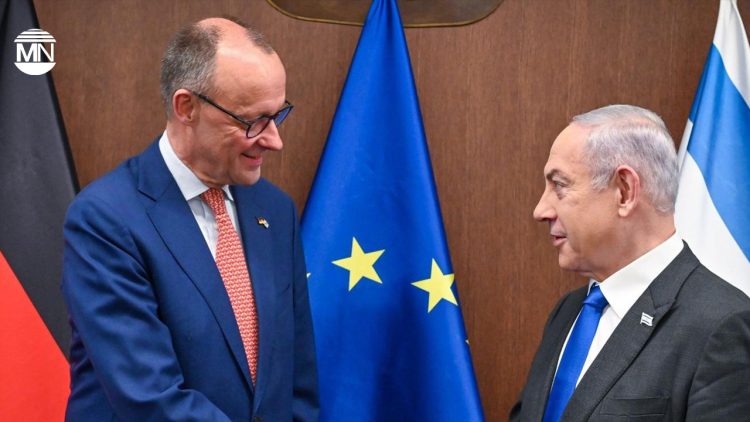
Newly elected German Chancellor Friedrich Merz condemned Israel’s recent military invasion in Gaza on 26 May, stating that the level of destruction and extent of harm being done to the civilian population is no longer justifiable. This is the first time that a German chancellor has made such strong comments against Israel.
Merz stated that he would speak directly with Benjamin Netanyahu to urge restraint, as the IDF warns of an “unprecedented attack” in Gaza.
Chancellor Merz, who took office on 8 May, replacing Olaf Scholz, is likely to take a harsher stance against Israel than the previous administration, especially due to growing international pressure.
Social Democratic Party (SPD) parliamentarian Adis Ahmetovic also spoke on the issue, stating “German weapons must not be used to fuel humanitarian disasters or to violate international law,” effectively calling for an arms blockade on Israel. These remarks are widely perceived as a shift in Germany’s relation to Israel, as the country’s strongest ally in Europe.
Nevertheless, it is part of German law to protect and defend Israel’s right to exist, and Merz reiterated that Germany will always show restraint in criticising Israel. However, his comments mark a turn in German sentiment over Israel and the Netanyahu administration.
Concern over the criminalisation of the Palestinian support movements in Germany was not addressed by Merz, despite the mounting criticisms of German state repression of activists, which has included their deportation.
Whether this will amount to a real change in Germany’s foreign policy remains to be seen, however, worldwide observers have highlighted the Palestinian peoples’ imminent risk of famine. As World Food Programme chief Cindy McCain has stated, “It’s imperative that the international community acts urgently to get aid flowing into Gaza again. If we wait until after a famine is confirmed, it will already be too late for many people.”