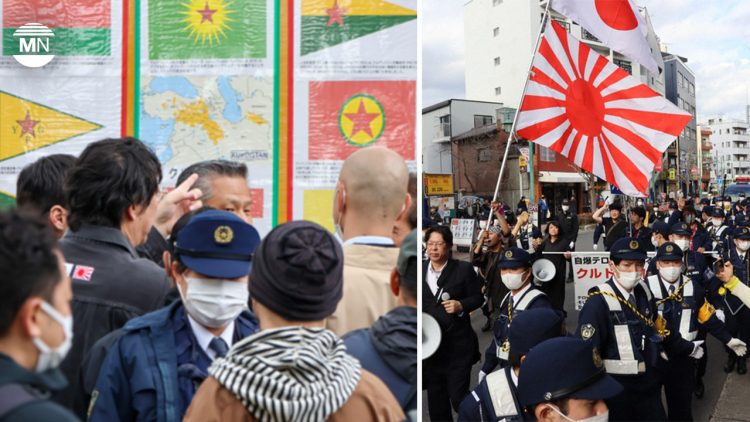
Kurdish residents in Japan have become the focus of a rising tide of hate speech and disinformation, with far-right groups and social media users, mostly based in Turkey, pushing a narrative of fear and hostility just weeks before Japan’s national elections in July.
According to reports by the daily newspaper Asahi Shimbun and Kurdish community leaders, the number of online posts targeting Kurds in Japanese surged from 40,000 in March 2023 to over 2.4 million a year later. Much of the content originates from Turkish social media accounts linked to Turkey’s ultra-right Victory Party, some of which impersonate Kurdish users and claim to live in Japan. These posts frequently echoed anti-refugee rhetoric and called for Kurdish expulsion, contributing to a hostile atmosphere in areas with Kurdish populations such as Kawaguchi and Warabi in Saitama Prefecture.
クルド人を標的にする事でトルコ人のナショナリズムを煽り、集票するやり方は、
トルコの極右ナチズム政党のZafer党やIyi党のやり口で、これを模倣するのが河合、石濱。
国外逃亡者licoは、トルコの内政問題の輸出を止めるべきだ。 https://t.co/sXxDRMGwrK pic.twitter.com/NlVCFU8xAb— 川口・蕨の真実を伝える住民の会 (@RicyTony) June 7, 2025
Ümit Özdağ of Turkey’s ultranationalist Victory Party with a Japanese collaborator, fueling anti-Kurdish hate campaigns in Japan
Despite numbering only around 2,000, Kurds in Japan have become scapegoats for broader anxieties around immigration, national identity and public safety. “They’ve invented a so-called ‘Kawaguchi Kurdish problem’ and are using it to incite public fear,” said Vakkas Çolak, Secretary General of the Japan Kurdish Cultural Association. He accused both local ultranationalist groups and foreign actors of manipulating public opinion. “Kurdish people have lived peacefully in Japan for decades. Now, there’s a coordinated attempt to portray us as a threat,” he said.
One flashpoint occurred in July 2023, when a brawl between two Kurdish families outside a hospital in Kawaguchi led to sensationalised media coverage and fresh protests. These incidents, while rare, have been used by nationalist groups to call for deportations and legal crackdowns. Demonstrations organised by the far-right “Japan First Party”, whose electoral support is negligible, have been widely circulated online—often deceptively repackaged as current footage to suggest a rising public backlash.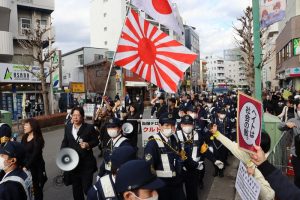
The Japanese authorities have taken limited action in response to the disinformation campaigns. In November 2024, a regional court banned hate speech demonstrations within 600 metres of the Kurdish association’s office. However, many community members say the legal protections provided are insufficient. “We still receive threatening phone calls at night, and media outlets like Sankei Shimbun continue to report in a biased way,” a community statement read.
Turkey’s pro-Kurdish Peoples’ Equality and Democracy (DEM) Party has called on Japanese authorities to take stronger action. “We will not remain silent in the face of these racist attacks,” said Meral Danış Beştaş, a DEM MP and co-spokesperson of the People’s Democratic Congress. “We urge Japan to protect its residents regardless of ethnicity or origin.”
Analysts suggest that Japan’s restrictive asylum policies have contributed to the climate of uncertainty. Although Japan is a signatory to the UN Refugee Convention, it accepted just 1.5% of refugee applicants in 2024. Most Kurdish asylum seekers are granted neither protection nor deportation, placing them in a legal limbo where they are unable to work or access basic services. Only one Kurdish individual has ever been granted refugee status, following a court appeal in 2022.
Some observers have noted the role of Turkey’s foreign policy in shaping Japan’s approach. By avoiding recognition of Kurds as a persecuted minority, Japan preserves its diplomatic and economic ties with Ankara. “It’s a double standard,” said a report from the US think-tank the Foreign Policy Research Institute, which noted that Japan has recently been accepting Ukrainian and Afghan refugee applications while denying most Kurdish claims.
Meanwhile, Kurds continue to contribute to Japan’s economy, particularly in the under-resourced demolition and construction sectors. “We came here for safety and dignity,” said a Kurdish business owner in the city of Saitama. “Now we live in fear—not from our neighbours, but from a system that does not see us.”