

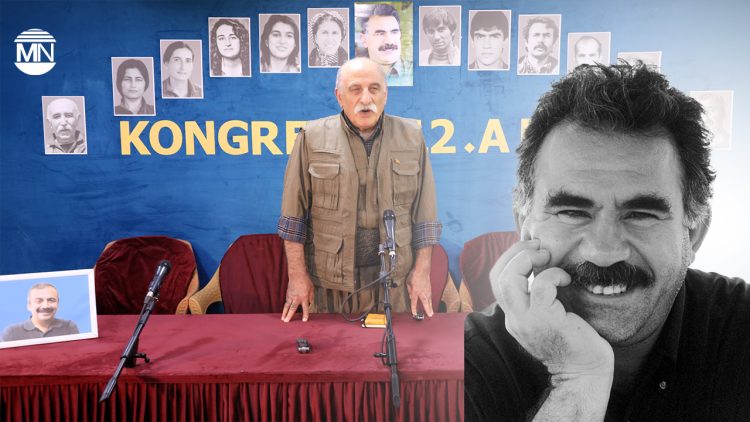
The Kurdistan Workers’ Party (PKK) has announced it is dissolving itself and ending its decades-long armed struggle against the Turkish state — a historic shift reported widely across global media.
The decision marks the end of an insurgency that has claimed more than 40,000 lives—mostly of Kurdish civilians—since 1984. The move follows a February call by the PKK’s imprisoned founder, Abdullah Öcalan, urging the movement to embrace democratic politics over armed resistance.
International media have highlighted the potential for this to be a turning point in Turkish-Kurdish relations and regional stability.
Reuters: “PKK disbands and ends 40-year Turkey insurgency”
Reuters reported that “The PKK 12th Congress decided to dissolve the PKK’s organisational structure… and end the armed struggle”, noting the announcement could “boost NATO member Turkey’s political and economic stability” and impact Syria and Iraq. The outlet also quoted an Equality and Democracy (DEM) Party MP who said the decision is “significant not just for Kurdish people but for the Middle East as a whole”.
BBC: “PKK says it is laying down arms and disbanding”
The BBC’s Orla Guerin and Gabriela Pomeroy reported from Diyarbakır (Amed) that the outlawed group said it had “completed its historical mission” and now believed the Kurdish issue could be “resolved through democratic politics”.
The New York Times: “Kurdish insurgent group says it will end conflict with Turkish state”
The New York Times highlighted the group’s statement that the Kurdish question can be “solved by democratic politics” and quoted analysts saying this could reshape politics beyond Turkey’s borders.
The Washington Post: “PKK says it will end armed struggle”
The Washington Post described the move as a possible end to “a bloody conflict that has killed an estimated 40,000 people,” quoting the spokesperson of Turkey’s ruling Justice and Development Party (AKP) Ömer Çelik, who called it a “turning point”, with the proviso that it includes “all branches and extensions of the PKK”.
France 24: “PKK to disband and end armed struggle with Turkey”
France 24 said the PKK had “completed its historical mission”, and quoted executive committee member Duran Kalkan: “This is not the end, it is a new beginning”.
TF1 (France) reported the end of the “guerilla of more than 40 years” and noted that Öcalan’s February call followed an unexpected mediation initiated by Turkey’s ruling coalition partner Nationalist Movement Party (MHP) leader Devlet Bahçeli.
Der Spiegel and ZDF Heute (Germany) reported on the end of the PKK’s armed struggle and the dissolution of its organisational structure, noting the political and security ramifications.
Deutsche Welle (Germany) cited the party congress held after Öcalan’s call, and quoted the PKK declaring that its struggle had “broken the policy of denial and annihilation” of Kurds.
CNN International described the disbandment as “a historic move” and noted the group’s statement that “rebuilding Turkish-Kurdish relations is inevitable”.
Euronews quoted the PKK saying it had reached “historic” decisions, and referred also to the groupp’s ceasefire, declared on 1 March on condition of a new legal peace framework.
Al Jazeera reported that “activities carried out under the ‘PKK’ name were formally terminated”, and noted growing speculation over the fate of PKK fighters and the regional impact.
Bloomberg framed the decision as boosting thenregional ambitions of Turkish President Recep Tayyip Erdoğan, and quoted the PKK’s call for constitutional recognition of Kurdish identity and language.
El Mundo (Spain) highlighted the end of “one of the longest and deadliest armed conflicts in Europe’s recent history” and the possible impact on Syria and Iraq.
La Vanguardia (Spain) stated that the decision “to disband and lay down arms” was announced after a PKK congress held in northern Iraq, and framed as “a new peace initiative with Turkey”.
Le Monde (France) described the PKK’s decision as ending “a fratricidal war” which had left some 40,000 people dead. It stressed the gravity of the decision for Turkey’s future.
RFI (France) traced the roots of the peace initiative to Öcalan’s call and the mediation efforts by nationalist politician Devlet Bahçeli through the pro-Kurdish DEM Party.
Despite the scale of the PKK’s announcement, initial international media coverage has largely focused on the group’s disarmament and the potential impact on Turkey’s domestic stability and regional dynamics. Broader political demands—such as formal recognition of Abdullah Öcalan’s role in the peace process or calls for a democratic framework to address Kurdish rights—have not yet been addressed in press reports.
So far, no coverage has mentioned the PKK’s continued designation as a terrorist organisation in the European Union and elsewhere, nor have there been reported calls for legal or diplomatic measures to support a longer-term peace process.


