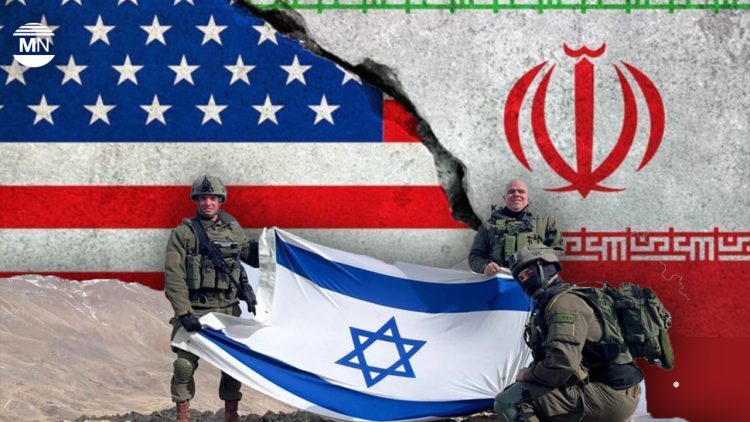
The United States has ordered non-essential staff and eligible family members to leave its embassy in Baghdad. Voluntary departures have also been authorised from diplomatic missions in Bahrain and Kuwait. Analysts have described these measures as extraordinary, emphasising Washington’s growing concern that the region may be on the brink of a broader conflict. On 11 June, US President Donald Trump commented on the latest developments, stating that US personnel were being moved out of the Middle East due to mounting threats and describing the region as ‘it could be a dangerous place’. He reiterated that the United States would not permit Iran to acquire nuclear weapons. The official evacuation order for the US Embassy in Baghdad was issued on the same day, highlighting the perceived urgency in the wake of Trump’s warning. The order also applies to staff at the US General Consulate in Erbil.
The travel advisory issued by the US Embassy in Iraq cited an increased threat to American diplomatic staff, though it did not specify the nature of the danger. It also stated that US government personnel in Baghdad are prohibited from using Baghdad International Airport due to security concerns. However, the timing of the order coincides with mounting speculation about a potential Israeli military operation targeting Iran’s nuclear facilities. This has raised fears of a wave of retaliatory attacks across the region.
Iran has warned that any strike on its territory would have severe regional consequences, potentially including counterstrikes against US military installations. On 11 June, Iran’s defence minister, General Aziz Nasirzadeh, reinforced this position, stating that “all US bases are within our reach” in the event of a conflict, signalling Tehran’s readiness to target American military assets throughout the Middle East.
Tehran has further escalated tensions by threatening to release documents that allegedly reveal Israeli nuclear activities. This appears to be a strategic attempt to shift the balance of regional diplomacy. This claim stems from Iranian intelligence assertions made public in early June 2025, in which they stated they possess thousands of pages of secret Israeli documents, possibly obtained through cyber operations or espionage. On 8 June, Iranian media and officials indicated that these documents would be unveiled ‘soon’ if provoked, suggesting that they would expose secret nuclear projects and Israeli security vulnerabilities.
The move comes in the context of increased scrutiny from the International Atomic Energy Agency (IAEA) following its June 2025 board meeting, as well as a broader debate over regional nuclear transparency. Despite Iran’s assertions, US officials remain sceptical, citing a lack of independent verification of the documents’ existence or authenticity. On 9 June, the IAEA’s director general stated that the materials in question appear to refer to Israel’s Soreq nuclear research centre. While this suggests partial acknowledgement of and alignment with Iran’s claims, the agency did not confirm the documents’ legitimacy. The more sensitive Dimona facility, which the IAEA is not permitted to oversee and which is believed to provide the fuel for Israel’s undeclared nuclear weapons programme, was not mentioned.
Iran also rejected the latest US-backed draft of the nuclear deal, reiterating its intention to continue enriching uranium on its own soil. Instead, Iran announced plans to submit a counterproposal via Oman, further deepening the diplomatic deadlock. Meanwhile, during a podcast interview on 11 June, Trump addressed the issue, stating that he was “less confident now” than he was a couple of months ago that Iran would halt its nuclear programme. He reaffirmed that Iran “will not have a nuclear weapon” and added that, although he favoured a diplomatic solution, he believed Iran to be unwilling to make a deal.
Related Article:
The combination of forced diplomatic withdrawals, unverified nuclear revelations, and failed diplomatic initiatives is making the situation in the region increasingly unstable. While the measures taken by US embassies reflect mounting concern in Washington, officials and analysts are describing them as precautionary rather than as an indication of an imminent conflict. It is suggested that these steps aim to mitigate risks and maintain preparedness as tensions rise. Concerns are particularly acute in light of Israel’s declared readiness for a military offensive and Iran’s continued nuclear activities. Adding to these concerns is Tehran’s diminishing control over its regional proxies, especially in Lebanon and Syria, where Hezbollah’s effectiveness and internal cohesion have come under visible strain.