

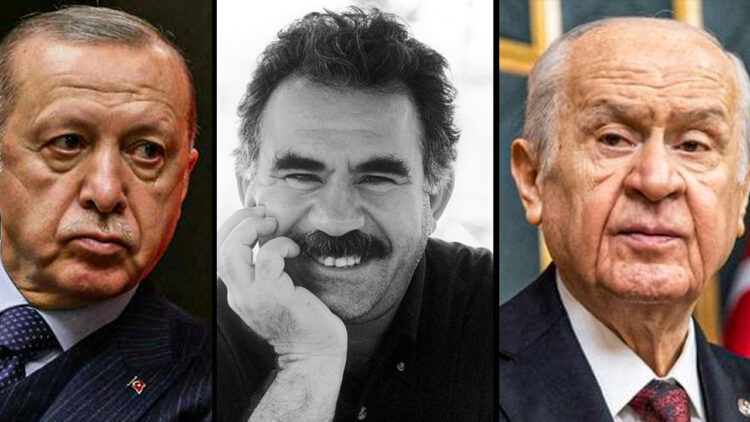
Turkish President Recep Tayyip Erdoğan expressed full alignment with the far-right Nationalist Movement Party (MHP) leader Devlet Bahçeli’s recent comments regarding the Kurdish question, describing it as a “bold and groundbreaking proposal” during the Justice and Development Party (AKP) group meeting in Ankara on Wednesday.
Erdoğan said he and Bahçeli were in “complete agreement” on addressing the long-standing Kurdish conflict, emphasising Turkey’s commitment to eradicating terrorism through military, diplomatic, and legislative strategies. The remarks follow Bahçeli’s statement urging direct engagement between Kurdish groups and the Kurdistan Workers’ Party (PKK) leader Abdullah Öcalan, drawing political focus to the Peoples’ Equality and Democracy (DEM) Party’s recent petition for dialogue.
“Every decision we make serves the national interest. Bahçeli’s proposal breaks taboos. We are committed to building a terror-free Turkey, dismantling barriers between Turks and Kurds,” Erdoğan said.
Meanwhile, Justice Minister Yılmaz Tunç confirmed that DEM Party co-chairs Tülay Hatimoğulları and Tuncer Bakırhan had filed a formal petition to meet with Öcalan in prison. Speaking to reporters before the AKP meeting, Tunç stated the request was under evaluation. “We will respond within a reasonable timeframe, in line with regulations governing prisoner communications,” he noted.
Erdoğan also hinted at a broader security initiative targeting Turkey’s southern border. “We will clear threats from the Mediterranean to the Iranian frontier, ensuring our nation’s safety. Terror groups’ increasing aggression in Syria signals their desperation,” he said, adding that military and diplomatic steps are planned for next year.
The opposition remains sceptical, highlighting potential political motives and ongoing oppressions against Kurdish politicians, mayors, journalist, and activists behind the proposals. While Erdoğan and Bahçeli reaffirmed their partnership within the People’s Alliance, the controversial petition and growing tensions in the Middle East keep the Kurdish question at the centre of Turkey’s political landscape.


