

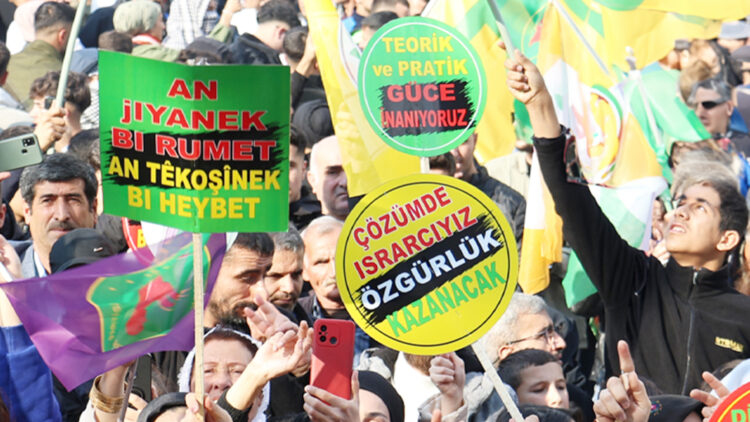
Kurdish political commentator Selahattin Erdem’s recent opinion piece in Yeni Özgür Politika highlights a critical moment in Turkey’s political discourse on the Kurdish question and Abdullah Öcalan’s isolation. Pointing to a remarkable shift in political and media narratives, Erdem describes how the long-standing ‘fascist-colonial ban’ on discussing Öcalan and Kurdish issues on mainstream platforms has been broken. These once-silenced issues have now moved to the forefront of Turkey’s political agenda, sparking widespread and often heated debate.
While welcoming this new openness, Erdem acknowledges the mixed nature of these discussions: they offer a chance for a more democratic and solution-oriented approach to the Kurdish question, but also expose entrenched prejudices and resistance to change. Nevertheless, he sees this openness as a positive step towards addressing the historic Kurdish question.
Divergence in Turkish politics and media
Erdem identifies a significant divergence in Turkey’s political and media landscape, catalysed by these debates. He outlines three key trends that are shaping the current discourse:
The first trend is the exploration of alternative methods by figures such as Devlet Bahçeli and President Recep Tayyip Erdoğan. While these leaders have not abandoned their goal of neutralising the PKK, they appear to be reassessing their strategies in the light of past failures. Figures such as CHP leader Özgür Özel have also aligned themselves with this approach, reflecting a wider recalibration within Turkey’s main political blocs.
The second trend is the continuation of ultra-nationalist and militarist rhetoric, led by figures such as Ümit Özdağ of the Victory Party. These groups, described by Erdem as “war profiteers”, continue to oppose Kurdish rights, use inflammatory language and resist moves towards reconciliation.
The third trend consists of those who are reluctant to engage fully in the ongoing debates. Erdem criticises this group, which includes many self-proclaimed democrats and intellectuals, for their reluctance to take a clear stance. He argues that their inaction inadvertently strengthens reactionary forces and impedes progress.
Regional and global dynamics at play
Erdem links this divergence to broader regional and global developments, including the escalating dynamics of the Third World War in the Middle East. He highlights the impact of recent geopolitical shifts, such as Israel’s aggressive moves against Hamas and Hezbollah, which have prompted Turkish policymakers to rethink their anti-Kurdish strategies.
The Turkish political establishment is beginning to realise that suppressing Kurdish identity and targeting the PKK will not lead to stability. This realisation has opened the door for figures like Bahçeli to consider dialogue as a viable alternative.
What lies ahead?
Erdem concludes by stressing the importance of maintaining and strengthening the current momentum towards a democratic solution. He warns against complacency and urges progressive forces to challenge reactionary rhetoric and support ways that emphasise Abdullah Ocalan’s leadership and the Kurdish freedom movement as integral to the resolution of the Kurdish question.
Erdem’s analysis underscores a crucial juncture in Turkey’s history, where divergence on the Kurdish question presents both risks and opportunities. The trajectory of these discussions will shape Turkey’s democratic development and its approach to resolving one of its most pressing issues.


