

The Turkish government granted Equality and Democracy (DEM) Party MPs Sırrı Süreyya Önder and Pervin Buldan access to İmralı Island on Saturday 28 December 2024 to meet with Abdullah Öcalan, the leader of the Kurdistan Workers’ Party (PKK). The visit concluded in the afternoon of the same day, a DEM party statement announced.
This visit follows an earlier meeting on 23 October 2024, when another DEM Party MP, Ömer Öcalan, who is also a nephew of Abdullah Öcalan, conveyed a message from the Kurdish leader stating his readiness to engage in dialogue if the legal and political conditions provided. Öcalan’s statement, “The isolation continues”, underlined his ongoing commitment to peaceful resolution despite 25 years and 10 months years of imprisonment, since 16 February 1999.
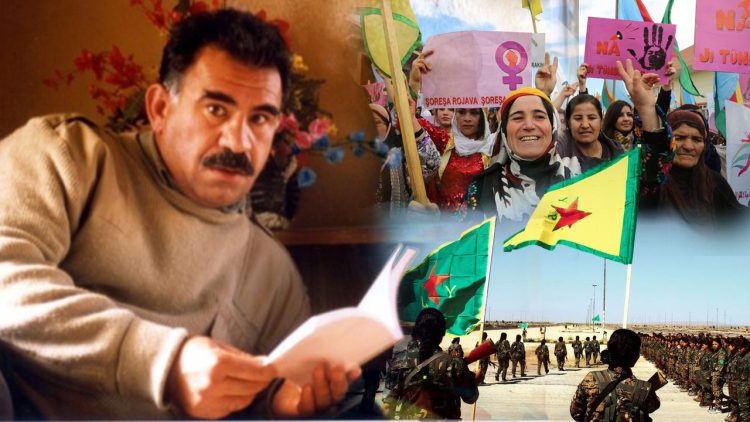
The meeting comes at a critical juncture as Turkey intensifies its attacks on the Democratic Autonomous Administration of North and East Syria (AANES). Turkish-backed groups and Ankara’s military operations have targeted key areas such as Manbij (Minbîc) and Kobani (Kobanê), core regions of the autonomy project inspired by Öcalan’s model of democratic confederalism. These attacks, marked by airstrikes and ground incursions, aim to destabilise the region, displace its Kurdish population and weaken the Syrian Democratic Forces (SDF), although these have been central to the defeat of ISIS.
The AANES, established as a multi-ethnic, democratic governance system, follows Öcalan’s principles of gender equality, grassroots democracy and environmental sustainability. The system has become a symbol of resistance against authoritarian regimes and jihadist groups, positioning Öcalan as not only a leader of the Kurds in Turkey but also of the Kurds in Syria and other parts of the Middle East.
Abdullah Öcalan’s ideological influence has been a cornerstone of the struggle of the Syrian Kurds for self-governance. The AANES has consistently referred to Öcalan’s writings and leadership as foundational to their model. This connection makes the current Turkish-backed assaults on the region an attack on Öcalan’s paradigm itself, highlighting his role as a transnational Kurdish leader.
While the visit by DEM Party officials has sparked speculation about the resumption of peace talks between Ankara and the PKK, scepticism runs deep. Turkish President Recep Tayyip Erdoğan’s track record, of abandoning peace talks in 2015 followed by years of intensified oppression against the Kurds, leaves many doubting the sincerity of the government’s intentions. Critics argue that Erdoğan’s history of manipulating Kurdish issues for political gain, coupled with his domestic and regional ambitions, casts a shadow over any optimism.
The implications of Öcalan’s potential message extend beyond Turkey’s borders. Any shift in Ankara’s approach could influence the broader dynamics in North and East Syria, particularly as the SDF faces mounting challenges defending the region against Turkish-backed incursions, while at the sme time continuing to hold the responsibility for the detention of thousands of ISIS prisoners. International actors, including the United States, have a stake in the stability of the AANES, which has served as a reliable partner in the fight against terrorism.
As the visit concludes and the Kurdish community and broader political landscape await Öcalan’s message, there are still many who question whether this visit signals a genuine move toward political resolution, or whether Ankara has ulterior motives behind the move.
The delegation announced upon leaving the island that it would share detailed information and assessments regarding the meeting with Öcalan with the press and public in the following hours.


