

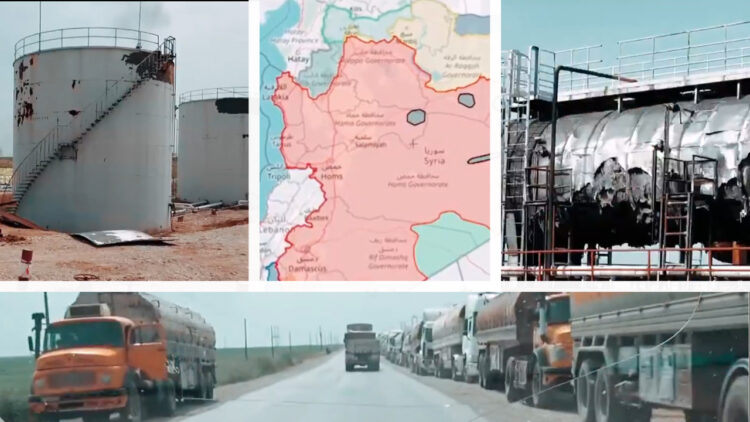
A new BBC documentary has turned the spotlight on Turkey’s war on water in North and East Syria, where a campaign of air strikes targeting energy infrastructure and control over a crucial water pumping station have left a million people suffering severe water shortages and on the brink of a humanitarian catastrophe.
“Turkey carried out more than 100 attacks between October 2019 and January 2024 on oil fields, gas facilities and power stations in the Kurdish-held Autonomous Administration of North and East Syria (AANES),” the BBC World Service report as part of a series profiling communities on the frontlines of climate change. “The attacks have added to the humanitarian crisis in a region reeling from a years-long civil war and four years of extreme drought exacerbated by climate change.”
The documentary itself profiles “the engineers and tanker drivers trying to get water to those needing it most”, showing locals pleading with drivers to access water being delivered to schools, orphanages, hospitals and the needy. “Water is more precious than gold here,” Ahmad al-Ahmed, a tanker driver, is quoted as saying. “People need more water. All they want is for you to give them water.”
A situation report prepared by the UN Office for the Coordination of Humanitarian Affairs, further documents the disruption caused to civilian life by Turkish airstrikes in northern Syria. Fuel, electricity and water supplies have been disrupted in 11 towns and 2,750 villages, affecting more than 1 million people since October 2023, the UN office said, stating that systematic attacks on basic services have worsened the region’s humanitarian crisis.
🔴#SHORTFILM | ‘Rojava Bombed But Still Standing’, a new short film by video journalist Chris Den Hond (@chris_hond). Watch here:#Rojava | #ShortFilm
🔗https://t.co/edLx9HNW8W pic.twitter.com/NFClijE9Fp— MedyaNews (@1MedyaNews) November 2, 2024
According to the BBC, the AANES has previously accused Turkey of seeking to “destroy our people’s existence”. The report quotes a NASA scientist who attests to the widespread blackouts caused by Turkey’s attacks on energy infrastructure in the region, visible through satellite imagery.
Turkey claims its attacks form part of an anti-terror campaign, in which it targets the US-allied Syrian Democratic Forces (SDF) on the basis of their alleged links to the banned Kurdistan Workers Party (PKK). However, the SDF denies any formal links to the PKK, and argues that the attacks imperil civilians, endanger their crucial role in the ongoing fight against ISIS, and dangerously destabilise a region suffering the ravages of years of civil war.
The Turkish army has bombed infrastructure such as power stations, factories, irrigation canals and drinking water towers, as well as agricultural land, olive groves and orchards in the region numerous times over the past few years.A Rojava Information Centre report from January revealed the catastrophic regional impact of Turkish airstrikes.


