

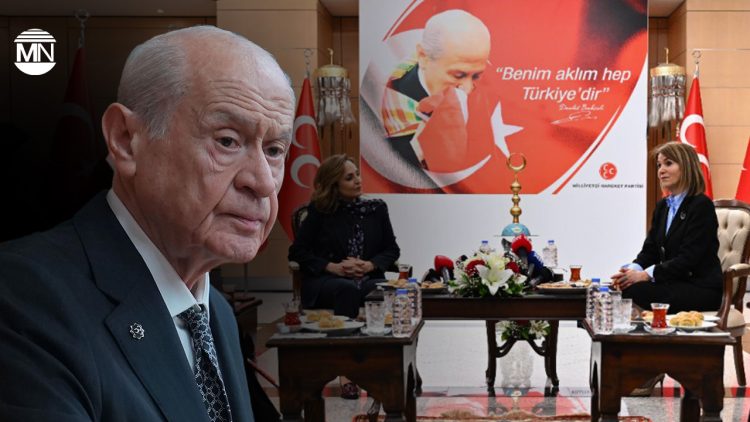
Devlet Bahçeli, leader of the Nationalist Movement Party (MHP), has centred his vision for Turkey on “building a structure everyone feels part of”, paired with the principle of an “Everyone equal Turkey.” In a comprehensive Eid al-Fitr statement to the Türkgün newspaper on Monday, he urged all citizens to unite as the Kurdistan Workers’ Party (PKK) considers disarming for political reconciliation with the Turkish state.
“What matters is building a structure everyone feels part of,” he stated, casting it as vital to a new political and social era.
The push follows a 27 February appeal from Abdullah Öcalan, the PKK’s imprisoned founder, who urged the group to lay down arms in a ‘Call for Peace and Democratic Society.’ Bahçeli called it a historic opportunity, saying, “It is in our hands to turn this expectation into joy, not disappointment.” He advocated swift steps, stating, “Weapons must be surrendered, and a congress swiftly convened to enact the dissolution of the PKK with all its components.” Unlike past rhetoric, he avoided naming Malazgirt, a city in eastern Turkey tied to nationalist symbolism, as the congress location, suggesting a wider perspective.
Bahçeli’s statement, centred heavily on the Kurdish reconciliation process, follows criticism from Kurdish sources noting that a month has passed since Öcalan’s call without any state action being taken.
The pro-Kurdish Peoples’ Equality and Democracy (DEM) Party co-chair Tuncer Bakırhan highlighted this delay at a parliamentary meeting in Ankara on 18 March, noting there had been a month of state inaction in spite of a unilateral PKK ceasefire. “Mr Öcalan took the first pedal stroke with great courage and responsibility. Now, it is the government’s and the state’s turn to pedal,” he said, urging Ankara to act, and warning of provocations.
In his long statement, Bahçeli talks of “Turkish nation” and “Turkish culture” but avoids exalting or imposing “Turkishness” as in the past, instead favouring “Turkey” and “Turkey Party” to widen inclusivity. While he still calls the PKK a “separatist organisation”, such terms are peripheral to his core message.
Bahçeli proposed reforms, including a new constitution based on “justice and equality”. “We invite everyone to build Turkey’s blessed future together,” he said, adding, “Avoiding delays and taking ownership are the top priorities.”
This vision was echoed during unprecedented Eid al-Fitr visits between the MHP and the DEM Party. On Monday, an MHP delegation led by General Secretary İsmet Büyükataman, went to the DEM Party’s offices in Ankara, marking the first of such visits for Eid. Concurrently, a DEM Party delegation, led by spokesperson Ayşegül Doğan, visited the MHP headquarters, reflecting a reciprocal exchange initiated on the second day of the holiday.
These visits followed an earlier meeting on 17 March, when DEM Party co-chairs Tülay Hatimoğulları and Tuncer Bakırhan visited the MHP to discuss peace efforts tied to Öcalan’s peace call, though Bahçeli did not attend due to health issues on that occasion.
At the DEM Party offices, MHP General Secretary İsmet Büyükataman said, “Days like these strengthen our bonds of brotherhood,” noting outreach to all parties except the Republican People’s Party (CHP), to which the DEM Party’s Öztürk Türkdoğan replied, “We can build a new Turkey within an honourable peace,” linking it to Öcalan’s appeal.
Türkdoğan raised the matter of arrests linked to protests against police operations targeting İstanbul Municipality, adding, “We want a democratic Turkey where the will of the people is respected.” Deputy Chair Yüksel Mutlu condemned the appointment of trustees to replace elected officials, saying, “People shouldn’t be in prison for their thoughts or democratic rights.”
Speaking at the MHP headquarters, the DEM Party’s Ayşegül Doğan warned, “Turkey faces a historic opportunity, but risks must be addressed—words spoken cannot be delayed,” envisioning a “more democratic, equal and just” nation. MHP’s Zuhal Topçu responded: “An important process has begun; our leader has taken the first step.” He agreed with an earlier point from Doğan that Turkey’s public is weary of war, amid “global pressures”, and talked of a “thousand-year tradition” of culture, to be revived together, hand in hand.


