

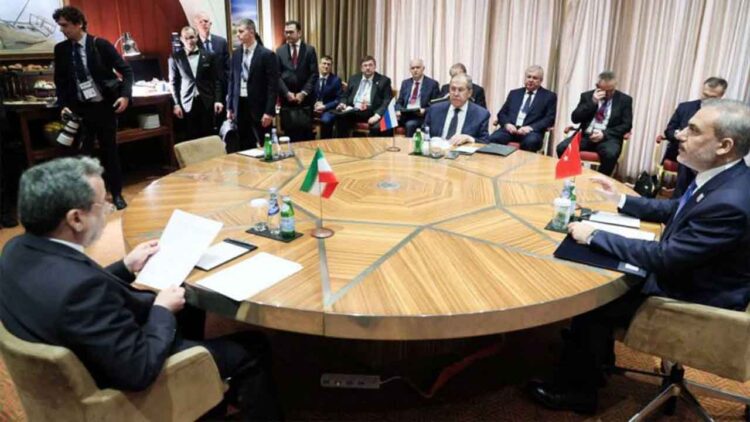
At a high-level meeting in Doha, Qatar, on 7 December, foreign ministers from Arab countries and the Astana Process, including representatives from Qatar itself, Saudi Arabia, Turkey, Russia and Iran, issued a joint statement on the Syrian crisis. The statement highlighted the grave risks posed by the ongoing conflict to national, regional and international security. It called for an immediate cessation of military operations, a political process based on UN Security Council Resolution 2254, and measures to preserve the unity, sovereignty and territorial integrity of Syria. In addition, the statement underlined the urgency of increasing humanitarian aid and enabling the safe and voluntary return of displaced persons.
Russian Foreign Minister Sergey Lavrov strongly condemned the presence of extremist groups such as Hay’at Tahrir al-Sham (HTS) on Syrian territory. Lavrov stressed that allowing terrorist groups to control parts of Syria undermines the country’s sovereignty and violates international agreements. He reiterated Russia’s commitment to supporting the Syrian government and maintaining stability, while calling for dialogue between legitimate opposition forces and the state. Lavrov also warned against geopolitical manipulation by extremist groups and stressed that the integrity of Syria remains a priority for Russia, Iran and Turkey.
These discussions coincided with a dramatic shift in Syria’s political landscape, as HTS-led militias seized control of Damascus and Homs, forcing President Bashar al-Assad to flee to an undisclosed location. While the collapse of the Assad regime signals the end of a long-standing government, Lavrov’s remarks reflect the complexities and potential risks associated with this power vacuum. Russia’s insistence on protecting Syria’s sovereignty and fighting extremism highlights the uncertainties surrounding the future of the region, as the balance of power continues to shift amid escalating tensions.


