

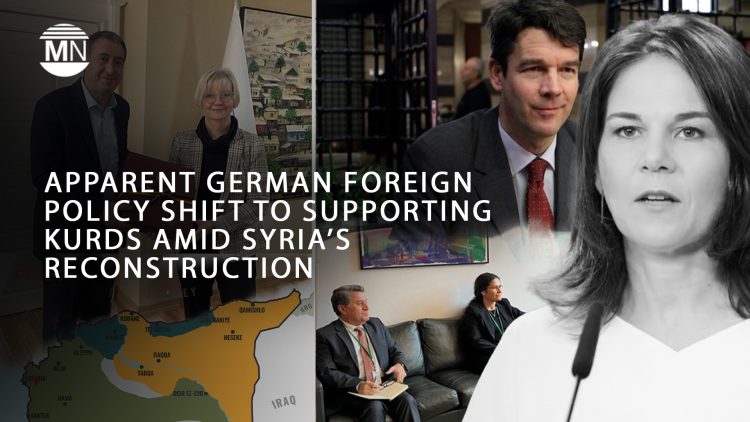
Germany, long seen as a steadfast ally of Turkey, is shifting its stance in the face of growing tensions in northern Syria. As Turkey intensifies its military operations and lobbying to exclude Kurds from Syria’s political future, Germany has taken a surprising turn to support Kurdish autonomy and deter Turkish aggression.
German Foreign Minister Annalena Baerbock recently issued a firm statement emphasising the importance of de-escalation and Kurdish inclusion in Syria’s rebuilding process. Her visit to Ankara was marked by strong warnings to Turkish officials about the consequences of continued attacks on Kurdish forces and civilian areas.
Baerbock’s message signals a shift in German policy, breaking from decades of close ties with Turkey, including a history of supporting the Turkish state against Kurdish political movements.
Engagement with Kurdish Representatives
Special envoy to Syria Stefan Schneck’s recently held talks with Syrian Democratic Forces (SDF) Commander Mazloum Abdi were focused on integrating Kurdish rights into Syria’s national framework.
“These discussions aim to make Kurdish rights a national agenda for uniting Syria,” Schneck stated in an interview. Germany has also taken steps to facilitate de-escalation, with Tobias Tunkel, Director for the Middle East at Germany’s Federal Foreign Office, meeting with AANES diplomats including İlham Ahmed, as well as Abdulkerim Omer in Berlin.
Germany’s ambassador to Turkey, Sibylle Katharina Sorg, visited the DEM Party’s headquarters in Ankara, further emphasising the importance of Kurdish representation in Syria’s future. This visit marked a rare acknowledgment of Kurdish political actors by German officials.
A Historical Shift in German-Turkish Relations
Germany’s recent moves reflect a significant break from its historical alignment with Turkey. For decades, Germany supported Ankara’s policies, often at the expense of Kurdish rights. Kurdish political movements in Germany faced restrictions, with widespread criminalisation and oppression of Kurdish activists. People were arrested for displaying the flag of the AANES’ Womens’ Protection Forces (YPJ) and Peoples’ Protection Forces (YPG), meanwhile the Kurdistan Workers’ Party remains illegal.
This historic relationship dates back to the Ottoman era and was solidified during World Wars I and II, when Germany and Turkey were allies. However, as Turkey’s aggression in northern Syria escalates and its exclusionary policies towards Kurds persist, Germany appears to be rethinking its strategic priorities.
“Turkey must understand that destabilising northern Syria is not in anyone’s interest,” said a German official involved in Middle East diplomacy.
Implications for the Future
Germany’s growing support for Kurdish autonomy has significant implications for the reconstruction of Syria. Schneck has stressed the importance of Kurdish rights in ensuring a stable and unified Syrian state. Meanwhile, Baerbock’s warnings to Ankara highlight Germany’s willingness to challenge its long-standing ally in favour of regional stability.
Related Articles :
Germany strengthens military ties with Turkey, ignores concerns around Kurdish rights
Germany resumes massive arms sales to Turkey
This shift aligns with broader European calls for dialogue and inclusivity in Syria’s reconstruction. As Kurdish representatives engage in discussions with both Damascus and international actors, Germany’s backing could play a pivotal role in shaping Syria’s political future.


