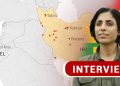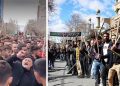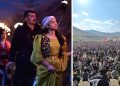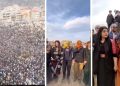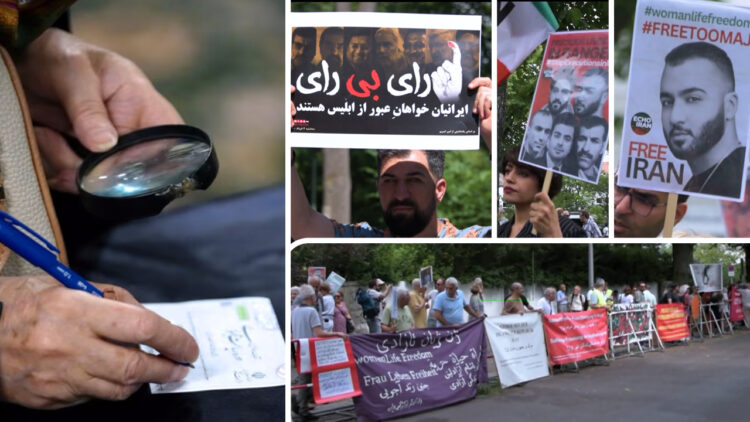
Dozens of civil and political activists within Iran and abroad have declared their intention to boycott the second round of presidential elections, scheduled for 5 July. They also urged the public to refrain from participating. A US Department of State official has remarked that the elections in Iran lack democratic integrity.
Influenced by the Jin Jiyan Azadî (Women, Life, Freedom) uprising, the loss of freedom under the authoritarian regime of the Republic of Iran, widespread public despair, and the heavy toll of Western sanctions, last Friday’s first round of the presidential elections was boycotted by political groups and parties from Iranian Kurdistan (Rojhilat) and other parts of Iran.
Consequently, none of the presidential candidates achieved a majority of votes, and the government’s reported participation rate of 39.9% seems inaccurate. Friday will be crucial for those opposing the Islamic Republic of Iran, including both fundamentalists and reformists, especially those who boycotted the first round.
Alongside the political entities, civil activists, democrats and clerics also called for a boycott on the second round. Fifty-five civil and political activists, both within Iran and outside, published a statement on 1 July urging the public to boycott the upcoming elections. They asserted that transitioning from Iran’s oppressive conditions to a pluralistic democracy requires dialogue and solidarity between the country’s progressive, intellectual and fighting forces.
The activists called on the “people of Iran, in pain and aware” to pave the way for the collapse of the regime by refusing to participate in the elections. Among the notable signatories were imprisoned Nobel laureate Narges Mohammadi, other human rights activists including Pouran Nazimi, Sholeh Pakrovan and Abbas Vahidian Shahroudi, and dissident Iranian filmmaker Mohammad Nourizad.
The activists stated that any political participation or any vote for powerless, hand-picked government candidates would be a bitter and dark irony given the killing of Iranian protesters in 2018, 2019 and during the Jin Jiyan Azadî uprising.
Other prominent figures joined various well-known groups from Iran and Kurdistan to call for a boycott, such as Gohar Eshghi, a mother turned civil activist at the state-killing of her son; Mozhgan Ilanlou, a documentary filmmaker supporting the anti-regime women’s rights protests; and Sepideh Reshno, an imprisoned translator.
In response to the widespread boycott, Mohammad Javad Zarif, the former Minister of Foreign Affairs of Iran and advisor to the reformist candidate Masoud Pezeshkian, acknowledged the public’s disillusionment with the efficiency of Iran’s governance. But he urged the people to participate in the elections despite this, for the sake of a better future. Zarif highlighted the threat posed by fundamentalists gaining seats in Iran.
Nevertheless, activists and civil groups in Iran and Iranian Kurdistan believe that neither of the two candidates in Friday’s election will be able to address critical issues such as human rights, freedom of expression, women’s rights, the pervasive influence of the Islamic Revolutionary Guard Corps (IRGC) and Iran’s foreign policy, due to the restrictive structure of the Islamic Republic and their vote-seeking efforts.
Although Pezeshkian has garnered some reformist support, his past positions —advocating for compulsory hijab in 2010, backing the strengthening of the Revolutionary Guards, and endorsing actions that provoke regional tension, for instance— still cast him, in voters’ eyes, as an integral part of the authoritarian regime of the Islamic Republic of Iran.
Analysts argue that the presidential election boycott has created an opportunity to “rebuild” social movements within the country, bolstering social resistance aimed at challenging the dictatorship. Proponents of democracy in Iran stress the need to integrate this strategy across multiple dimensions of the movement, including workers’ groups, Kurdish issues, women’s resistance, and the efforts of marginalised communities.