Rethinking coexistence in Turkey: Öcalan’s call for a new Social Contract
After eight meetings with Abdullah Öcalan since October, a new reconciliation process gains momentum. The imprisoned Kurdish leader’s call for a “brotherhood-based contract” challenges the deep-rooted nationalist framework of the 'Turkishness Contract' (Türklük Sözleşmesi) hinting at a democratic and inclusive political future.
Since the onset of a reconciliation process in October 2024, Turkey has been experiencing a cautious yet continuous shift towards renewed dialogue. Despite widespread scepticism fuelled by the ruling government’s past decade of failed peace initiatives—most notably the collapse of negotiations between 2013 and 2015—developments have continued step by step. Public distrust remains high, given the long history of broken promises dating back to 1993. However, the renewed commitment of Abdullah Öcalan, the imprisoned Kurdish leader and central architect of past negotiations, marks a significant shift. His determination remains steadfast despite the recent loss of his trusted intermediary, Sırrı Süreyya Önder, whose vibrant personality and unique capacity for mediation had played a vital role in earlier phases of this process.
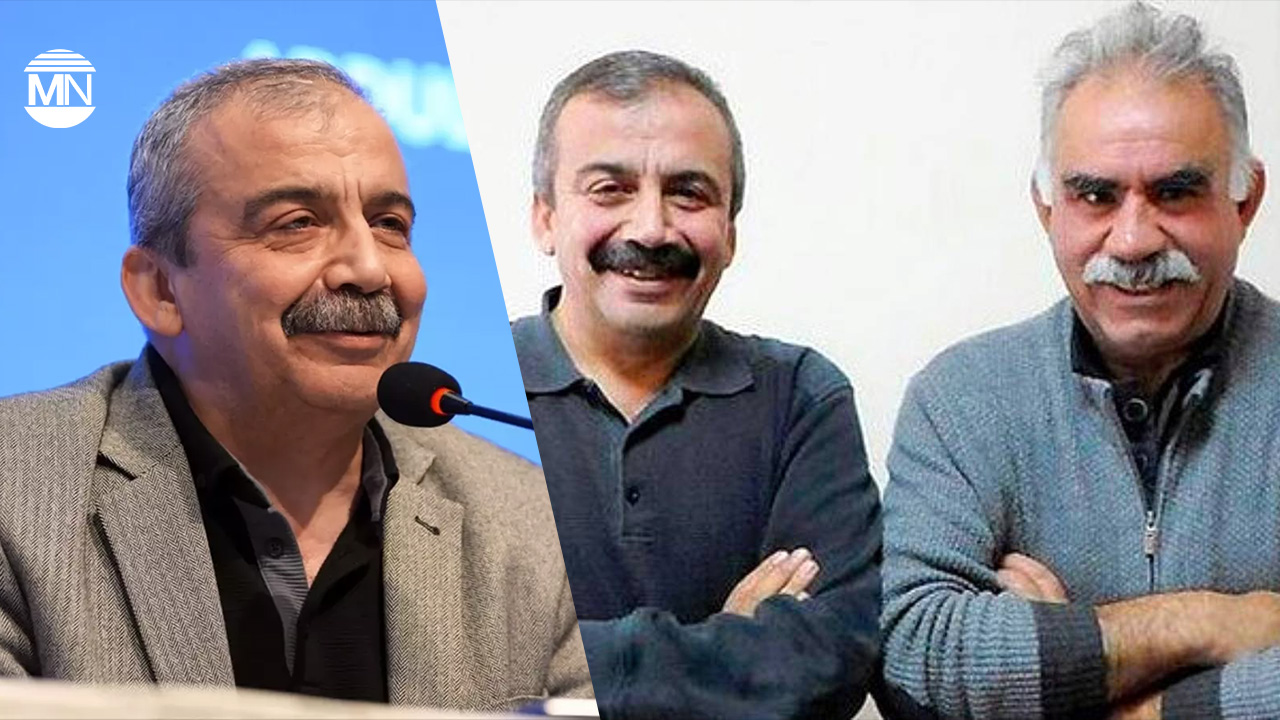
From the early days of peace to a historic call: A rare photo of Sırrı Süreyya Önder standing beside Abdullah Öcalan during the initial phase of the 2013–2015 peace process, alongside a second image from Öcalan’s 27 February 2025 call, again featuring Sırrı—marking his continued presence across two defining moments in the Kurdish struggle for peace.
Since October, there have been eight meetings with Öcalan—following a 43-month period of absolute incommunicado detention during a total 26 years of predominantly isolated detention—marking a significant shift in the political climate. In his most recent meeting on 18 May, Öcalan reiterated his call for a democratic reconciliation process rooted in a redefined social contract.
A call beyond peace: The framework of a New Contract
In his most recent message, dated 18 May and conveyed via the İmralı delegation, Öcalan called for a “new contract based on the law of brotherhood”. This call is not merely a plea for peace but a radical intervention that unsettles the foundations of Turkish citizenship, nationalism, and the state’s ideological scaffolding. His proposal has been met with diverse responses, notably from Mümtaz’er Türköne, a conservative intellectual once associated with nationalist currents, who drew parallels between Öcalan’s statement and the philosophical lineage of the social contract. These convergences highlight an emerging rupture with what Barış Ünlü has termed the “Türklük Sözleşmesi” (Turkishness Contract), a tacit yet potent mechanism that has historically regulated Turkish identity by excluding and denying difference.
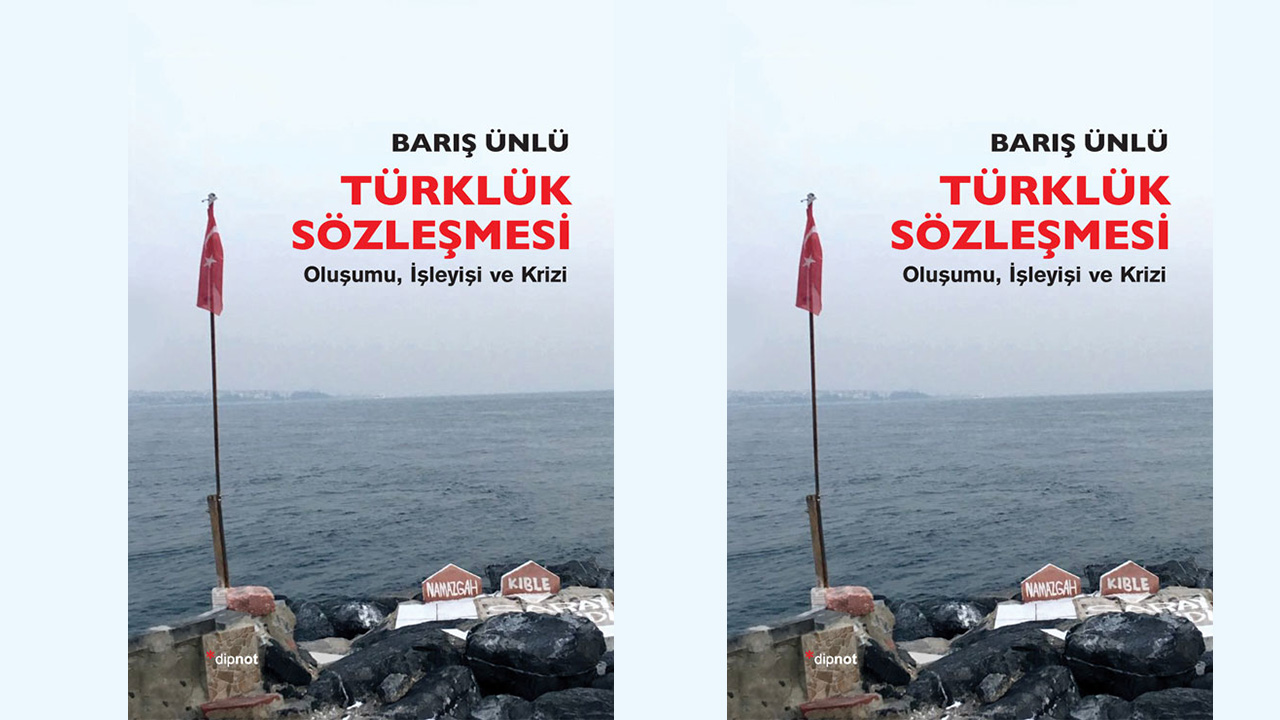
Türklük Sözleşmesi (Turkishness Contract) is a 2018 book by Barış Ünlü, arguing that Turkish national identity is shaped by an unwritten but deeply internalised set of norms. Ünlü suggests that Turkishness is not only about seeing, feeling, and knowing certain things—but also about not seeing, not feeling, and not knowing.
Barış Ünlü’s influential analysis conceptualises Turkish identity as more than a legal or civic status. It operates as an embodied contract requiring individuals—especially Kurds, Alevis, Armenians, and other minorities—to participate in a hegemonic narrative by erasing their distinct identities. This performative framework sustains a version of Turkishness rooted in Sunni, ethnically Turkish, and nationalist ideals, and marginalises those who do not conform. Ünlü writes:
“A person shaped by Turkishness constantly sees certain things while never seeing others; constantly becomes informed about certain things while remaining uninformed about others; constantly feels emotions about certain things while remaining indifferent to others.”
In stark contrast, Öcalan’s most recent intervention rejects this model entirely. He reframes the longstanding conflict not simply as a political impasse but as a fractured kinship between Turks and Kurds.
Declaring, "What has been broken is the sibling relationship... we are repairing the roads and bridges," Öcalan positions reconciliation as an ethical and relational imperative. His call for a new social contract implies a paradigmatic shift: one that decentres state ideology in favour of mutual recognition, equal dignity, and democratic coexistence among diverse peoples.
Unexpected convergences: Türköne reads Rousseau with Öcalan
Surprisingly, Türköne’s article titled ‘A New Contract’ aligns with this vision. Historically known for his nationalist conservatism, Türköne now engages Öcalan’s framing through the lens of Rousseau’s social contract theory. He argues that Öcalan’s proposal reorients negotiations away from a statist paradigm, proposing instead a foundational agreement between peoples—Kurds and Turks as co-equals. Importantly, this concept situates the people, not the state, as the sovereign authors of political legitimacy. Such a framing challenges long-standing narratives that centralise the state as the sole arbiter of unity and law.
Within the context of Turkey’s political culture, this is a radical shift. The traditional state model, often inspired by Hobbesian principles of authority and order, has historically sanctioned the repression of Kurdish identity in the name of cohesion. Rousseau’s model, which Türköne invokes, foregrounds consent, equality, and popular sovereignty. He reminds readers that in Rousseau’s theory, the state is not a signatory to the social contract; it exists only to serve the general will of free and equal individuals.
Toward an egalitarian future
This intellectual and political shift—towards a people-centred, egalitarian contract—carries profound implications. It begins to unsettle the assumptions of the Türklük Sözleşmesi by opening space for real coexistence rather than hierarchical tolerance.
When Türköne challenges Turkish society to meet the Kurds as equals, he echoes, whether intentionally or not, the central critique advanced by Ünlü: that Turkish identity has long depended on systemic erasure and enforced silence. As Ünlü succinctly puts it, “Turkishness can only survive through ignorance.” (Türklük Sözleşmesi, p.60)
The evolution of Öcalan’s thought is central to this shift. From his early days as a Marxist-Leninist revolutionary to his later writings on democratic confederalism, Öcalan has increasingly turned toward non-statist, participatory models of political organisation. His appeal for a new contract is grounded in the PKK’s recent 12th Congress decision to end armed struggle and embrace peaceful political engagement. The message also gestures towards transnational solidarity, referencing figures such as Alain Badiou and Slavoj Žižek, and calling for a global struggle rooted not in nationalism but in radical democracy.
In Öcalan’s framework, the nation is reimagined not as an exclusive ethnic or religious community but as a voluntary association of equals and diversified and democratic in unity, mostly named as ”democratic nation”. Cultural and linguistic diversity is not a threat to unity but a resource for democratic flourishing.
Öcalan's metaphor of rebuilding roads and bridges speaks to the material and symbolic work required to mend the fractures created by the Türklük Sözleşmesi.
This work cannot rest solely with Kurds or their representatives. As Türköne notes, genuine peace demands reciprocal transformation. The Turkish public must grapple with its complicity in perpetuating the status quo. Recognition of Kurdish language rights, constitutional reform, and meaningful guarantees of equality are not concessions but preconditions for a new, inclusive national contract. As Ünlü notes, many of the negative aspects of Turkishness are unconsciously enacted through what he terms the “contracts of insensitivity and ignorance”, reinforcing structural exclusion.
The present moment—characterised by the PKK’s disarmament, renewed parliamentary engagement, and cautious international support—presents a unique historical opportunity. The European Union’s interest in the peace process could play a facilitating role, if translated into actionable political support and legal frameworks.
What is at stake is not merely the resolution of an armed conflict but the redefinition of the political community itself. The dismantling of the Türklük Sözleşmesi and the tentative emergence of a pluralistic, inclusive social contract suggest not the dissolution of the Republic but its possible democratic rebirth.
Rousseau’s oft-quoted line—”Man is born free, yet everywhere he is in chains”—finds renewed relevance in Turkey’s current juncture. The challenge now is whether Turkish society can unshackle itself from historical denial and embrace a vision of democratic renewal built on mutual recognition and equal dignity.
*Sinan Önal is a political scientist, currently an envoy of the Kurdistan National Congress (KNK), who formerly acted as an adviser in policy-building and international affairs to the left-wing alternative and pro-Kurdish parties DTP, BDP, and HDP in Turkey. Mr Önal also represented the pro-Kurdish party in the United States in 2012/2013, and in Germany in 2017/2018.
We use cookies on our website to give you the most relevant experience by remembering your preferences and repeat visits. By clicking “Accept All”, you consent to the use of ALL the cookies. However, you may visit "Cookie Settings" to provide a controlled consent.
This website uses cookies to improve your experience while you navigate through the website. Out of these, the cookies that are categorized as necessary are stored on your browser as they are essential for the working of basic functionalities of the website. We also use third-party cookies that help us analyze and understand how you use this website. These cookies will be stored in your browser only with your consent. You also have the option to opt-out of these cookies. But opting out of some of these cookies may affect your browsing experience.
Necessary cookies are absolutely essential for the website to function properly. These cookies ensure basic functionalities and security features of the website, anonymously.
Cookie
Duration
Description
cookielawinfo-checkbox-analytics
11 months
This cookie is set by GDPR Cookie Consent plugin. The cookie is used to store the user consent for the cookies in the category "Analytics".
cookielawinfo-checkbox-functional
11 months
The cookie is set by GDPR cookie consent to record the user consent for the cookies in the category "Functional".
cookielawinfo-checkbox-necessary
11 months
This cookie is set by GDPR Cookie Consent plugin. The cookies is used to store the user consent for the cookies in the category "Necessary".
cookielawinfo-checkbox-others
11 months
This cookie is set by GDPR Cookie Consent plugin. The cookie is used to store the user consent for the cookies in the category "Other.
cookielawinfo-checkbox-performance
11 months
This cookie is set by GDPR Cookie Consent plugin. The cookie is used to store the user consent for the cookies in the category "Performance".
viewed_cookie_policy
11 months
The cookie is set by the GDPR Cookie Consent plugin and is used to store whether or not user has consented to the use of cookies. It does not store any personal data.
Functional cookies help to perform certain functionalities like sharing the content of the website on social media platforms, collect feedbacks, and other third-party features.
Performance cookies are used to understand and analyze the key performance indexes of the website which helps in delivering a better user experience for the visitors.
Analytical cookies are used to understand how visitors interact with the website. These cookies help provide information on metrics the number of visitors, bounce rate, traffic source, etc.
Advertisement cookies are used to provide visitors with relevant ads and marketing campaigns. These cookies track visitors across websites and collect information to provide customized ads.