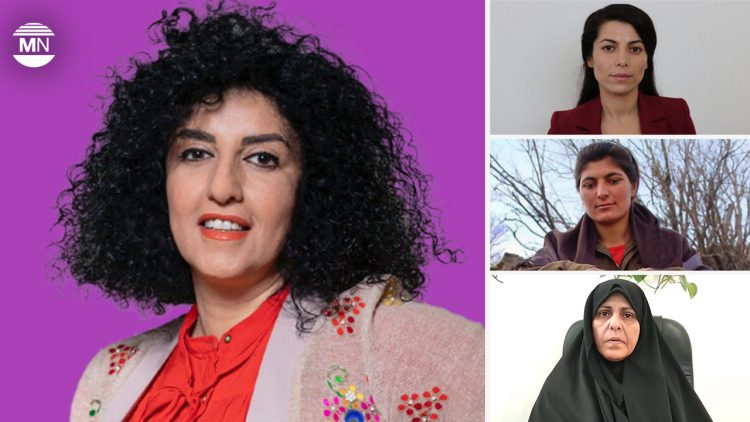
Iranian authorities are facing mounting international criticism over their threat to return Nobel Peace Laureate and human rights activist Narges Mohammadi to prison despite her ongoing medical treatment, Human Rights Watch (HRW) reported on Monday. Mohammadi, who has been a persistent voice against Iran’s rights violations, was released temporarily on 4 December, after enduring months without medical care in Tehran’s notorious Evin prison.
The 51-year-old activist, who is serving a 13-year and nine-month sentence on charges linked to her human rights work, has refused to return to prison after her temporary release expired on 25 December. Although the Iranian Legal Medicine Organisation (ILMO) approved an extension based on medical advice, authorities continue to pressure her to surrender, raising concerns over the country’s treatment of political prisoners.
“Iran’s authorities have a legal obligation to unconditionally release Nobel Laureate Narges Mohammadi and all others arbitrarily detained,” said Federico Borello, interim executive director at HRW. “Threatening to send her back to prison despite her deteriorating health is a chilling message to all human rights defenders in Iran.”
Mohammadi suffers from multiple health conditions, including heart disease, severe back and knee pain, and a herniated spinal disc. In November 2024, she was forcibly returned to prison shortly after undergoing surgery for a suspected cancerous bone lesion, defying medical recommendations. Her latest temporary release was granted only after months of pressure from human rights organisations highlighting her urgent medical needs.
During her short period outside prison, Mohammadi has continued her advocacy, speaking with international human rights bodies and exposing the worsening crackdown in Iran. In a recent virtual meeting with HRW, she drew attention to the alarming increase in executions, repression of activists, and the systematic denial of medical care to political prisoners.
Mohammadi’s case underscores a broader pattern of abuse by Iranian authorities, who have routinely denied medical care to detainees in a bid to silence dissent. Among those currently at risk are Kurdish political prisoner Zeynab Jalalian, women’s rights activist Fatemeh Sepehri, and Warisheh Moradi, a Kurdish activist sentenced to death. Rights groups warn that Iran’s practice of medical neglect has led to fatalities in custody, which the United Nations classifies as arbitrary deprivation of life.
Related articles:
Nobel laureates demand immediate release of Narges Mohammadi, all Iran’s political prisoners
Rights groups demand medical release of jailed Iranian Nobel laureate Narges Mohammadi
Amnesty International warns of urgent threat to Kurdish activists Pakhshan Azizi, Warisheh Moradi
Europe must stop Iran’s execution of Pakhshan Azizi and Warisheh Moradi: Petition
Campigners warn that executions of Pakshan Azizi and Warisheh Moradi could be imminent
International pressure is mounting on Iran to halt its repression. The United Nations has condemned the country’s treatment of political prisoners, warning that the denial of medical care constitutes torture under international law. Amnesty International has documented cases of detainees dying due to deliberate neglect, adding urgency to calls for reform.
As Mohammadi resists the pressure to return to prison, human rights organisations are calling on global leaders to intervene and demand her unconditional release. The Nobel laureate, despite her fragile health, remains defiant in her fight for justice.