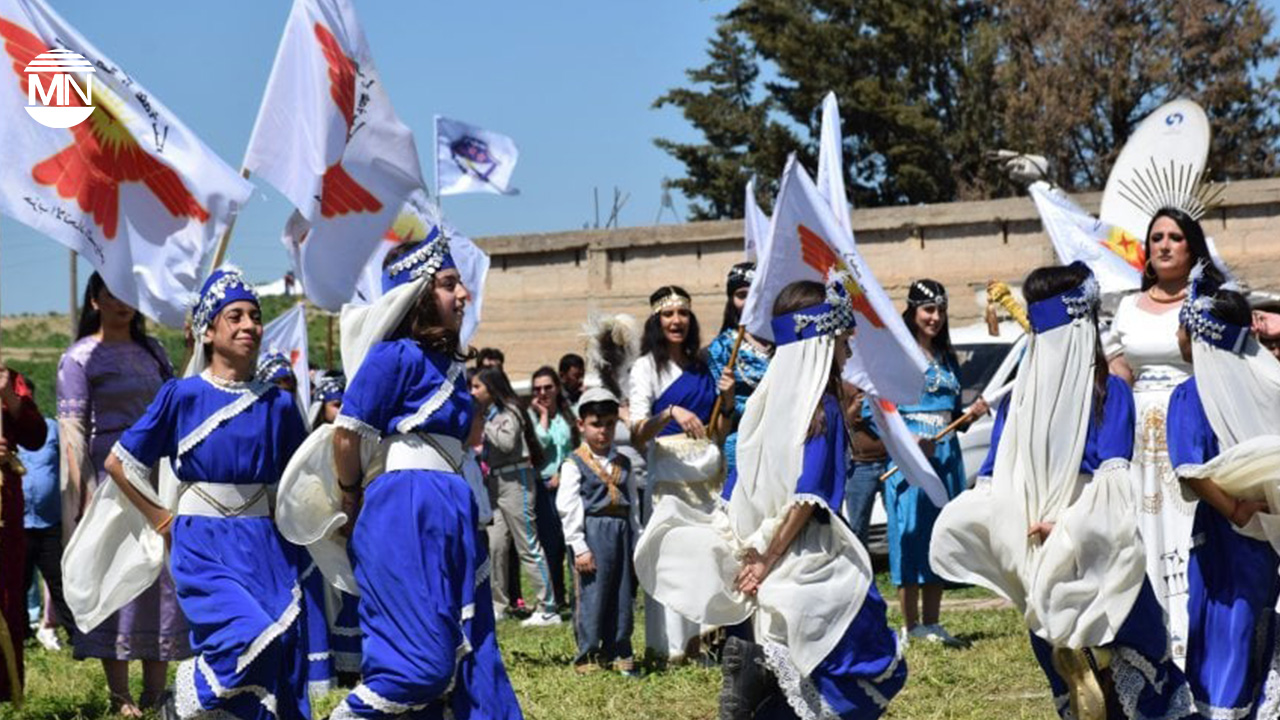
Assyrian, Chaldean, and Syriac communities across North and East Syria (Rojava) and the diaspora marked the Ekito Festival on Monday, celebrating a springtime tradition believed to date back 7,000 years to ancient Mesopotamia.
Observed each year on 1 April, Ekito is one of the oldest known festivals in human history. Emerging from Sumerian rituals known as Zagmuk, it symbolised the beginning of the new year, the rebirth of nature, and the cycle of agricultural renewal. Later adopted by Akkadian, Babylonian, and Assyrian civilisations, the tradition centred on the spring equinox and featured elaborate ceremonies.
In Babylon, the festival spanned 12 days and culminated in the recitation of the Enuma Elish, a creation myth honouring the god Marduk. Kings performed rituals of humility, and sacred statues were paraded to the Bit Akiti, a temple symbolising divine renewal. In Assyria, celebrations honoured the god Ashur and were held in special Ekito houses beyond city walls.
While ancient political and religious contexts faded over time, Ekito continued to be observed by the region’s native peoples. Assyrian, Chaldean, and Syriac communities preserved the tradition even after the fall of Mesopotamian civilisations and through successive empires including the Seleucids and Romans.
Under the Roman Empire, the Suryani-origin emperor Elagabalus reportedly introduced similar rituals in Italy. However, the rise of Christianity and later political instability in the Middle East pushed the festival into private or regional observance.
By the 20th century, violent events such as the 1915 Assyrian genocide and regional conflicts forced many Assyrian, Chaldean, and Syriac families into exile. Diaspora communities around the world, from Europe to North America, began commemorating Ekito as a symbol of cultural survival.
In modern-day North and East Syria, particularly in the Jazira (Cizîrê) Region where Syriac and Assyrian communities are concentrated, the festival has gained renewed visibility. Under the Autonomous Administration (AANES), established in 2012 following the Rojava Revolution, Ekito is recognised as an official holiday.
This year’s celebrations are taking place in Jazira’s Al-Hasakah (Hesekê) governorate at Girşêran, Werdiyat, and Hekmiyê, with public gatherings featuring traditional clothing, folk dances, and music in native languages. Women craft floral decorations known as Deqna Nissan—’Nisan’s Beard’—to hang on doors, symbolising spring’s blessings.
Unlike the ancient 12-day rituals, contemporary Ekito festivities are typically limited to one day. But their significance remains. As regional wars and displacement continue to impact the region, Ekito now embodies not only the cycle of nature but the continuity of identity across generations.