Protests across Turkey entered their ninth day following the detention of İstanbul Mayor Ekrem İmamoğlu on 19 March, jailed on 24 March. According to Interior Minister Ali Yerlikaya, a total of 1,879 people have been detained nationwide, with 260—including minors—sent to prison. The protests follow a string of investigations targeting İmamoğlu, a senior figure in the opposition Republican People’s Party (CHP) and a potential challenger to President Recep Tayyip Erdoğan in the 2028 presidential election. İmamoğlu is currently being held in Silivri High-Security Prison, outside İstanbul.
Members of the CHP claim that due to overcrowding in İstanbul’s prisons, detainees are being transferred to facilities in surrounding provinces. A CHP lawmaker alleged that detainees were subjected to torture, accusing the police of deliberately prolonging detention periods to erase evidence of mistreatment.
The protests began after İstanbul University annulled İmamoğlu’s university diploma—a decision widely condemned as politically motivated. His arrest later the same day triggered widespread public outrage. Demonstrators flooded the streets in cities including İstanbul, Ankara and Adana, despite local governors’ bans on protests.
Police violence intensifies during protests in Turkey following İmamoğlu’s arrest
In İstanbul, thousands initially gathered outside Saraçhane, home to the metropolitan municipality’s headquarters, where CHP leaders called for public resistance. Although the CHP stated that demonstrations would shift to a major rally on 28 March, spontaneous and daily protests continue across the city.
CHP officials claim that overcrowding in İstanbul prisons has led to the transfer of detainees to facilities in neighbouring provinces. One CHP deputy alleged that detainees were subjected to torture during extended detention periods intended to obscure physical evidence of ill-treatment.
In the capital, Ankara, security forces used water cannons and tear gas to disperse crowds around Middle East Technical University (METU/ODTÜ) and the city centre’s Kızılay district. Lawyers from the Ankara Bar Association, joined by Turkish Bar Association President Erinç Sağkan, marched in protest against what they described as “the increasing politicisation of the judiciary.”
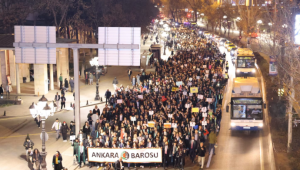
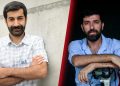
“Detaining elected officials and intimidating journalists cannot be part of a democratic state,” said one lawyer marching with the group.
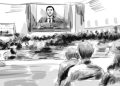
Seven journalists arrested earlier this week while covering the protests have now been released. Although a public prosecutor initially ordered their release, a reversal of the decision led to continued detention before a final court ruling secured their freedom.
The southern city of Adana also witnessed intense scenes. Protesters led by CHP organisers clashed with police who responded with tear gas and water cannons.
Parallel to the street demonstrations, students at 23 universities—including some of the country’s most prestigious institutions—have launched a boycott of classes and exams. These include METU/ODTÜ, Bilkent University, Hacettepe University, Ankara University, Boğaziçi University, İstanbul Technical University (İTÜ), Galatasaray University, Bahçeşehir University, Yıldız Technical University, Özyeğin University, İstanbul Bilgi University, Koç University, Yeditepe University, Mimar Sinan Fine Arts University, Marmara University, Dokuz Eylül, University, Ege University, Gebze Technical University, Anadolu University, İzmir Democracy University, Gebze University, Kocaeli University, Bolu Abant İzzet Baysal University, where students walked out of classes. It remains unclear when academic life will return to normal.
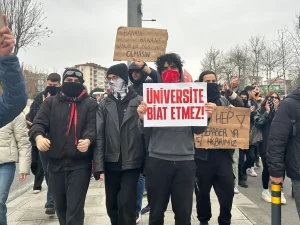
Credit: medyascope.tv
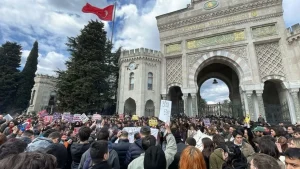
The boycott began at METU in response to the cancellation of İmamoğlu’s diploma, and quickly spread nationwide. “We will not obey,” read banners carried by students protesting at İstanbul University. “This is about more than one politician—it’s about democracy and our future,” said a 22-year-old engineering student in Ankara.
Protests have also been reported at universities in İzmir, Kocaeli and Bolu. The nationwide boycott reflects a generational mobilisation, with young people taking a leading role in demanding political accountability.
The continued detention of İmamoğlu has intensified scrutiny of Turkey’s judiciary. Critics claim the case against him is part of a broader strategy to sideline potential rivals ahead of the 2028 elections. President Erdoğan, who had been widely expected to face İmamoğlu at the polls, has yet to make a detailed public comment on the matter.
As demonstrations enter their tenth day, opposition leaders warn that further crackdowns may escalate tensions. CHP group leader Özgür Özel cautioned the İstanbul Governor on 25 March: “If a single youth is gassed tonight, I will summon 500,000 people to the streets.”
While authorities maintain the protests are unlawful, growing public support and the scale of the mobilisation suggest they are unlikely to subside soon. “This is not just about one arrest,” said a demonstrator in İstanbul. “It’s about reclaiming our rights and our voice.”