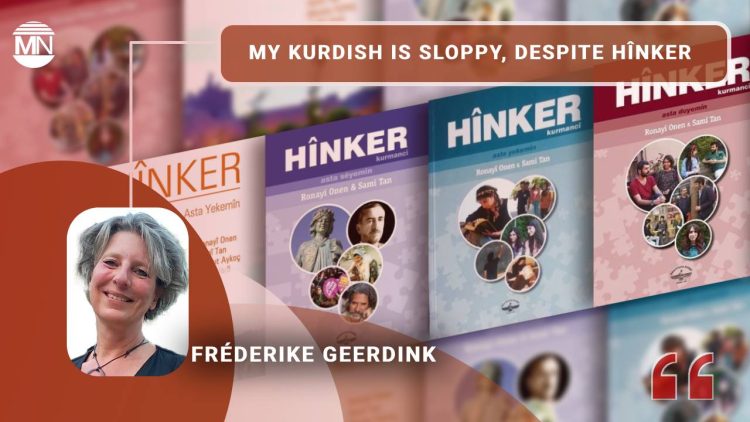
It may sound fully absurd to you that a Turkish prosecutor decided to launch an investigation into three authors of Hînker, a well-known textbook for those who want to learn Kurmancî Kurdish. And sure, absurd it is, but then again, the series is so good, that it hampers Turkey’s ongoing forced assimilation policies. Hînker pushes back, and that scares the state.
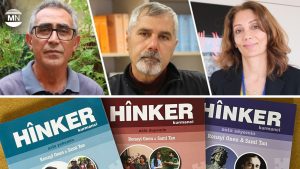
The three people against whom an investigation was launched and who were detained this week, are Mevlüt Aykoç, Sami Tan and Ronayi Önen. Hînker was launched in 2010 and there has never been a problem with it. Until, reportedly, Hînker was found in the possession of a deceased PKK fighter, which, in the eyes of the state, make the book’s authors suspicious. They now stand accused of ‘membership of a terrorist organisation’.
Geography
Hînker brings back good and frustrating memories. I started learning Kurdish with it in 2012, somewhere around Taksim Square in an old building on the ninth floor without an elevator. There were two rooms: one for classes, the other with cupboards stuffed with Kurdish books with a big reading table in the middle. My teacher was Abdurrahman Önen. He had been a geography teacher all his life, so he knew how to teach, and Hînker was great too. So were the fellow-students. I was the only foreigner, the rest were young Kurds who wanted to learn their mother tongue but knew the basics already. When I lost hope, teacher and classmates pulled me through.
Abdurrahman was a family member of Ronayi, who was now detained – if I am not mistaken, they were siblings. Abdurrahman was working on a book too. He was retired and dedicated his life to teaching Kurdish and making a series of books about the geography of Kurdistan. He travelled and investigated, dug up all the old banned Kurdish names of not just towns and villages but also of hills, creeks, hamlets, valleys, mountains. His passing away in 2021, before he could finish his series, was a great loss.
Stenbol
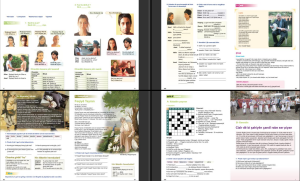
Hînker does what a good language learning book does. It doesn’t only teach words and grammar rules, it helps you enter the world in which that language lives. So while you learn the language, you become familiar with the Kurdish names of Istanbul (Stenbol), Diyarbakır (Amed), you get to know Kurdish folk tales and lyrics of famous songs, there are short reading exercises about friends visiting Newroz celebrations, there are visits to villages with shepherds, goats and sheep. This bothers the state.
Hînker is used a lot, it’s a famous book among those who want to learn the language, but it can’t be used officially anywhere. In classes like the one I took in Istanbul and later also in language classes I attended in Amed, but language schools are always at risk of getting closed down.
The state’s forced assimilation policies, in play since more than a century, are not supposed to be challenged too much.
Short circuit
Finding Hînker in the bag of a guerrilla fighter must bother Turkish authorities even more. It causes a short circuit in their Turkish-nationalist brains, I’m sure. All their lives they have believed and spread the propaganda that PKK guerrillas are ruthless terrorists, but what do they actually do?
Even to the battlefield, they carry books! They educate themselves! They take pride in who they are and learn the language of their parents, grandparents, ancestors!
Unfortunately, I have never been very successful in learning Kurmancî. The main reason: the state’s assimilation policies. When I learned Turkish, living in Istanbul, I saw and heard Turkish the whole day everywhere, and combined with classes, this lead to results. But in Amed and other Kurdish cities, the everyday language is Turkish too. The bakery is called fırıncı (not firinkar), the fish shop the balıkçılık (not masîgirî), tomatoes on the market domates (not fringî). On the street, in shops and in public transport, the language most commonly used is Turkish. If I did try to speak Kurdish, people wouldn’t understand me, which made me hyper insecure, so I switched to Turkish again.
Scorpion
Even when I went to an intensive course in the mountains for three months, I failed miserably. This was in the summer of 2016, at the start of my year with the PKK to write a book about the organisation. The lessons were held under the walnut trees, the teachers were guerrillas and most of the other students were guerrillas too. We didn’t use Hînker but the PKK’s own method, and the leading language in the camp was Kurdish. I learned all the grammar rules, I did all the writing exercises and homework. New words introduced me into the guerrilla’s world. Balafir (plane, as in: fighter jet), dûpişk (scorpion), skeft (cave), serkeftin (be successful).
But what I knew in my brain, didn’t easily come out of my mouth: speaking remained very difficult. Understanding too, when it was more than everyday sentences. This meant that I couldn’t use Kurdish in my many conversations with PKK members, because I was supposed to write a book and couldn’t do that properly if I only half understood what people said. So which language did we resort to? Turkish.
Characters
I lost my Hînker books, volumes 1 and 2. I couldn’t take them with me when Turkey expelled me, back in 2015. A kind follower on X sent me a few random pages. Ah yes, Dîlan and Azad, the two young Kurdish characters in the book. And see, an Aram Tigran song. Character Hêlin was from Êfrîn (Afrin), and the terrible chemical attack of Saddam Hussein on Halabja in 1988 was the subject of a short history lesson. I can see why the state attacks this book: it’s just too good.
My Kurdish remains sloppy, despite wonderful Hînker accompanying me during many efforts – I solely blame myself and the state. Shall I order the book and pick it up again?
Fréderike Geerdink is an independent journalist. Follow her on Bluesky (or X) or subscribe to her acclaimed weekly newsletter Expert Kurdistan.