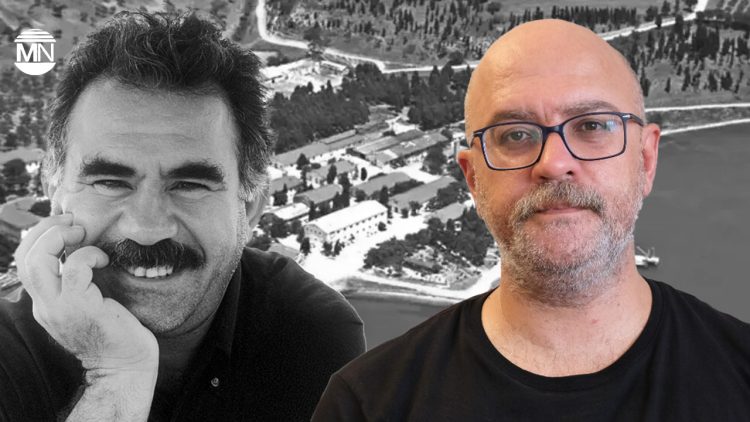
“[Abdullah] Öcalan came to the meeting holding a document. He placed it in front of him and said, ‘We will name this call and this day,’” Faik Özgür Erol, a lawyer from Asrın Law Office, told İlke TV’s Ankara Zamanı on Monday, revealing details of Kurdish leader Abdullah Öcalan’s long-anticipated statement during a 27 February meeting with an expanded delegation at İmralı prison, which Erol attended.
During the rare meeting, Öcalan, the leader of the Kurdistan Workers’ Party (PKK), reportedly insisted that the name of the call must include the word ‘peace’. “He said it should be called the Peace and Democratic Society Call”.
Öcalan’s latest message, described by Erol as a historic political statement, comes amid ongoing debate over Turkey’s Kurdish question and his prolonged isolation. Since 2019, he has been held under strict conditions, with no direct communication with lawyers, family, or political representatives until the recent meeting.
Erol described the encounter as a delegate as “emotional and intense”, emphasising the symbolic and strategic importance of the PKK leader’s words. “He laid out a vision that prioritises peace and democratic engagement over conflict,” Erol noted.
Erol stressed the need to remove restrictions on Öcalan’s ability to participate in talks. “Can this process move forward if a key figure—Öcalan—is silenced?” he asked, arguing that meaningful negotiations require the direct involvement of Kurdish leader Öcalan, just as the state’s leadership, including President Erdoğan and far-right Nationalist Movement Party (MHP) leader Devlet Bahçeli, play pivotal roles in shaping political outcomes.
“He needs the means to express himself, to communicate, to be heard. That is the first and fundamental step,” Erol stated, asserting that Öcalan’s conditions must be improved for any sustainable political process.
According to Erol, Öcalan’s message reached beyond Turkey’s internal dynamics. He reportedly framed his vision within a broader historical and regional context, advocating for democratic coexistence among ethnic groups in Turkey and neighbouring regions. “He emphasised that different identities must not be forced upon people and that recognition of diversity is key to lasting peace,” said Erol.
The lawyer suggested that Öcalan sees his proposals as not only a resolution to the Kurdish question but also as a model for democratic governance. “This is not just about one group’s struggle. He envisions a society where dialogue replaces repression,” Erol added.
While Öcalan’s statement is now public, significant political and legal obstacles remain. Turkish authorities have historically limited or blocked political negotiations involving Öcalan, with past peace efforts collapsing amid renewed violence.
Erol warned that unless authorities engage with Öcalan’s call, the potential for further unrest remains high. “What he is proposing is a roadmap. Ignoring it does not eliminate the problem,” he said, urging the Turkish state to take steps towards genuine dialogue.
Despite political tensions, Öcalan’s Peace and Democratic Society Call has already sparked discussions across Kurdish and Turkish political circles. Whether it will lead to tangible political shifts remains uncertain, but for now, Erol’s disclosure has revived debate on Turkey’s approach to its long-standing Kurdish question.