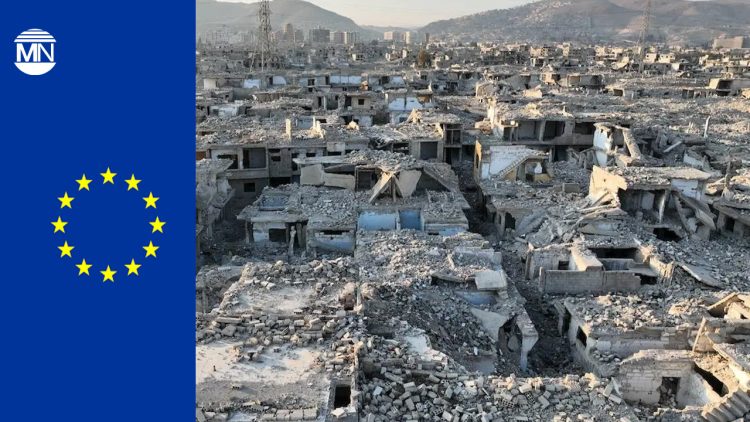
The European Union will suspend sanctions on Syria’s energy, transport and reconstruction sectors following the fall of President Bashar al-Assad, according to a draft statement seen by Reuters. EU foreign ministers are expected to confirm the decision at a meeting in Brussels on 24 February.
The draft text says the EU Council will lift a series of restrictive measures “in the fields of energy, transport and reconstruction, as well as to facilitate related financial and banking transactions”. It also states that a humanitarian exemption will be extended indefinitely to ensure the continued delivery of aid.
European leaders have been reassessing their approach to Syria since rebels led by Hay’at Tahrir al-Sham (HTS) toppled Assad in December. In January, EU ministers agreed on a roadmap for easing sanctions, but left details to further negotiations. Although Syria’s new leadership has pushed for the lifting of punitive measures, diplomats warn that sanctions could be reimposed if Damascus fails to respect minority rights and implement an inclusive transition.
‘Syria needs a half century to recover’
Meanwhile, a new United Nations study underlines the scale of the economic challenge facing post-war Syria. At current growth rates, it would take the country more than 50 years to return to pre-2011 economic levels, according to a report released Thursday by the UN Development Programme (UNDP).
“Fourteen years of conflict in Syria have reversed nearly four decades of economic, social and human capital progress,” the report said, adding that Syria’s gross domestic product “has shrunk to less than half its value” in 2011. It also revealed that nine out of ten Syrians now live in poverty and a quarter are unemployed.
Related Articles:
Salih Muslim accuses Turkey of sabotage as HTS consolidates power in Syria

SDF signals willingness for talks with Damascus amid shifting Syrian landscape

Kurdish front warns against Turkey’s interference in Syria amid ongoing dialogues with Damascus
The UNDP estimates that Syria’s annual economic growth has averaged just 1.3 per cent over the past seven years, and that it would take an ‘ambitious tenfold increase’ in growth over 15 years to return to the economic trajectory it would have had without the war. A more realistic five per cent annual growth over the same period would be needed just to regain the size of the economy in 2010.
“Beyond immediate humanitarian assistance, Syria’s recovery requires long-term investment in development to build economic and social stability for its people,” said UNDP Administrator Achim Steiner. “Restoring productivity for jobs and poverty alleviation, revitalising agriculture for food security and rebuilding infrastructure for essential services such as health, education and energy are key to a self-sustaining future, prosperity and peace.”
Abdallah Al Dardari, UNDP Regional Chief for Arab States, stressed the need for “governance reform”, “economic stabilisation” and “infrastructure reconstruction” to help Syria reduce its dependence on external aid and build a more resilient, prosperous future.
After years of international isolation following Assad’s 2011 crackdown on opposition groups, Syria’s infrastructure has been severely damaged and its economy has been devastated. With the EU and other major powers now vying for influence in the post-Assad era, observers say the suspension of sanctions could be an important first step in stabilising Syria’s shattered economy – although much will depend on the new government’s commitment to inclusive governance and sustainable development.