Political and economic pressures on Kurds in Iranian Kurdistan (Rojhilat) remain unrelenting. Toward the end of 2024, the wave of arrests targeting socio-political activists in the region intensified. Economic hardships and soaring unemployment, on the other hand, have further exacerbated the struggles of its residents, leaving many with few options for survival. Cross-border traders, known as kolbari trade, sustains the livelihoods of hundreds of Kurds, yet remains fraught with danger.
According to statistics published by Kolbar News, in the first six months of 2024 alone, 142 kolbars lost their lives in the border areas of Iranian Kurdistan, as well as along roads under the control of Iranian forces. Many were shot, perished in freezing conditions, or killed by landmine explosions. Among the victims, 10 were minors under the age of 18. In total, 339 kolbars were killed or injured in 2024, marking a two percent increase from the previous year.
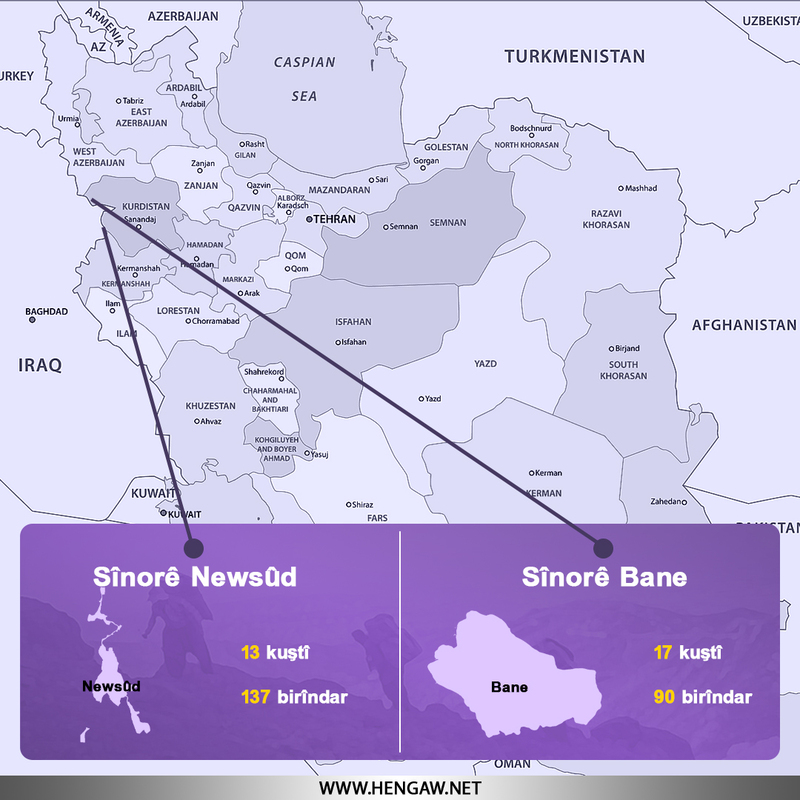
Hangaw Human Rights Organisation similarly reported that in 2024, 57 kolbars were killed and 282 others wounded across the four provinces of Iranian Kurdistan. Their data reveals that Iranian security forces were responsible for 81 percent of these casualties. Among the victims, one child was killed and 18 others were injured at the hands of Iranian forces. Additionally, one kolbar was killed and three others wounded by Iraqi border guards. The Iran-Iraq border, particularly the Nowsood region, remained the deadliest, accounting for 84 percent of all recorded incidents.
The province of Kordestan (Sine) recorded the highest number of kolbar casualties, with 31 killed and 127 injured. In Kermanshah (Kirmashan) province, 14 kolbars lost their lives and 139 were wounded, while West Azerbaijan (Urmiya) province reported 12 deaths and 16 injuries.
Beyond the crushing economic hardship in Iranian Kurdistan, the staggering toll on kolbars and the suffering of women in the border regions expose the systematic and egregious human rights violations perpetrated by the Islamic Republic of Iran.
Recently, Iranian Vice President Mohammad Reza Arif introduced a legislative proposal to legalise cross-border trade. However, the initiative has met fierce resistance from the security forces, particularly in the Iranian Kurdistan, effectively preventing any meaningful reform.
According to published data, Iranian Kurdistan’s four provinces, Ilam, Kermanshah, Kordestan and West Azarbayjan, alongside Sistan-Balochestan, remain among the poorest regions in Iran. The areas hardest hit by the plight of kolbars are those with significant non-Persian minority populations, particularly Kurds and Balochs, where economic infrastructure remains severely neglected.
One of the most harrowing recent tragedies unfolded in the Bane and Saqqez region, where several kolbars, stranded in the freezing no-man’s-land between Iran and Iraq borders, took their own lives—an unbearable testament to the cruelty of their circumstances.
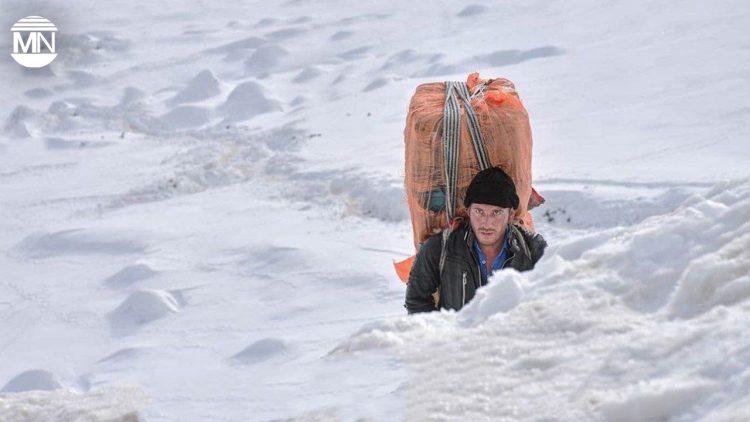
Kolbars haul up to 50 kilos of goods across treacherous mountain passes along the Iran-Iraq-Turkey borders, navigating routes heavily patrolled by border guards. Driven by sheer economic desperation, they have no alternative. Even if they survive the perilous cliffs and deadly minefields, injuries often leave them crippled, illustrating a brutal reality for the Kurdish population of Iran.