A global call for the release of Kurdish leader Abdullah Öcalan has gained renewed momentum ahead of the 26th anniversary of his imprisonment on 15 February 2025. The letter highlights the critical importance of Öcalan’s role in resolving Turkey’s Kurdish question. This follows a similar appeal sent in September during Latvia’s presidency of the Council of Europe (CoE) Committee of Ministers. That earlier letter, led by Nobel laureates, marked the beginning of sustained international efforts to ensure Öcalan’s freedom and compliance with European Court of Human Rights (ECHR) rulings.
The September letter urged immediate action, citing Öcalan’s solitary confinement as a violation of fundamental human rights. However, the CoE’s response, while acknowledging the concerns, did not yield concrete steps. Latvia’s Minister of Foreign Affairs, Edgars Rinkēvičs, serving as President of the Committee at the time, pledged to monitor the situation but refrained from initiating decisive measures. The current appeal, addressed to Xavier Bettel, Luxembourg’s Deputy Prime Minister and Minister for Foreign and European Affairs and current Chair of the CoE Committee of Ministers, represents a continuation and escalation of these efforts.
Referencing Nelson Mandela, the letter states, “Only a free man can negotiate,” emphasising that Öcalan’s freedom is indispensable for creating the conditions for meaningful dialogue and lasting peace in Turkey and the Middle East. The appeal highlights:
''The ongoing situation demonstrates how little the Turkish leadership and government believe in peace, with Nelson Mandela's statement that “only a free man can negotiate” ringing true. It is now time for the ministerial committee, in light of recent developments, to take a proactive stance towards a final resolution to this issue.''
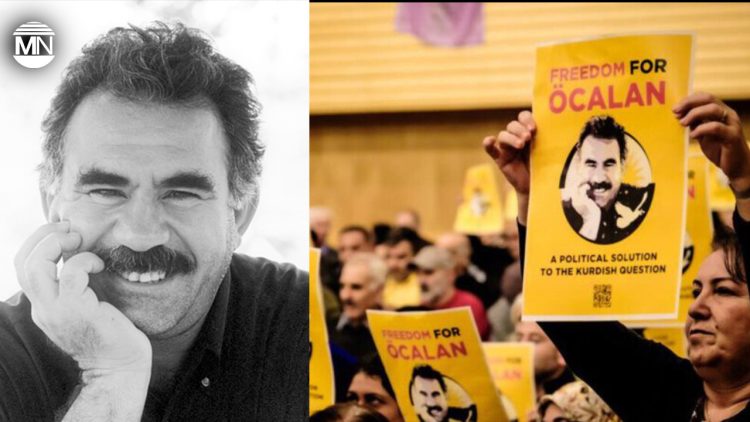
The Freedom for Abdullah Öcalan – A Political Solution to the Kurdish Question campaign has mobilised millions since October 2023, with over 69 Nobel laureates, 1,500 lawyers, and countless activists worldwide joining the cause.
Kariane Westrheim, Chair of the European Union Turkey Civic Commission (EUTCC), described the effort as ongoing, with new signatories and developments expected. “This is not the end but a pivotal step in a long journey toward justice and peace,” she stated.
Former MEP Jürgen Klute also spoke to Medya News, highlighting the legal and moral basis for Öcalan’s release: “Öcalan must be free like Mandela. In accordance with ECHR decisions, it is completely legal. Turkey must act, and the CoE, EU, the Council of the EU, the UN must do more to ensure his freedom. The existing reconciliation efforts taken place should turn into concrete steps for a real peace negotiations. It is indispensable for the democratisation of Turkey and the freedom of the Kurdish people.”
The letter also underscores the ECHR’s 2014 ruling that Turkey’s aggravated life sentence on Öcalan violates the European Convention on Human Rights. It urges the CoE to ensure Turkey implements the right to hope, which guarantees the possibility of parole and humane conditions for prisoners. Critics argue that recent permissions for delegations to visit Öcalan are insufficient and politically motivated attempts to appease Kurdish voters.
Adding to the urgency, Turkey continues to refuse to release findings from a 2019 inspection of İmralı Island by the CoE’s Committee for the Prevention of Torture (CPT), raising transparency concerns about Öcalan’s detention conditions. The ongoing incommunicado detention, now exceeding 44 months, highlights the deteriorating human rights landscape in Turkey.
Readers can find the full letter sent to the CoE’s Committee of Ministers below:
Mr Xavier Bettel
Chair of the Committee of Ministers of the Council of Europe
Dear Mr. Bettel,
February 15, 2025 will be the 26th anniversary of the abduction of the Kurdish people’s leader Abdullah Öcalan. Since then, he has been held on the Turkish prison island of Imrali. Visits by his family and lawyers followed the political arbitrariness of Turkish governments.
In 2014, the ECHR ruled that Mr. Öcalan’s aggravated life sentence, which excludes the possibility of parole, breached the European Convention on Human Rights. The court recommended that Turkey amend its laws to guarantee that prisoners are made aware of the potential for eventual release—known as the Right to Hope.
At the meeting of the Council of Europe’s Committee of Ministers from 17-19 September, the Council of Europe’s Committee of Ministers once again pressed Turkey to take immediate steps towards compliance with the ECHR 2014 rule. The committee warned it would consider drafting an interim resolution if no progress was made by 20 September.
Since October 10, 2023, millions of people in Kurdistan and around the world have participated in the “Freedom for Abdullah Öcalan – A Political Solution to the Kurdish Question” campaign to draw attention to Mr. Öcalan’s plight and draw the world’s attention to the path to peace. The political importance of Mr. Öcalan for the Turkish-Kurdish conflict cannot be overstated, and a resolution of the Turkish-Kurdish conflict, which has now spilled beyond Turkey’s borders as the Turkish military attacks, invades, and occupies areas in northern Syria and northern Iraq, could also bring peace to the Middle East.
Along with 69 Nobel laureates, 1,500 lawyers worldwide together people from various backgrounds: unions, social movements, political parties, elected officials, artists, intellectuals, activists, and millions of Kurds and their supporters have also appealed to the CoE and the President of the Republic of Turkey to end the solitary confinement of Mr. Öcalan and release him. Additionally, numerous international networks have founded to work for his release, and their efforts continue to this day.
The fact that political delegations of the DEM party (The Peoples’ Equality and Democracy Party) are now selectively receiving permission to visit Mr. Öcalan in confinement due to pressure from the CoE and global political and civil society organizations may be a positive development. However, Mr. Öcalan is still a political prisoner held in violation of various laws and human rights conventions. The ongoing situation demonstrates how little the Turkish leadership and government believe in peace, with Nelson Mandela’s statement that “only a free man can negotiate” ringing true. It is now time for the ministerial committee, in light of recent developments, to take a proactive stance towards a final resolution to this issue. Mr. Öcalan has expressed his willingness for a peaceful solution despite the unequal conditions. Kurdish leader Abdullah Öcalan must be allowed to meet with his lawyers and family and ultimately, be freed under conditions that allow him to play a role in finding a just and democratic political solution to Turkey’s decades-old Kurdish conflict.
It is now up to the Committee of Ministers to take concrete legal, diplomatic and political steps towards the release of Mr. Öcalan for a peaceful political solution of the Kurdish question.
Thank you for your time and consideration.