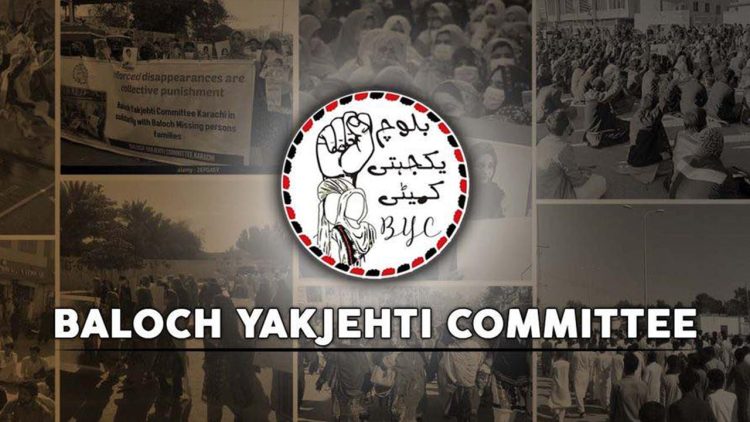
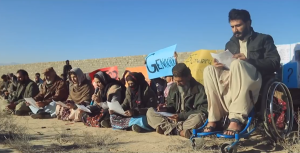
The Baloch Unity Committee (Baloch Yakjehti Committee, or BYC) drew attention to systematic state violence and genocidal policies against the Baloch people, at a press conference held at a graveyard in Mastung, Balochistan, Pakistan, on Tuesday. Dr. Mahrang Baloch, leader of the BYC, called for mobilisations on 25 January, which the BYC has designated as Baloch Genocide Remembrance Day.
“This graveyard bears witness to the atrocities committed against the Baloch people,” BYC stated, commemorating the discovery, in January 2014, of mass graves in the Tootak area of Balochistan’s Khuzdar District, containing more than 150 bodies.
“The hundreds of Baloch youth buried here were forcibly disappeared by the Pakistani military and intelligence agencies, subjected to inhuman torture, and then killed,” BYC continued. “This is all part of a larger, organised plan to wipe out the Baloch nation from their ancestral lands.”
The discovery of the mass graves over a decade ago heightened concerns over enforced disappearances and extrajudicial killings in Balochistan, a region long plagued by allegations of human rights abuses, and where an armed insurgency is taking place. Many suspected that the bodies, mutilated and unidentifiable, belonged to missing Baloch activists and civilians.
A judicial commission was set up to investigate the mass graves, following calls by human rights organisations for a full enquiry. In its report, the commission found no evidence implicating Pakistan’s armed forces or intelligence agencies in the incident. However, many local and international observers criticised the investigation as inadequate and lacking transparency.
The struggles of the Baloch
The Baloch people, through the Baloch Yakjehti Committee (BYC), have been at the forefront of resistance against the repressive state policies targeting their community. The BYC has announced a series of mobilisations for 25 January, including a public meeting in Dalbandin, Chagai District, and a nationwide campaign. Planned activities include setting up data collection centres to document instances of the Baloch genocide and establishing communication and coordination with the families of victims.
The Tootak mass graves stand as a stark symbol of the unresolved human rights issues in Balochistan, highlighting the urgent need for transparent investigations and accountability to address the region’s ongoing challenges.
“January 25 is not only a testament to the resilience of the Baloch nation, but also an opportunity to awaken the global conscience by recognising the Baloch genocide at the international level and taking immediate action to stop it,” the press release concludes.