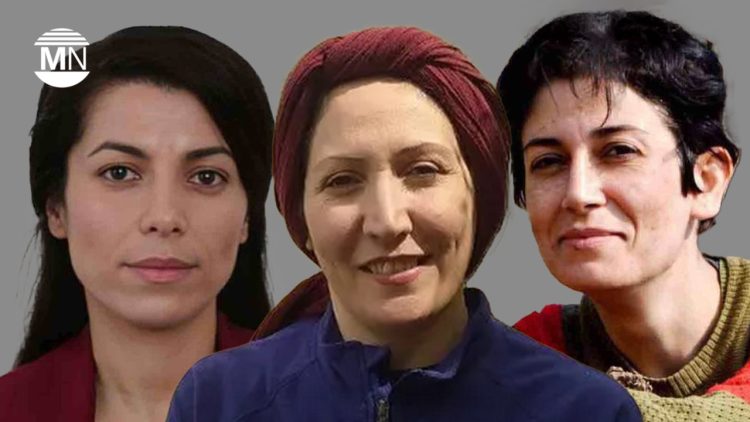
Kurdish political prisoner Warisheh Moradi, sentenced to death for “rebellion”, remains in critical health in Iran’s notorious Evin Prison without access to external medical treatment, human rights activists have revealed.
Moradi, a member of the Free Women’s Society of East Kurdistan (KJAR), has been suffering from acute digestive problems exacerbated by the refusal of the prison authorities to permit her transfer to a hospital. After nine months in isolation, Moradi was granted a brief family visit, but local sources told Medya News on Monday that her health continues to deteriorate due to the lack of external medical care.
Human rights advocates from the initiative No to Execution, Yes to Free Life! have condemned the denial of medical treatment, calling it a “deliberate tactic of oppression” and a violation of international human rights standards. “Such actions constitute a blatant violation of human rights and contradict Iran’s international obligations to uphold the rights of detainees,” they said.
In a related case, Sharifeh Mohammadi, another political prisoner, was transferred for external medical treatment on 31 December following months of untreated illness. Mohammadi, whose death sentence was recently overturned, had been suffering from a spreading toenail infection at Lakan Prison in Rasht. Her delayed treatment highlights the systemic neglect of prisoners’ health.
Reports from Iranian prisons paint a grim picture of the deteriorating conditions. In Lakan Prison, 160 women live without electricity, functioning heating systems or proper sewage facilities. The lack of heating during harsh winters has led to widespread seasonal illnesses, including influenza. Medical care remains virtually absent, leaving inmates to suffer without relief.
Similarly, Qarchak Varamin Prison, south of Tehran, houses over 100 women and 20 children in freezing temperatures without adequate heating or hot water. Recent reports indicate that all the detainees in Qarchak have fallen ill due to the lack of basic amenities.
The systemic denial of basic healthcare by prison authorities exemplifies what activists describe as a “strategy of repression”, pushing vulnerable detainees towards physical and psychological collapse.
The international community continues to call on Iran to address these human rights violations and fulfil its obligations under international law to protect the health and dignity of detainees.