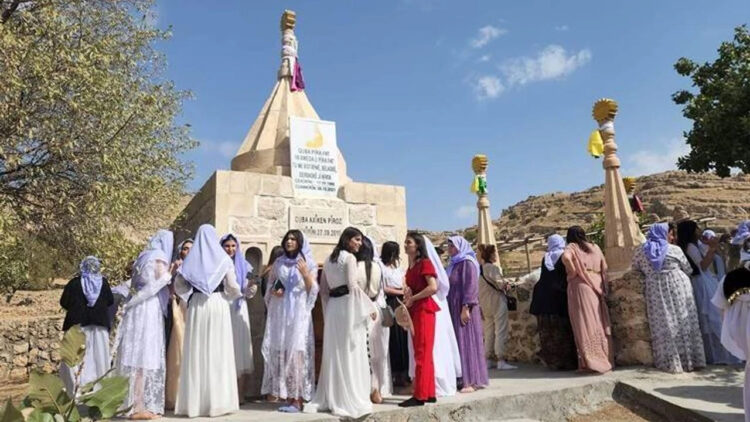
The Yazidi (Êzidî) Kurdish people celebrated their traditional Cejna Êzî (Ezid festival). To celebrate together, people visited the cemetery, ate together and played traditional music in the evening.
Cejna Êzî takes place in December after three days of fasting, starting on Tuesday and ending on Thursday. People fast from dawn to dusk. The days of fasting are called ‘Rojiyên Êzî’, which means ‘Fast of Ezid‘. Ezid itself is one of the names of God’s earthly manifestation in Yazidism.
The unknown history of Yazidis (Êzidîs) – Part 1
The sun plays an important role in the Yazidi religion. According to ancient Mesopotamian beliefs, the sun is considered a visible symbol of God, as it represents the source of life. The Cejna Êzî is therefore associated with the winter solstice. The celebration itself is a breaking of the fast, similar to the traditional pre-Christian understanding of Advent and Christmas.
Not all Yazidis celebrate the ‘Fast of Ezdi’ on the same days, as different calendars are used. The Feqîr Yazidis celebrated two weeks ago, while the Babê Şêx Yazidis ended their fast last Thursday.
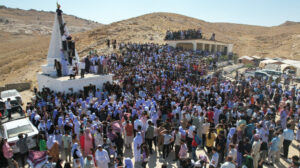
On the occasion of the celebration, some of the Yazidis of Sinjar (Şengal) visited their cemeteries and holy places at dawn, distributing blessings to their dead and praying for the protection of the Yazidi community. In the cemetery, the traditional def and şibeb instruments were played along with the blessings.
During these hours, people visit each other, celebrate the holiday together and eat together at noon. In the evening, young people may gather in some central places and celebrate.
A Yazidi community has long been established in the Syrian region of Afrin (Efrîn). The Union of Yazidi Women of Rojava (Yekitiya Jinên Êzidiyên Rojava, YJÊR) wrote in a statement that this year’s celebration of Cejna Êzî is taking place at the same time as the attacks of the Turkish-backed mercenaries and the fall of the Assad regime. Therefore, YJÊR stated that the people of Afrin are suffering a lot and condemned the forced displacement of the people of Afrin. YJÊR added that this year’s Cejna Êzî was held in a more formal way due to the difficult conditions.
The Yazidis (Êzidîs): Massacres and genocide throughout history – Part 2