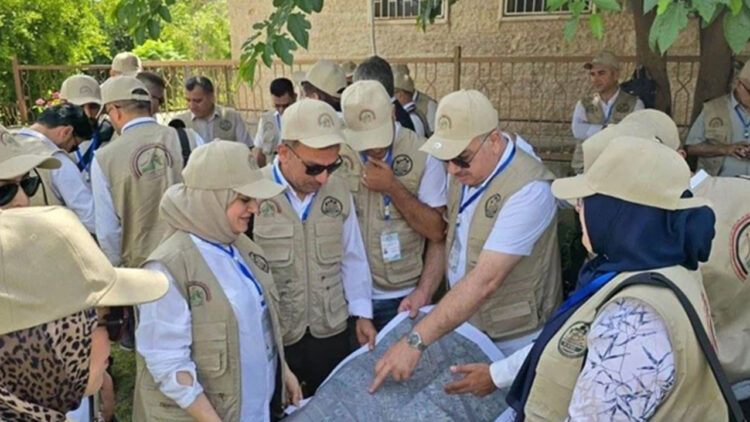
After a 27-year hiatus since the last national census, Iraq and the Iraqi Kurdistan Region commenced, on 20 November, the 10th population census. This long-anticipated initiative begins amid Kurdish apprehensions over the potential loss of parts of the Kurdistan Region’s territory. According to reports from media outlets in the Kurdistan Region of Iraq (KRI), a 48-hour travel ban has been implemented across the country as a security measure.
Both the federal Iraqi state and the Kurdistan Regional Government (KRG) have underscored the critical importance of the census, highlighting its profound political implications. Chief among these is the contentious Kirkuk dispute, addressed under Article 140 of the Iraqi Constitution, alongside its expected influence on advancing social and economic equity.
Dara Rashid, the Minister of Programming and Head of the Supreme Census Commission in the Kurdistan Region, addressed the media, stating:
“The determination of the Kurdish population within the Kurdistan Region during this census ensures that Iraq’s central government will no longer be permitted to manipulate the Region’s budget allocation, or restrict funds for employees and government institutions, based on political agendas.”
Similarly, Iraq’s Minister of Planning, Mohammad Ali Tamim, underscored the significance of the census, asserting during a press conference that its results could foster social and economic justice while improving public services across Iraq.
Prime Minister Mohammad Al-Shi’a Sudani echoed these sentiments, urging the public to disregard rumours and political disputes surrounding the census process. Meanwhile, Mahmoud Mashdhani, the Speaker of the Iraqi Parliament, described the census as a historic opportunity, capable of laying the groundwork for a more prosperous Iraq.
Despite these assurances, Kurdish public opinion remains fraught with concerns over the census’s shortcomings. Many Kurds fear that policies enacted by Turkey and Iraq’s central state since 16 October 2018 have led to significant displacement from Kirkuk and other areas outside of KRG, including Tuz Khormatu, Tikrit, and Hawija. This displacement could undermine the census’s accuracy, potentially marginalising Kurds in regions under dispute.
Reports suggest that in some areas, especially Hwije, Arab statisticians are exclusively employed by Iraq’s central state. Given the Kurds’ limited proficiency in Arabic, this arrangement may lead to complications and inaccuracies in the census process.
Political observers in the KRI warn that such deficiencies could adversely affect Kurdish influence in Iraq’s political framework, including parliamentary representation and budget allocations for the KRI.
Adding to the tension, Arab and Turkmen communities in Kirkuk have called for the census process in the city to be halted, fearing the return of displaced Kurds to participate in the census. The Turkmen Front and Arab factions in Kirkuk have vocally opposed the re-settlement of Kurdish returnees, cautioning against its potential political and security ramifications.
Notably, while a nationwide census was initially slated for 2008, political and security challenges have repeatedly delayed the process. Nonetheless, the Iraqi central state, in collaboration with the KRG, has prepared extensively for this year’s census, enlisting the support of four international companies to oversee the initiative.