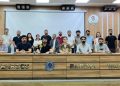
A coordinated series of protests and cultural events across Europe and Australia, from 1 to 10 October 2024, is calling for the immediate release of the Kurdistan Workers’ Party (PKK) leader Abdullah Öcalan and a political resolution to the Kurdish question. As part of the ‘Freedom for Abdullah Öcalan – Political Solution for the Kurdish Question’ campaign, demonstrations have been held in cities such as Sydney, Berlin, Milan, Heidelberg, and Stockholm. The campaign highlights Öcalan’s significance to the Kurdish struggle and his potential to foster peace in the Middle East, with the movement gaining international momentum.
In Berlin, the city’s youth took charge of the movement. TekoJIN and TCŞ members organised a seminar on Tuesday to mark the anniversary of the 1998 international conspiracy that led to Öcalan’s imprisonment. Speakers Muharrem Aral and Zekî Pirsus emphasised that Öcalan’s captivity transcends one individual; it is a direct attack on the Kurdish freedom movement. They argued that the Kurdish struggle for freedom, bolstered by Öcalan’s writings and political paradigm, is not only a Kurdish cause but one that resonates with all oppressed peoples in the Middle East. “Öcalan’s paradigm offers a solution that addresses both national and social issues in the Middle East and the world,” one speaker said.
“The release of Abdullah Öcalan is essential not just for Kurdish demands, but for peace in the entire region,” Aral and Pirsus said, insisting that a resolution to the Kurdish question is key to ending the cycles of conflict in the Middle East.
Meanwhile, on Tuesday, in Milan and Heidelberg, the ‘Fikir-Zikir-Çalakî’ (Idea-Mentioning-Action) exhibition brought Öcalan’s ideas to life through art and photography. Organised by Rete Jin and the European Kurdish Women’s Movement (TJK-E), the exhibition focused on themes central to Öcalan’s philosophy, including women’s liberation, ecology, and the fight for peace. Visitors were taken on a journey through photographs depicting how Kurdish women, inspired by Öcalan’s vision, have contributed to these struggles across Kurdistan.
In her opening remarks at the Milan exhibition, a Rete Jin representative highlighted Öcalan’s deep influence on the Kurdish freedom movement, particularly among women. “The words that you see in this exhibition are directed by Apo. His observations on different aspects of life have always been a source of inspiration for the struggle of the Kurdish people, especially women,” she explained, using the affectionate nickname ‘Apo’, which means uncle, to refer to Öcalan. She added, “The liberation of women underpins the liberation of anyone who is oppressed. For this reason, as Rete Jin, we welcome and repurpose the tools that Öcalan offered us.”
Throughout her speech, she drew attention to how Öcalan’s intellectual work, even while in isolation, continues to inspire not only Kurds but also international movements for justice and freedom. She explained that Öcalan’s vision promotes a grassroots approach to solving complex issues, rooted in the liberation of oppressed peoples from the shackles of colonialism and statism.
“Öcalan’s words are a guiding light, and they continue to be put into practice through action and solidarity,” the speaker concluded. “This exhibition represents the unity of thought, word, and action, central to Öcalan’s paradigm.”
In Stockholm, a seminar on Tuesday at the Kurdish Institute explored Kurdistan’s history and the ongoing attempts to suppress the Kurdish revolution. Kurdish author Kamiran Simo Hedilî and historian Osman Elxanizade provided insights into Kurdish uprisings over the past century and how Öcalan’s leadership has shaped the current struggle.
After Turkey was founded, the Turks said in the 1924 constitution that only Turkish citizens had the right to exist in this state, he said. “It was a betrayal of the Kurdish people and their leader, which was an internal and external betrayal at the same time.”
Hedilî argued that Öcalan’s capture was part of a long history of international conspiracies aimed at dismantling Kurdish resistance. “The Kurdish people have come closer to national unity under Öcalan’s leadership,” Hedilî stated. “Kurdistan’s liberation is within reach, but only if we build on this resistance.”
These seminars, exhibitions, and protests collectively reflect a global solidarity movement seeking to amplify Öcalan’s voice, which has been silenced through years of isolation in Turkey’s İmralı prison. Activists argue that Öcalan’s ideas remain key to resolving not only the Kurdish question but also to securing long-term peace in the region. His writings, which advocate for democratic confederalism, women’s rights, and ecological balance, are seen as pivotal in challenging authoritarian regimes across the Middle East.
As the campaign enters its final days, more events are planned across Europe. Heidelberg, for example, will host a series of concerts and seminars on the international conspiracy against Öcalan, with a final event featuring Kurdish food and traditional music. The sense of urgency among activists is palpable, as they continue to demand an end to Öcalan’s isolation and push for his involvement in peace talks.
The ‘Freedom for Abdullah Öcalan’ campaign may have started as a Kurdish initiative, but it has now gained an international audience, with support spreading far beyond the borders of Kurdistan. As Öcalan’s supporters often chant, “His freedom is our freedom,” the global movement for his release continues to grow, uniting diverse groups under a common banner of justice and equality.