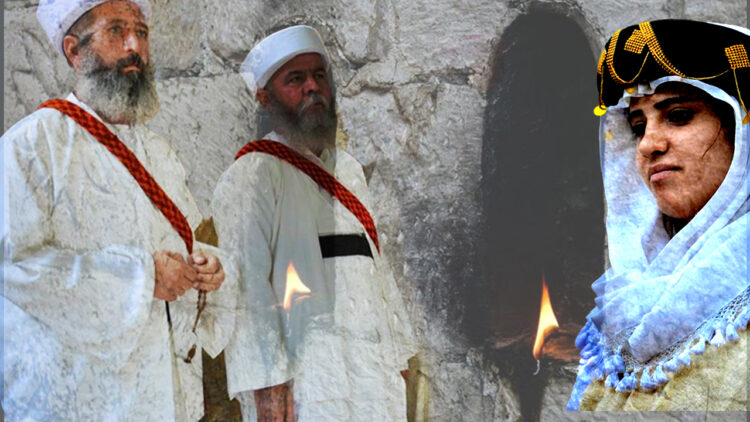
Yazidi Kurds in Iraqi Kurdistan are celebrating Jama, a major communal festival, from 6 to 13 October after a decade hiatus following horrors inflicted by the Islamic State (ISIS) on the ethnic-religious minority including genocide and forced displacement. Thousands have rallied this year to revive the historically annual festival, known as the ‘Sheikh Hadi gathering’ at the sacred Lalesh (Laliş) Temple, a venerated Yazidi shrine.
The festivities honour Cejna Cimaya Şêxadî (‘Saint Hadi’), a revered figure within the Yazidi Kurdish community who gather at his shrine in Lalesh to pay their respects for seven days. During the ceremonies, Yazidi pilgrims tie knots in cloths while making wishes, hoping that Şêxadî or Tawisî Melek, a divine angel symbolised by a peacock, will grant them. Pilgrims later untie the knots, symbolising the fulfilment of previous wishes.
A long-standing ceremonial tradition includes a sacrificial offering of a bull, which must have a distinctive white mark on its forehead. In a ritual filled with symbolic drama, some pilgrims attempt to “steal” the bull while others intervene to restore it to its rightful place. The bull is then sacrificed, and its meat is used to prepare Simat, a dish of bull meat with rice shared among participants.
The Yazidi population in Iraqi Kurdistan is estimated at approximately 500,000, with around one million Yazidis worldwide. This ancient religion is practised across Kurdish regions of the Middle East, including by the 30,000 to 40,000 Yazidis in Syrian Kurdistan (Rojava). Additionally, six villages in the Kermanshah province of Iranian Kurdistan (Rojihlat) are home to Yazidi followers.
Yazidism, one of the world’s oldest religions, is deeply rooted in Kurdish heritage. Known in English and Persian as Yazidi, adherents believe that humanity itself is sacred, with each person seen as a “lever” balancing good and evil. They view humans as a bridge between heaven and earth, highlighting the importance of humanism and the cultivation of virtuous qualities.