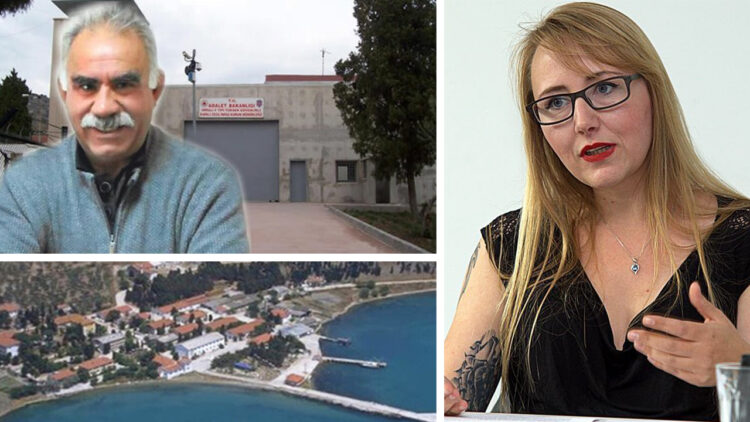
Franziska Stier, General Secretary of the Swiss BastA Party, spoke to Kurdish women-led Jin News, on the prolonged, unlawful and torturous isolated detention of Kurdistan Workers’ Party (PKK) leader Abdullah Öcalan by Turkish authorities on the high-security prison island of İmralı, and the implications of his isolation on the criminalisation of the Kurdish diaspora in Europe.
Belgian’s supreme court ruled the militant PKK political entity to be a legitimate party to a civil conflict, but it remains on European terror lists under pressure from the Turkish government who trade criminalisation of peaceful Kurdish activists abroad for their backing as the largest NATO force in Europe.
Furthermore, European institutions mandated to protect against torture are silent on torture inflicted within the walls of İmralı and fail to pressure Turkey into transparency. The country has a dire human rights record and abuses democratic values, which prevents accession to the European Union, but it remains a key ally.
Jin News asked Stier why European states cooperate with the Turkish government, an alliance between President Recep Tayyip Erdoğan’s Justice and Development Party (AKP) and the far-right Nationalist Movement Party (MHP), and effectively endorse the disregard for human rights.
“Right-wing and radical parties are on the rise here to eliminate human rights. They support each other. They give each other weapons. They sell materials. That is why we must stand up against nationalism and racism everywhere. Or we will not have a chance to protect rights and democracy,” Stier said.
The Council of Europe (CoE) Committee for the Prevention of Torture and Inhuman or Degrading Treatment (CPT) has visited the prison island, but the AKP-MHP alliance gagged the CPT over release of the inspection report.
No news of Öcalan has reached the public for three years. He has been denied access to his lawyers and family, with arbitrary visitation bans repeated every six months. Öcalan’s detention on the island since 1999, and later his total incommunicado isolation, serves as a baseline for Turkey’s treatment of political prisoners.
“No information has been obtained from him for years. We don’t know anything about his health. This situation worries people in Europe,” Stier said. “The struggle for the freedom of Abdullah Öcalan also symbolises oppression and injustice […] The Kurdish people want peace and they have proven this dozens of times […] All the people of Turkey deserve freedom, security and peace. This is why the [Kurdish] struggle is justified.”
Stier outlined the grave historical injustices and on-going political coups against the Kurdish people, including the government’s policy of ousting democratically elected Kurdish mayors for replacement with state-appointed ‘trustees’. The Kurdish diaspora, criminalised and frequently subjected to the threat of extradition, face further attacks from far-right Turkish-origin groups operating in Europe, such as the Grey Wolves.