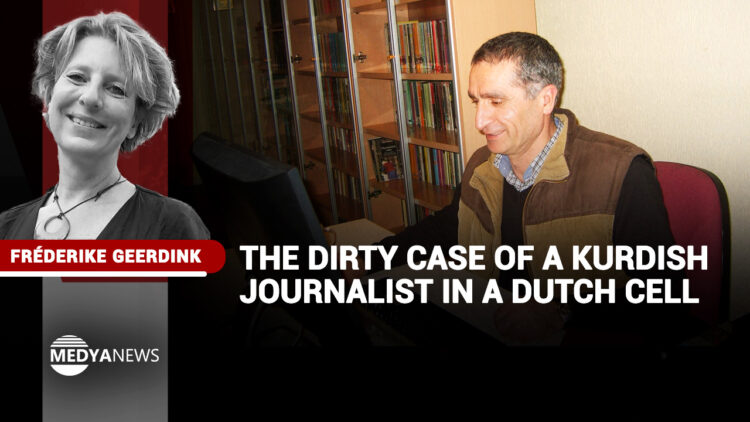
Fréderike Geerdink
It’s been two weeks now since journalist Serdar Karakoç was arrested in the Netherlands
and locked up to await extradition to Germany. I wanted to instantly write about it, but I was reluctant because I needed more info. Now that I have more info, I realize that the info we really need, just isn’t available.
Serdar Karakoç has been living in the Netherlands for no less than 23 years. He had to seek refuge there after having worked in Bakur (Kurdistan in Turkey) and Turkey in the 1990s. Maybe not all readers know this, but to work as a Kurdish journalist in Turkey in the 1990s, you had to have not only professionalism but deep dedication and steel nerves as well. Several journalists have been murdered by the state, editors-in-chief were locked up, newspapers were confiscated, and the delivery men were arrested and tortured. (Here’s https://frederikegeerdink.com/2012/09/28/a-paper-of-four-pages/ the English version of a Dutch reportage I once wrote about that.)
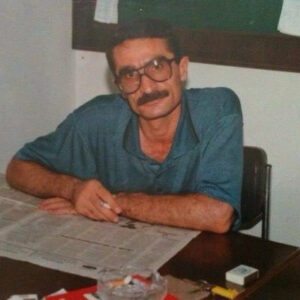
Serdar Karakoç has been living in the Netherlands for 23 years after seeking refuge there from Turkey where he worked as a Kurdish journalist
Asylum
One of the most dramatic events were the bombings of the premises of Özgür Gündem (Free Agenda) in December 1994. Karakoç was there and survived. Some years later, he had to leave Turkey and was granted asylum in the Netherlands. He was arrested on 23 May and is now awaiting a court hearing on 24 July, after which he could be surrendered to Germany.
What I wanted to know before publishing about this, is what Germany’s accusations against Karakoç are. I assumed something political, but we always need to keep other options open, right? Now that information came: Germany accuses him of breaking article 129b of the German Criminal Code which is, surprise surprise, related to ‘foreign criminal and terrorist organisations’. More specifically, his German lawyer told Özgür Politika
Karakoç is suspected of ‘being responsible for the Darmstadt and Saarland and Rhineland Palatinate regions between July 2017 and May 2018’ – whatever that means. Responsible for what?
Books
Of course, we know what Germany means. Being ‘responsible’ in relation to article 129b obviously implies that Karakoç is leading some regional group of an illegal organisation, and of course, the organisation they mean is the PKK. Germany is the European country that has been cracking down on peaceful Kurdish political activism since many, many years, and is using Turkish tactics for that. In other words: they use anti-terrorism legislation to prosecute people who are standing up for the rights of their people with weapons like pens, books, flags and banners. German governments have for decades served Turkey like that.
Why now? Why a journalist who has been living peacefully in the Netherlands for 23 years? Well, that’s where we have to resort to educated guesses.
One of the things that came to mind, was the effort lawyers in Germany are making to lift the terrorism designation of the PKK. One of the arguments they use, is that the PKK is not in any way whatsoever a threat to Europe. Many decades ago, some assassinations happened within the movement on European soil, but for at least a quarter of a century, no such thing has happened. The Kurdish movement in Europe is extremely well organised and is engaged in advanced political struggle, part of which is a great journalistic community, but violence is not a part of that.
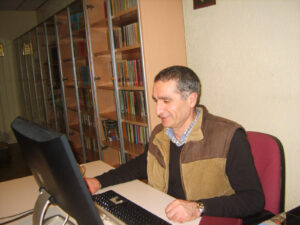 Turkey, and also Germany, are using anti-terrorism legislation to prosecute people who are standing up for the rights of their people with weapons like pens, books, flags and banners
Berserk
I am not sure in which stage these court cases to de-list the PKK in Germany are, but maybe they need a conviction to give the courts a reason not to de-list. Because trust me, if a German court would decriminalise the Kurdish movement, both the Turkish government and the mainstream opposition would go berserk.
Another issue that came to mind, was the curious case of a Kurdish prisoner in the Netherlands who has been jailed for life since 1999: Hüseyin Baybasin. The case is much too complicated to explain, but I have been following it for some time and I happen to know that there are negotiations going on between the Dutch state and Baybasin’s lawyer about his release. Baybasin was arrested in the Netherlands in the late 1990s in an, again, highly complicated political game. Due to a ruling of the European Court of Human Rights, the Netherlands has to give people who serve a life sentence the option to be freed after 25 years, and Baybasin is eligible for release.
Turkey won’t like that, but there’s not much they can do, and also the Dutch judicial system can’t evade ECHR rulings for too long. Maybe the Netherlands working with Germany to crack down on politically active Kurds is a way to mend ties before they become too fragile?
Illusions
Hasn’t outgoing Dutch PM Mark Rutte recently visited Erdoğan to convince him to support him to become the next Secretary General of NATO? He has indeed . It was just a short meeting, but I don’t have any illusions about what Erdoğan demands of every European leader who wants to get anything done from him: Criminalise Kurds.
You may think I’m losing myself in wild speculations here and you are right, I cannot prove any of these claims. But that is exactly the problem. I was able to wait with publishing about Karakoç’s case until I knew which law article Germany pulled out of the closet against him, but I can’t wait with publishing until I know all the details that matter more. The details of how exactly Europe and Turkey conspire against Kurds. That information is murky and classified and will only maybe emerge when we’re all dead. But trust me, it’s dirty.
Free Serdar!
Fréderike Geerdink is an independent journalist. Follow her on Twitter https://twitter.com/fgeerdink or subscribe to her acclaimed weekly newsletter Expert Kurdistan https://frederikegeerdink.com/expert-kurdistan/.