

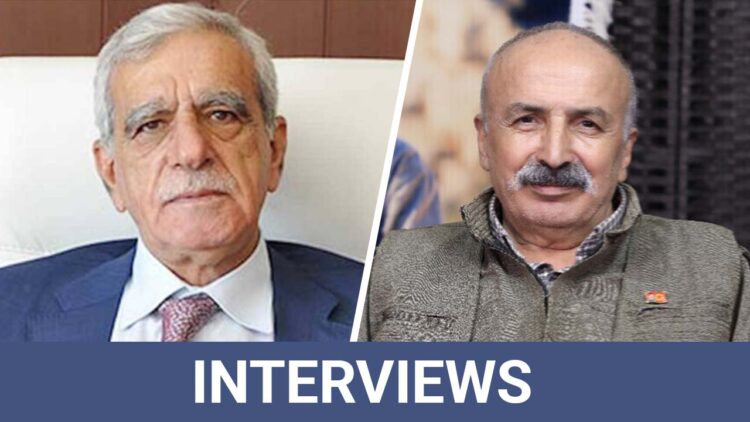
Kurdish political leaders are expressing scepticism regarding recent remarks from Turkey’s ruling elite towards addressing Kurdish rights. Ahmet Türk, co-chair of the Mardin (Mêrdîn) Municipality, voiced concerns during a recent interview on Wednesday, stating, “We are not in a position to be convinced by what is being said. What will happen in practice?” His remarks underline a deep-seated mistrust following years of unfulfilled promises from the government.
Türk’s comments reflect a broader sentiment within the Kurdish political sphere, particularly regarding President Recep Tayyip Erdoğan and the Nationalist Movement Party (MHP) leader Bahçeli’s intentions. “If we see sincerity, of course, we will evaluate this internally among the Kurdish community,” he said, emphasising the necessity for the government to respond to Kurdish demands in a meaningful way. “Today, the expectations of the people must be met,” he added, reiterating the importance of recognising Kurdish identity and rights as integral to Turkey’s democratic framework.
The remarks come amidst a backdrop of political manoeuvring, with Erdoğan making statements that some interpret as conciliatory, including calls for education in the Kurdish language. Türk, however, remains cautious, asserting, “We cannot be convinced by words alone. We need to see the practical steps being taken.”
In a separate interview on Wednesday, Mustafa Karasu, a senior member of the Kurdistan Communities Union (KCK) Executive Council, critiqued the narrative that the Kurdish movement bears responsibility for the failure of past peace initiatives. He stated unequivocally, “There was no real solution process between 2007 and 2015.” Karasu pointed to the Dolmabahçe Agreement of 2015, describing it as an effort by Abdullah Öcalan, leader of the Kurdistan Workers’ Party (PKK), to foster dialogue with the Justice and Development Party (AKP) government. “Öcalan’s efforts were aimed at bringing the government into a genuine solution process,” he explained, highlighting that it was the state’s lack of commitment that led to the breakdown.
Karasu also refuted claims that the PKK had derailed the peace process, stating, “The Turkish National Security Council decided on the ‘collapse plan’ in October 2014, which marked a turning point in the state’s approach.” This “collapse plan”, he argued, represented a coordinated effort to dismantle Kurdish political gains and suppress any dialogue.
As political discussions unfold, the Kurdish community awaits tangible actions rather than promises. Türk’s insistence that “the essence of the issue is not simply to support individuals but to ensure equal rights for our people” encapsulates a broader yearning for justice and recognition that transcends mere political theatre.
The path forward remains uncertain, with both Türk and Karasu calling for a careful examination of any new initiatives from Ankara.


