

Protests in Van (Wan) have intensified following the Turkish government’s decision to appoint a trustee to replace the elected mayor, Abdullah Zeydan. Tensions reached a boiling point after Zeydan was removed from office on 15 February and the Governor of Van, Ozan Balcı, was appointed as trustee. The protests, which began as demonstrations against this political move, quickly escalated with clashes between police and protesters, leading to arrests and further tensions.
The protests were sparked after Zeydan was sentenced on 11 February to three years and nine months in priso
n on alleged charges of supporting a terrorist organisation and spreading propaganda for a terrorist organisation through the media. His removal sparked widespread outrage, and residents of Van took to the streets in protest. On 12 February, police raided the city hall, arrested several people including journalists, and used tear gas and rubber bullets to disperse the crowds.
Protests spread throughout the city, with demonstrators blocking roads, setting up barricades and even throwing Molotov cocktails. The situation worsened overnight as the police responded aggressively to the demonstrations. By Sunday, more than 200 people had been arrested and many local businesses had closed in solidarity with the protesters.
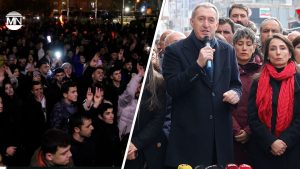
On Sunday, the co-chairs of the pro-Kurdish Equality and Democracy (DEM) Party Tülay Hatimoğulları and Tuncer Bakırhan, and co-chair of the Democratic Regions Party (DBP) Çiğdem Kılıçgün Uçar joined the demonstrators, who marched from the DBP’s branch office towards Cumhuriyet Avenue chanting slogans of resistance. However, the police surrounded the demonstrators, blocked their way and prevented them from reaching their destination. Many demonstrators were detained and violent clashes broke out as the police used force to control the crowds.
The DEM Party speakers, including Bakırhan and Hatimoğulları, recalled the events after the elections of 31 March, which had already demonstrated Van’s defiance against the erosion of their democratic rights. Although Zeydan came first in the polls with 55.48% of the vote, the local election board initially denied him the mayor’s post and awarded it to the candidate of the ruling Justice and Development Party (AKP) who had come second, sparking massive protests and demonstrations. The protests led to a landmark decision by the Supreme Electoral Council (YSK) to reinstate Zeydan, marking a significant victory for democracy in the region.
Bakırhan condemned the recent police intervention, saying: “Van displayed its resistance in the elections of 31 March. The will of the people is stronger than the repression”. He criticised the appointment of the trustees as a direct attack on the democratic values of the region. “What are you doing? Are you looking for a democratic solution, dialogue or Kurdish hostility?” he added.
Addressing the crowd, Hatimoğulları said, “On 31 March, Van rejected injustice. Now they [the government] want revenge for this victory”. She pointed out the hypocrisy of the government’s actions and said, “They talk about democracy, but they are deposing elected officials. This is not democracy; it’s an attack on the will of the people.”
The protests in Van have resonated beyond the city, with solidarity demonstrations held in Ankara and Istanbul. In both cities, demonstrators rallied against the government’s actions, calling for the restoration of local democratic decision-making and an end to the appointment of trustees in Kurdish-majority regions.
As tensions continue to rise in Van, the city’s residents appear determined to resist the appointment of trustees. With over 200 arrests reported, local activists and politicians have vowed to continue fighting for the democratic rights of the people of Van. The wider Kurdish community and civil society organisations across Turkey and beyond are rallying in support of Van’s struggle, signalling that this struggle is not just about one municipality, but about the Kurdish political will as a whole.


