

Turkey’s 8th Judicial Package faces scrutiny as it reintroduces controversial penalties for individuals accused of committing crimes on behalf of organisations for which they hold no membership, igniting a debate over potential infringements on judicial independence and individual rights.
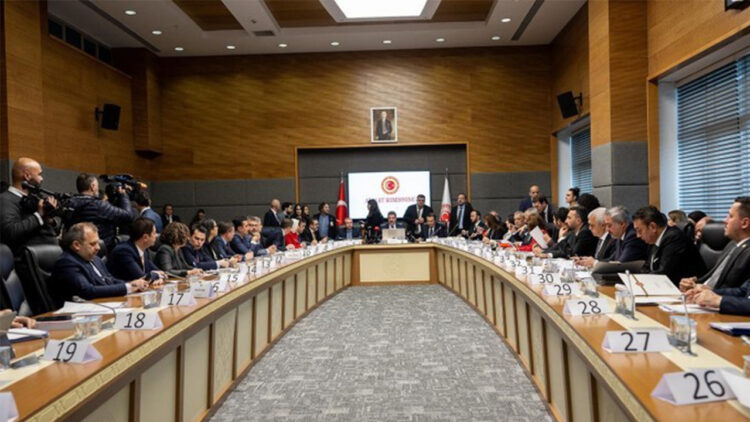
The judicial package, a comprehensive set of legal reforms affecting the Turkish Penal Code (TCK) and several other laws, was approved by the Justice Committee of the Turkish Grand National Assembly (TBMM) on Wednesday. Scheduled for debate in the General Assembly next week, the proposed changes are set to take effect 1 June 2024, stirring significant discussion about implications on the legal system and individual rights.
The package, announced by the ruling Justice and Development Party (AKP), aims to address various aspects of the legal process, from the execution of penalties to the handling of compensation claims related to judicial processes. Among the notable reforms is the establishment of a Compensation Commission within the Justice Ministry, intended to become a permanent fixture with extensive authority.
The Commission is expected to adjudicate compensation claims concerning violations of the right to a trial within a reasonable time, including cases deemed inadmissible by the Constitutional Court (AYM) and the European Court of Human Rights (ECHR).
The reform package also revisits the Conditional Suspension of Sentence (HAGB) system, limiting its applicability to sentences of two years or less, with decisions to be implemented alongside the verdict. Additionally, the package introduces regulations for fugitive defendants, preventing their sentencing to imprisonment without prior interrogation, potentially leading to statute limitations in critical cases.
Critics raised concern over the adherence of the package to constitutional principles and the potential impact on judicial independence and individual rights. The reclassification of crimes “committed on behalf of organisations without being members”, previously annulled by the AYM, has been particularly contentious. They argue that the reform disregards the AYM’s concerns about the ambiguous nature of acting “on behalf of” an organisation and may lead to disproportionate sentencing.
The charge circumvented the need for proving membership, facilitating broader application of the law. With this package, the AKP has intensified its stance in disregarding the AYM’s critique.
Other significant changes include an increase in financial penalties, with the package raising the limits for daily fines and adjusting the thresholds for various penalties. Additionally, the package proposes that home confinement and similar restrictive measures be considered part of the punishment and be deducted from the total sentence.
One of the more popular measures within the package is the increase in retirement bonuses, with the package proposing to raise the amount from 2,000 to 3,000 Turkish Lira (65-100 USD) for holidays, providing financial relief to retirees.
The reforms also address the processing of special categories of personal data, introducing new conditions under which such data can be processed, including situations where explicit consent is not possible due to incapacity or emergency health situations.
As the 8th Judicial Package advances to the General Assembly for further debate, its potential impact on Turkey’s legal landscape remains a subject of significant discussion, with proponents highlighting the aim to enhance judicial efficiency and critics warning of potential overreach and infringement of fundamental rights.


