

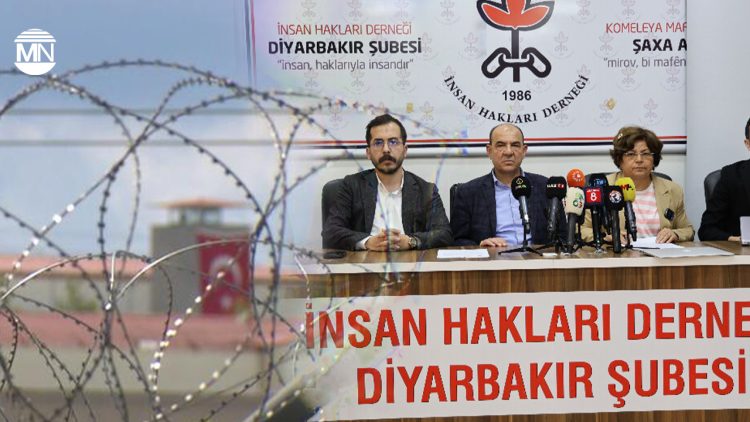
Turkey’s prison authorities are detaining at least 1,412 sick inmates, with 335 in severe condition, according to a report released by the Human Rights Association (İHD) on 28 April. The findings, presented at the İHD’s Diyarbakir (Amed) branch, highlight dire health conditions in the country’s jails and call for the urgent release of these prisoners to access proper medical care.
The İHD’s Central Prisons Commission compiled the report based on data from lawyer-client meetings, prisoner letters, family applications, and prison visits. It documented health issues ranging from cancer and heart disease to mental health disorders and physical disabilities. Among the 1,412 sick prisoners, 161 are women and 1,251 are men. Of the 335 critically ill, 230 cannot live independently, 105 require assistance, and 188 need constant medical monitoring. The report also noted 38 inmates needing surgery and 21 awaiting treatment.
The report directly follows the İHD’s two-day workshop in Diyarbakır that concluded on 27 April, addressing systemic human rights violations in Turkish prisons.
İHD Co-Chair Hüseyin Küçükbalaban stated that the Justice Ministry rarely shares health data on prisoners, making the report’s findings vital. “Prisons are where this country’s worst human rights violations occur,” he said, describing the data as the “tip of the iceberg”. He tied the issue to broader calls for resolving Turkey’s Kurdish question, referencing a recent peace appeal by Abdullah Öcalan, the imprisoned leader of the Kurdistan Workers’ Party (PKK).
Highlighting Öcalan’s 27 February disarmament call and subsequent unilateral PKK ceasefire, Küçükbalaban noted that the Turkish government has yet to outline a clear response. He urged the state to show goodwill by releasing sick prisoners and addressing past wrongs, such as village evacuations and unresolved killings during the decades-long conflict between the Turkish state and the PKK. “The state must take confidence-building steps, like halting operations and ensuring the right to life,” he added.
The report detailed systemic issues exacerbating prisoners’ health problems. Hospital transfers often involve cramped, unhygienic vehicles that pose risks for inmates with chronic conditions like epilepsy or asthma. Prisoners face handcuffed medical examinations, which the İHD says violates doctor-patient confidentiality and human dignity. Some inmates refuse hospital visits due to invasive searches, including oral cavity inspections by security forces. Overcrowded cells, inadequate heating, and limited access to clean water further worsen conditions.
Nuray Çevirmen and Yusuf Erdoğan, İHD officials, presented the report’s recommendations, urging compliance with international standards like the UN’s Mandela Rules. They called for immediate release of critically ill prisoners, improved hospital transfer conditions, and an end to handcuffed examinations. The report also criticised the Forensic Medicine Institute’s role as the sole authority in deferring sentences for health reasons, proposing that reports from fully equipped hospitals be accepted instead.
The İHD’s findings come amid ongoing discussions between the pro-Kurdish Peoples’ Equality and Democracy (DEM) Party and the Justice Ministry on legal steps to address the Kurdish issue. Küçükbalaban expressed hope that the report would guide policymakers toward prioritising sick prisoners’ release.


