

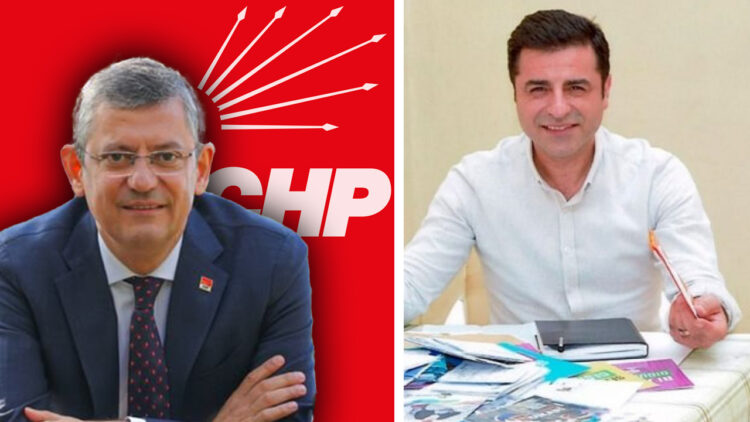
Özgür Özel, leader of Turkey’s main opposition Republican People’s Party (CHP), emphasised the need for ‘inclusive normalisation’ addressing the distinct realities of the Kurdish community, in an interview with T24’s Murat Sabuncu on Saturday, conducted a few days after his meeting with Turkish President Recep Tayyip Erdoğan.
“Currently, there is no normalisation for Turks or Kurds. The only ‘normalisation’ there is is our efforts at goodwill,” Özel stated, emphasising the limited progress in political reconciliation. He pointed out that his visit to former MP and Co-chair of Peoples’ Democratic Party (HDP) Selahattin Demirtaş in prison aims to be a working meeting, highlighting the importance of strategic dialogue over mere symbolic gestures.
Furthermore, Özel emphasised that any efforts at normalisation must include the Kurdish community, warning, “Normalisation will not exclude the Kurds.” He stressed that “it is the most disadvantaged groups that should be prioritised in normalisation efforts,” recognising the significant challenges faced by the Kurdish population in Turkey.
There is currently much debate around the concept of ‘normalisation’ in Turkey. The term is used to describe alleviation of the polarisation in politics and society, and President Recep Tayyip Erdoğan’s ruling Justice and Development Party (AKP) was the first party to seize upon it and put it into use in political discourse.
“I will not accept or allow a situation where democratic gains are achieved for Turks but Kurds are left out. If there is to be normalisation, it must prioritise the most disadvantaged, the poorest, and the most oppressed. In this country, the Kurds suffer the greatest democratic injustices. For example, people in Manisa, Osmaniye and Rize can elect their mayors, but those in Diyarbakır cannot. When they do, a ‘trustee’ is appointed [in their place], as has happened in Hakkari. In the last term, nearly all HDP municipalities had trustees appointed. If normalisation is to begin, it must start with ending the policy of appointing trustees in Kurdish areas.”
Özel was critical of the response of Erdoğan’s far-right ally the Nationalist Movement Party (MHP) to the case of the murder of far right politician Sinan Ateş. He said, “The MHP failed in the Sinan Ateş murder case,” and expressed concern over the lack of accountability in such significant incidents. Ateş, former head of the right-wing youth organisation Grey Wolves, was murdered in December 2022, reportedly due to internal conflicts within the MHP. Addressing the societal impact of political violence, Özel said, “In a normal place, the head of a party’s youth organisation wouldn’t be shot in the capital city without consequences,” criticising the current state of law and order in Turkey. He assured that “Sinan Ateş’s blood will not be forgotten by the people”.
Reflecting on the broader political environment, Özel remarked, “We played draughts with chess pieces for years,” illustrating his calculated and strategic approach to political manoeuvers. He stressed that, “The opposition must be constructive and resilient when necessary.”
Özel also tackled the issue of political communication, pointing out that “Turkey is in a very bad place regarding politicians’ communication with each other,” and acknowledged his role in initiating efforts towards normalisation. “I have no regret in my efforts towards normalisation,” he said, highlighting his commitment to fostering political civility and cooperation. Some, including those within his constituency, have criticised him for meeting with Erdoğan.
On 11 June, the day of the Erdoğan-Özel meeting, the MHP leader Devlet Bahçeli shared an Instagram post of his hand, with his distinctive ring on one finger, holding a file of papers, which some interpreted as a covert message or threat to the AKP and President Erdoğan. Özel’s emphasis on the Sinan Ateş murder, the “Achilles’ heel” of the MHP, is a strategic response to discredit any potential opposition to normalisation from the ruling AKP/MHP alliance.
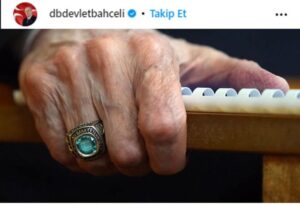
Observers, such as Turkish journalist Ergun Babahan, speculate that Bahçeli’s Instagram post might be a reminder to Erdoğan of similar issues within the AKP that have been overlooked, such as the unresolved murder of Erol Olçok and his son Abdullah. Nihal Olçok, the widow and mother of the victims, has been vocal about seeking justice and uncovering the truth behind their deaths. Recently, she addressed Bahçeli directly on social media, expressing hope that the file he held might contain crucial information about her husband and son’s deaths. “Dear chairman Devlet Bahçeli, if you accept, I would like to come and have a bitter coffee with you during the holiday. Maybe we can talk a bit about our pains, in a truthful and sincere manner. Let’s see if it happens… I don’t know about that ring, but I am hopeful about the file you are holding,” she wrote.
The Erol Olçok murder, which occurred during the chaos of the 2016 coup attempt, has raised significant questions about accountability and transparency. According to reports, Erol Olçok and his son were shot from behind by sniper fire, contradicting the official narrative that they were killed by participants in the coup attempt. Despite initial media coverage, these reports have been largely suppressed, leading to persistent speculation and demands for a thorough investigation.


