

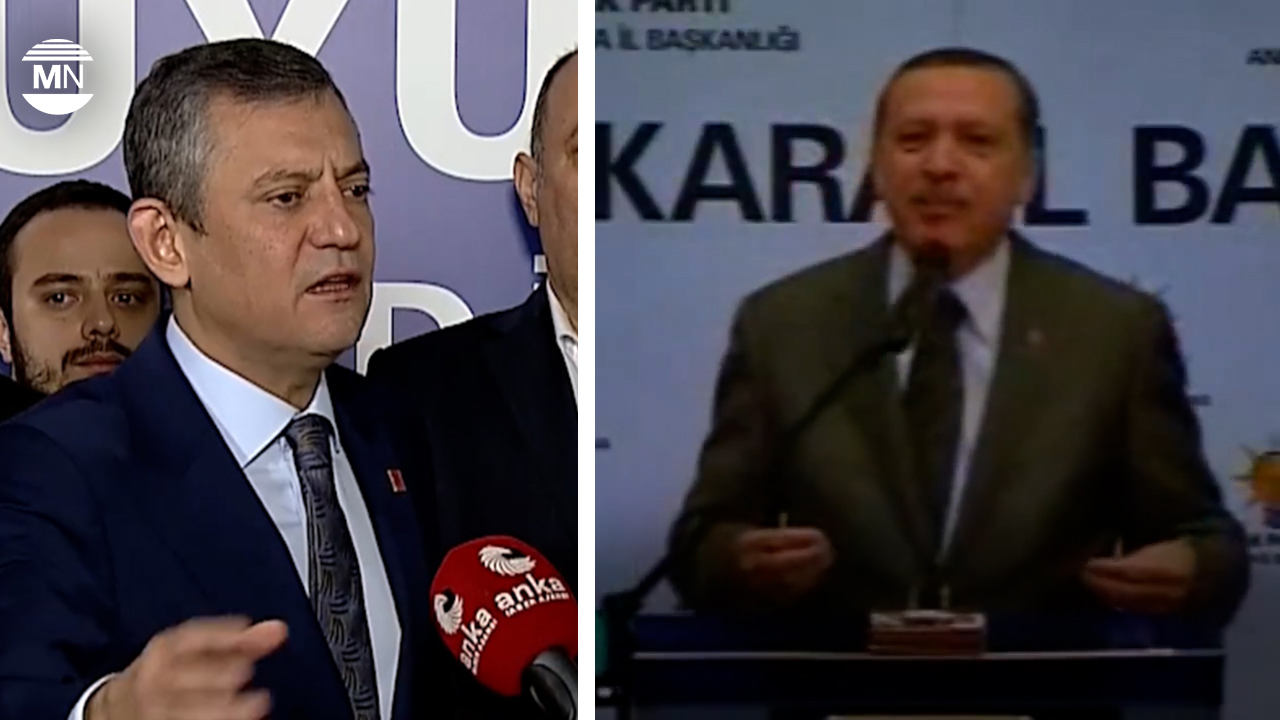
Turkish prosecutors launched an investigation on Tuesday into calls for an economic boycott after opposition leader Özgür Özel urged citizens to abstain from spending as a protest against the government. The move, coming amid mass protests over İstanbul Mayor Ekrem İmamoğlu’s arrest, has escalated tensions between the opposition and President Recep Tayyip Erdoğan’s ruling party.
The İstanbul Chief Prosecutor’s Office announced on Tuesday evening that it was probing whether the boycott campaign violated laws against inciting public hostility. The move was swiftly followed by top government officials condemning the boycott as a threat to economic stability.
Vice President Cevdet Yılmaz denounced the initiative, stating that opposition should be “legitimate” and that efforts targeting social peace and economic stability were “doomed to fail”. Trade Minister Ömer Bolat urged citizens to defy the boycott by increasing their spending, saying, “Let’s foil these efforts and give a lesson to those trying to create chaos.”
Özel, the leader of the main opposition Republican People’s Party (CHP), called for the economic boycott to take place on 2 April, framing it as a democratic right and a means of protesting the government’s crackdown on dissent. Within an hour of his statement, five senior ruling Justice and Development Party (AKP) officials appeared on pro-government television to condemn the move.
AKP spokesperson Ömer Çelik likened Özel’s call to reckless behaviour, while Justice Minister Yılmaz Tunç dismissed the boycott as “nonsense” that would ultimately fail. Industry Minister Fatih Kacır accused Özel of undermining domestic businesses and national production.
The debate intensified when the Union of Chambers and Commodity Exchanges of Turkey (TOBB), the country’s largest business association, joined the criticism. “Targeting our companies that produce, provide employment, and invest — and calling for boycotts — is wrong,” said TOBB Chair Rifat Hisarcıklıoğlu.
Özel fired back, accusing TOBB of siding with the government and ignoring public grievances. “No one is dragging businesses into political debates,” he responded. “We stand with what’s right. We will win, and your mindset will lose.”
Özel also pointed to past calls for boycotts by Erdoğan himself, including a 2008 campaign against media outlets critical of his administration. “What is halal for Erdoğan cannot be haram for the people,” he said, branding government reactions as hypocritical.
The controversy has added fuel to ongoing protests across Turkey, where thousands have taken to the streets over what they see as growing authoritarianism. İmamoğlu’s arrest on corruption charges, widely regarded as politically motivated, has galvanised opposition groups, particularly among younger voters. More than 2,000 protesters have been detained nationwide since last week.
Related articles:
Nearly 1,900 detained as Turkey protests İstanbul mayor’s arrest for eighth night
Crackdown in Turkey: 173 arrested as protests escalate on seventh night
Nationwide student protests and strikes escalate over İstanbul mayor’s arrest
Tens of thousands gather in Istanbul in defence of democracy, solidarity with İmamoğlu
Istanbul Mayor Ekrem İmamoğlu remanded in custody, sparking outrage
Global media reacts to Istanbul Mayor İmamoğlu’s arrest: ‘Erdoğan’s key rival detained’
Turkey arrests President Erdoğan’s main competitor, Istanbul Mayor Ekrem İmamoğlu in dawn raid
Beyond political discontent, economic hardships are also driving unrest. Inflation remains high, and many young people see limited job prospects. Protesters argue that the boycott is a symbolic act of resistance against worsening economic conditions and the erosion of democratic freedoms.
A university student protesting in Ankara said similar sentiments about the oppression, highlighting, “Not just minorities, not just women, not just the LGBTI+ — it is against all of us.” Another 25-year-old protester in İstanbul echoed concerns about the economic conditions, saying, “I graduated in 2024, but I can’t find a job, and my family struggles financially,” Reuters reported on Wednesday.
With tensions mounting, the government’s next steps remain unclear. But for many in the opposition, the economic boycott has become more than just a call to limit spending — it is a test of resistance in an increasingly polarised Turkey.


