

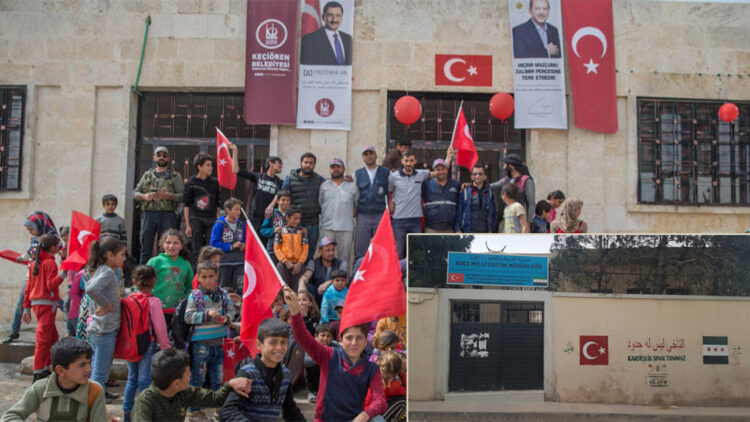
Turkey has been accused of replacing Kurdish landmarks and symbols in Afrin (Efrîn) and other areas of occupied northern Syria with Turkish ones, prompting concerns of cultural erasure and demographic change. Following its military incursion, Operation Olive Branch, which began on 20 January 2018, Turkey established control over Afrin and other Syrian cities, leading to widespread replacement of local Kurdish symbols with Turkish flags, monuments and names.
According to a report by Syrians for Truth and Justice, these changes began almost immediately after Turkey’s occupation of Afrin, targeting key Kurdish landmarks like the Kawa al-Hadad Roundabout and Newroz Roundabout. The Kurdish identity of these areas has been replaced with symbols of Turkish or Islamic culture, such as renaming the Newroz Roundabout as Salah ad-Din al-Ayyoubi Roundabout and al-Saray Square as President Recep Tayyip Erdoğan Square. The statue of Kawa al-Hadad, a legendary figure in Kurdish culture, was removed and replaced with a sculpture symbolising Turkey’s Operation Olive Branch.
Local residents interviewed for the report, who requested anonymity due to fears of retaliation, stated that the changes aim to erase Kurdish cultural identity in Afrin. “The goal of altering Afrin’s landmarks is complete demographic and cultural change, until Afrin can no longer be called a Kurdish area,” said one resident, adding that around 70% of the population in Afrin now consists of non-indigenous people.
The report also documents similar Turkification efforts in other areas under Turkish control, such as al-Bab, where schools and public squares have been renamed after Turkish figures. These actions have sparked protests from local communities and led to arrests, such as that of activist Khalil Abu Shekho, who was detained for removing a Turkish name from a school sign in al-Bab.
Human rights organisations argue that these policies violate international laws protecting cultural and minority rights. They claim that Turkey’s actions in northern Syria mirror past exclusionary practices by the Syrian government against Kurds and other minority groups. Local residents, meanwhile, remain unable to express their opposition due to ongoing arrests and harassment by militias loyal to Turkey.


