

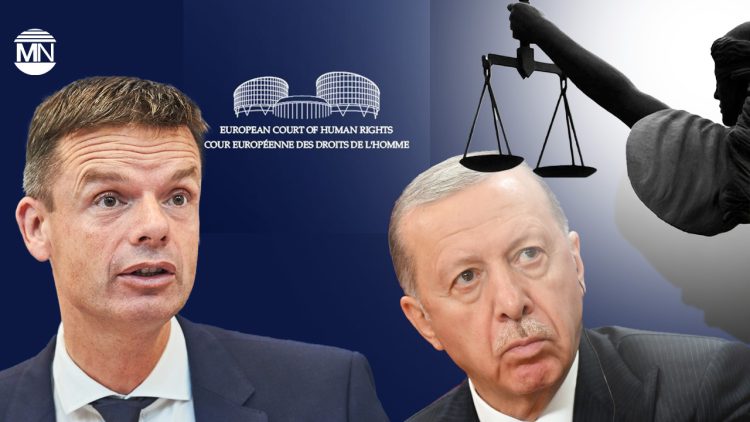
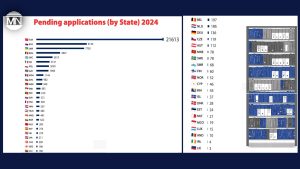
President of the European Court of Human Rights (ECHR) Marko Bošnjak has officially launched the 2025 judicial year, presenting also the 2024 statistics on human rights violations across Europe. According to the report, Turkey has 21,600 pending cases, making it the country with the highest case count at the Court – almost three times higher than that of the second on the list, Russia, with 8,150. The report highlights systemic issues within Turkey’s judiciary, including political interference, suppression of free expression, and unfair trials.
According to the report, five countries accounted for nearly three quarters of all pending cases before the ECHR. Turkey topped the list with more than a third of all cases before the Court, followed by Russia (8,150 cases), Ukraine (7,700), Romania (3,850), and Greece (2,600). Notably, 80% of the Court’s priority applications – cases considered urgent due to their potential impact on human rights – also originated from these five countries.
The prominence of Turkey in the Court’s caseload highlights long-standing criticisms regarding the erosion of judicial independence, particularly under President Recep Tayyip Erdoğan’s government. In recent years, the Turkish judiciary has been accused of being weaponised by the state against political opponents, civil society actors and journalists.
One of the key issues highlighted by legal experts is the ongoing imprisonment and incommunicado detention of Kurdish leader Abdullah Öcalan, which has drawn widespread condemnation. Despite multiple calls from the ECHR and the Council of Europe’s Committee for the Prevention of Torture (CPT), Turkey continues to deny Öcalan legal representation and family visits, raising serious concerns about compliance with European human rights standards.
Additionally, Turkey’s judicial system has faced scrutiny for politically charged trials, such as the cases against opposition figures like Istanbul Mayor Ekrem İmamoğlu. Erdoğan’s government has been accused of using the courts to eliminate potential political rivals, reinforcing fears of a judiciary compromised by executive influence. While Erdoğan says that the Turkish judiciary acts solely on behalf of the Turkish nation, reports highlight a rise in politically motivated trials, the repression of free speech, and increasing government interference in the judiciary.
Despite the high caseload, the ECHR has reported a decline in pending applications overall, with 60,350 cases awaiting judgment by the end of 2024 – a decrease of 8,100 from the previous year. The Court attributed this progress to efficiency-driven reforms, including the implementation of an “impact strategy” and increased use of three-judge committees to expedite decisions.
In a further effort to enhance transparency and judicial integrity, the Court announced the establishment of an Ethics Council to oversee compliance with judicial ethics. This initiative aims to ensure greater impartiality in judicial proceedings and restore trust in the Court’s decision-making process.
While the ECHR continues to adjudicate cases related to Turkey, the Turkish government remains defiant in its approach to human rights. In previous years, Ankara has resisted implementing key ECHR rulings, including decisions calling for the release of political prisoners such as the philanthropist Osman Kavala and former HDP Co-Chair Selahattin Demirtaş.
The ongoing judicial crisis in Turkey has led to increasing concerns within European institutions. The Council of Europe has repeatedly warned Ankara about possible sanctions, including suspension from the organisation, if it continues to ignore binding ECHR rulings.
As the 2025 judicial year unfolds, Turkey’s record in the ECHR will remain a critical measure of its commitment to democratic governance and human rights. With thousands of cases still pending, the Court’s role in holding Turkey accountable is expected to intensify, adding further pressure on the Erdoğan administration.


