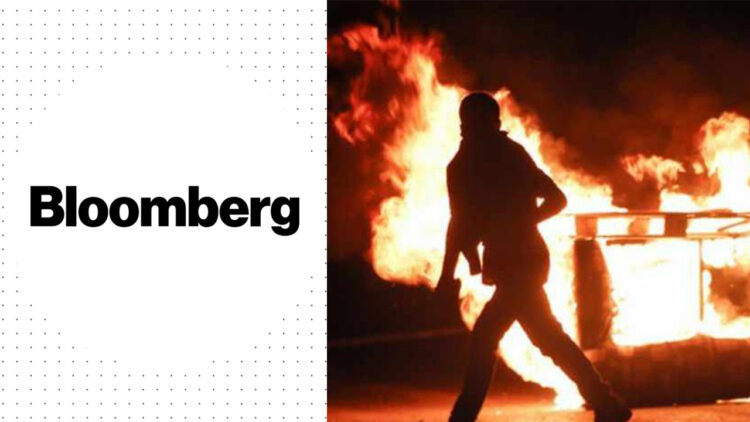
Turkey has been ranked as the most likely G20 nation to face internal conflict or civil unrest within the next year, according to a recent analysis by Bloomberg Economics.
The report, released on 14 August, places Turkey ahead of both Russia and the United States in terms of the risk of violent political turmoil, highlighting growing concerns about the country’s political and economic stability.
The analysis adapts a model developed by the US government’s Political Instability Task Force, which assesses the likelihood of internal strife based on factors such as the erosion of democratic institutions and the rise of factionalism. Turkey’s position at the top of the list is attributed to the increasing political polarisation, ongoing economic challenges, and the government’s crackdown on dissent, which have collectively heightened the risk of unrest.
Kurdish journalist Günay Aslan commented on the findings, emphasising that Turkey’s situation is more precarious than that of Russia, which is currently embroiled in the Ukraine conflict, or the United States, which has been experiencing rising political tensions. “Turkey is at the brink of a significant breakdown,” Aslan stated, noting that the country has been grappling with severe economic pressures, ongoing conflicts, and deepening societal divisions.
Aslan pointed to the Turkish government’s reliance on nationalist rhetoric and paramilitary forces as factors that could exacerbate these divisions and potentially lead to widespread violence. He also warned that marginalised groups, such as Kurds and Syrian refugees, could become targets in any internal conflict, as nationalist sentiments and xenophobia continue to rise.
These concerns echo comments by Howard Eissenstat, a non-resident scholar at the Middle East Institute (MEI) who analysed Turkey’s political landscape following pivotal May 2024 elections. Eissenstat argued that the next few years would likely be distinctly unstable due to the country’s economic decline and significant political challenges faced by both the ruling Justice and Development Party (AKP) and the country’s main opposition.