

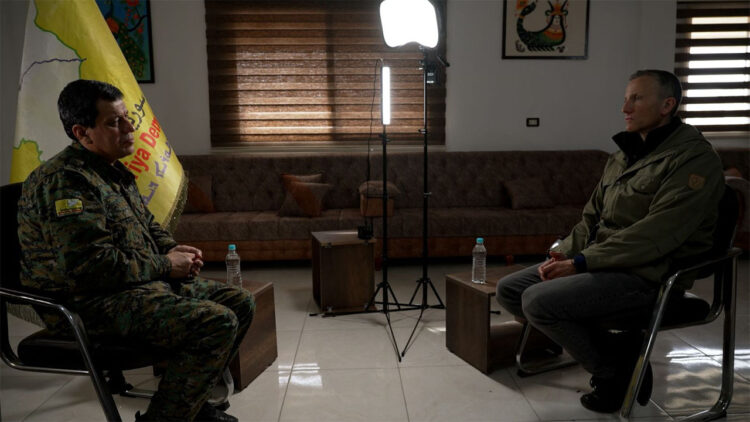
In an exclusive interview with Sky News, General Mazloum Abdi, the leading figure of the Syrian Democratic Forces (SDF), has issued a stark warning about the escalating threat posed by Turkey-backed rebel groups. The attacks, Abdi stated, are forcing the SDF—one of the most crucial allies in the US-led coalition against ISIS—to suspend operations targeting the remnants of the terrorist group in northern Syria.
Kurdish US-allies halting anti-ISIS operations because of threat from Turkey-backed rebels, SDF commander warns https://t.co/daTceDoysr
— Sky News (@SkyNews) December 11, 2024
Abdi explained that the aggression from Turkey-supported mercenaries has destabilised the region, jeopardising hard-won security achievements. “Instead of focusing on ISIS cells, our resources are being redirected to protect our borders and communities from attacks,” Abdi said. This shift, he warned, could create a dangerous vacuum, allowing ISIS to regroup.
A call for international action
The commander called on the US and the international community to hold Turkey accountable for its support of armed groups that are undermining regional stability. These factions, he added, have been emboldened by Turkey’s policies, launching frequent assaults that not only threaten the SDF but also imperil civilians in the territories liberated from ISIS.
Abdi described the attacks as part of a broader strategy aimed at dismantling the autonomous administration established in northern Syria—a region that has become a rare bastion of pluralism and democracy in the Middle East. “This is not just about the SDF. It is a deliberate attempt to dismantle everything we have built,” he said.
Implications for the global fight Against ISIS
The timing of these attacks is particularly troubling, as ISIS continues to carry out sleeper-cell operations in the region. The SDF has played a pivotal role in containing the group’s resurgence, maintaining security in camps holding thousands of ISIS fighters and their families. Without sustained operations, Abdi warned, the risks of ISIS regaining ground grow exponentially.
“Global security depends on the stability of this region,” he emphasised, urging international allies to step up efforts to shield northern Syria from external aggression. Failure to act, he cautioned, could have dire consequences far beyond the region, enabling ISIS to resurface as a global threat.
Broader regional dynamics
Abdi’s comments also shed light on the complex dynamics of northern Syria, where Turkey’s influence continues to expand. Analysts argue that Turkey’s support for these groups is part of a wider geopolitical agenda, aimed at countering Kurdish-led governance and securing territorial control. This ongoing conflict not only disrupts local stability but also risks drawing major powers deeper into the quagmire.
For Abdi, the path forward is clear: “We need stronger commitments from our allies. Silence in the face of aggression is complicity.” His appeal underscores the urgency of safeguarding a region that has been instrumental in the fight against one of the world’s most dangerous terrorist organisations.


