

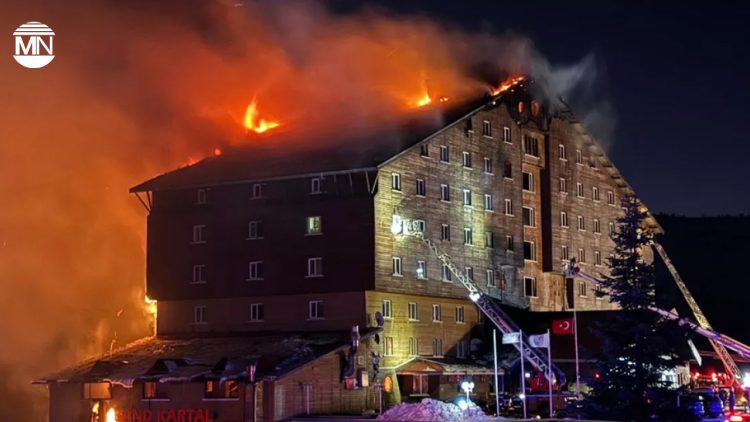
The catastrophic fire at the Grand Kartal Otel in the Kartalkaya district of Bolu, which claimed 79 lives and injured dozens, has once again exposed the devastating consequences of systemic negligence, corruption and nepotism in Turkey. This latest tragedy highlights the authorities’ long-standing failure to enforce safety regulations and prioritise public safety over profit, sparking widespread public outrage.
Described as yet another ‘preventable disaster’, critics argue that the Grand Kartal Otel fire adds to a grim list of tragedies caused by a system that prioritises political and financial gain over human lives. In a statement published on 23 January, the Peoples’ Equality and Democracy (DEM) Party criticised the government’s policies, saying: “Since the AKP came to power in 2003, incidents that we define as massacres – including earthquakes, mining accidents, train derailments, floods, dormitory and hotel fires and factory explosions – have claimed 54,780 lives and left tens of thousands injured.” The party called for a parliamentary inquiry, immediate inspections of older buildings and the resignation of those responsible, stressing that corruption and weak oversight continue to allow such disasters to occur.
The Fayn newspaper echoed these criticisms, publishing data on the staggering death toll during the AKP’s rule and highlighting the pervasive role of nepotism and systemic negligence. Among these tragedies, the Maraş earthquakes of 2023 stand out as the deadliest, with more than 50,000 deaths. Experts argue that many of these deaths could have been prevented with proper enforcement of building codes, stricter oversight and transparent governance. Investigations have revealed that several collapsed buildings were constructed with substandard materials, with some contractors reportedly using political connections to bypass safety regulations. Stories of people trapped under rubble for days and rescue efforts hampered by inadequate infrastructure further underlined the failures of a system that neglected disaster preparedness.
Onlarca önlenebilir facia, sıfır istifa! pic.twitter.com/vyvbqhTXl8
— Fayn (@faynstudio) January 22, 2025
Other examples of preventable disasters include the 2014 Soma mine disaster, which killed 301 miners; the 2018 Çorlu train derailment, which killed 25; and the 2024 Beşiktaş nightclub fire, which claimed 29 lives. These tragedies reflect a recurring pattern of regulatory neglect and impunity, which continues to claim lives.
Amid the tragedy, stories of human solidarity have emerged, offering hope in the midst of despair. People used bedsheets to help others escape the flames, and acts of heroism were widely shared on social media. One name that stood out was Neçirvan Ören, a young Kurdish man who saved multiple lives during the disaster. His courage and selflessness dominated discussions on social media, in stark contrast to the officials who publicly blamed each other for the tragedy.
🔴 Bolu’daki yangında iki aileyi kendi imkanlarıyla kurtaran KÜRD genci olay esnasında başından geçenleri anlattı. Gencin bu cesareti ve yardımı sosyal medyada övgülerle anıldı. pic.twitter.com/rxAa6iLWRx
— RonMedya (@RonMedya) January 22, 2025
Former Peoples’ Democratic Party (HDP) co-chair Selahattin Demirtaş, writing from Edirne prison, reflected on the fire in a powerful article. “A man from the upper floors shouted, ‘There’s a baby!’ as flames and smoke engulfed the hotel,” he wrote. “Yet no one takes responsibility. No resignations, no shame, no humanity.” Condemning the culture of impunity, Demirtaş called for justice for the victims and systemic reforms to tackle negligence and corruption.
The Bolu Chief Public Prosecutor’s Office confirmed that the death toll from the fire had risen to 79, with many more injured. Following inspections, the Bolu branch of the Ministry of Environment and Urbanisation declared the building to be severely damaged and unsafe. As a result, officials have decided to demolish the Grand Kartal Otel, which suffered extensive damage in the fire.
The Grand Kartal Otel fire is the latest in a series of preventable tragedies in Turkey, rooted in systemic failures and a lack of accountability. Critics warn that unless urgent reforms are implemented, such disasters will continue to claim lives, with the innocent bearing the brunt of the cost.
Related Articles:
Negligence blamed for deadly Bolu ski resort fire, says KCKBlaze at a ski resort hotel in Turkey kills at least 66


