

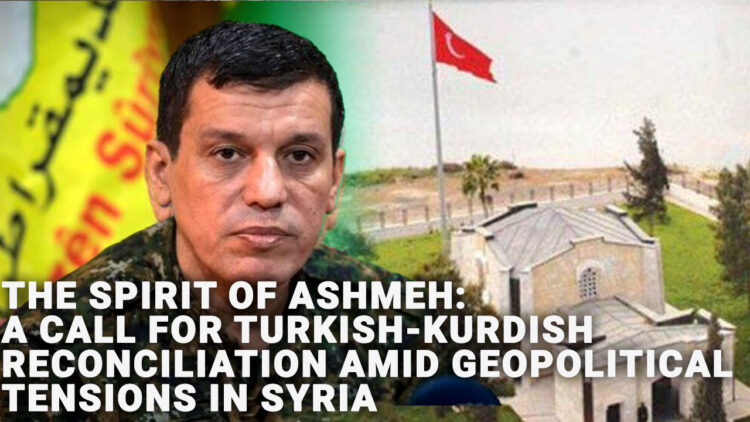
The Commander-in-Chief of the Syrian Democratic Forces (SDF), Mazloum Abdi has made a statement reaffirming the SDF’s commitment to preserving historical and cultural heritage amidst ongoing conflicts and challenges. Reflecting on their role in 2015 during the threat posed by ISIS, Abdi highlighted the SDF’s contribution to securing the remains of Suleyman Shah by facilitating their relocation to the Ashme region.
In his latest post in X (formerly known as Twitter), Abdi underlined the SDF’s readiness to collaborate with all relevant parties to ensure the safe return of Suleyman Shah’s remains to their original mausoleum. He stated that any such process would be conducted in accordance with prior international agreements and with full respect for the cultural and historical significance of the site.
خلال التهديد الذي شكله تنظيم داعش عام 2015، ساهمنا في حماية رفات سليمان شاه عبر تسهيل نقلها إلى منطقة آشمة.
واليوم، نجدد تأكيدنا على التزامنا الراسخ بالحفاظ على المواقع التاريخية، واستعدادنا للتنسيق مع جميع الأطراف المعنية لتيسير إعادة رفاته إلى موقع المزار الأصلي ، بما يتماشى…
— Mazloum Abdî مظلوم عبدي (@MazloumAbdi) December 11, 2024
In 2014, the SDF assisted Turkey in relocating them from the tomb’s original location near the Qara Qozak Bridge of the Euphrates River located south of Kobani, into a more secure site in the village of Ashme, west of Kobani (Kobanê), amid an attack by the Islamic State (ISIS) on the city.
During this tense period, the imprisoned Kurdish leader Abdullah Öcalan congratulated the joint operation and referred to it as the *‘spirit of Ashme’ amidst the sensitive negotiations and peace talks with the ruling AKP government in 2014, which were later unilaterally terminated by Erdoğan himself. Öcalan described Ashme as embodying a spirit that symbolises the collaborative efforts of Turks and Kurds, underscoring their shared sense of a-thousand-year shared history.
This announcement from Abdi comes at a time of heightened geopolitical tensions in northern Syria. Abdi’s remarks underscore the SDF’s broader commitment for protecting cultural heritage, as well as their wish to be at peace with neighbouring countries, while maintaining their role as a stabilising force in the region, particularly in the fight against ISIS.
Since 8 December, a US-brokered negotiation process is underway between the AANES and Turkey, aiming to de-escalate attacks by Turkish-backed mercenaries on cities under the control of the Autonomous Administration of North and East Syria (AANES) in the Euphrates basin.

Abdi’s remarks also contributed to bringing to the fore the existing discussions and discourses about the urgent necessity of allowing Öcalan to speak for peace, and of ending the decades-long bloody conflict with Turkey. Tuncer Bakırhan, co-chair of pro-Kurdish DEM Party, had also mentioned the ‘spirit of Ashme’ during his speech in Turkish Grand National Assembly earlier this week, in the context of his call for updating reconciliation and peace talks process with Öcalan.
The SDF leader’s call for cooperation reflects a willingness to engage with Turkey and other actors in addressing matters of historical and cultural importance. His statement resonates with the international community’s focus on safeguarding heritage sites in conflict zones and promoting collaboration for peaceful resolutions.
The importance of Sulayman Shah’s tomb for Turkey
Sulayman Shah’s tomb, located in northern Syria, holds a deeply symbolic place in Turkey’s historical narrative as a cornerstone of the Ottoman Empire’s legacy. Sulayman Shah, the grandfather of Osman I—the founder of the Ottoman dynasty—is revered as a pivotal figure in Turkish history. His tomb has served as a bridge connecting modern Turkey with its Ottoman heritage, reflecting themes of continuity, power, and identity.
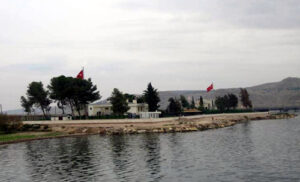
The significance of Sulayman Shah’s burial site extends beyond its historical roots; it is a powerful symbol of Turkish sovereignty and heritage in an area that has long been a geopolitical crossroads. The site has been relocated multiple times due to security concerns amidst Syria’s ongoing conflicts, with Turkey deploying resources to safeguard it. These actions highlight Turkey’s commitment to preserving this symbolic link to its past, while navigating the challenges of modern border politics. The tomb is protected under a 1921 treaty between Turkey and France, granting it extraterritorial status and making it a tangible reminder of Turkey’s historical presence in the region.
For Turkey, Sulayman Shah’s tomb is more than a historical site; it serves as a focal point for national identity and soft power. By emphasizing its Ottoman heritage through the preservation of this site, Turkey reinforces a narrative that links its modern statehood to a storied imperial past. The cultural and emotional resonance of Sulayman Shah’s legacy provides a unifying thread for Turkey’s domestic audience while also asserting its influence in a region marked by competing historical claims and shifting alliances to the extent of Neo-Ottoman expansionist strategies.
*Ashme Spirit (Eşme Ruhu): The call of Öcalan for peace and reconciliation
Abdullah Öcalan, the jailed Kurdish leader and founder of the Kurdistan Workers’ Party (PKK), invoked the notion of the ‘spirit of Ashme’ during a pivotal moment in Turkey’s political history—the peace talks of 2014 between the PKK and the ruling Justice and Development Party (AKP). The phrase, as articulated by Öcalan, symbolised a spirit of unity and collaboration between Turks and Kurds. Ashme, in this context, became a powerful metaphor for a shared sense of brotherhood, suggesting that despite longstanding ethnic and political tensions, the two groups could find common ground through mutual respect and historical ties.
The timing of Öcalan’s reference was particularly significant. The peace process, which was at its height in 2014, aimed to end decades of armed conflict and was marked by delicate negotiations involving various stakeholders. The invocation of Ashme added a historical dimension to the discussions. It served as a reminder of a time when Turks and Kurds had cooperated to navigate challenges, such as safeguarding shared heritage. This narrative was instrumental in framing the peace process as not just a political negotiation but also a cultural and historical reconciliation.
The concept of the ‘spirit of Ashme’ remains relevant in contemporary discourse, as it reflects the complex interplay between heritage and modern identity politics. By drawing upon this shared historical symbolism, Öcalan sought to ground the peace talks in a narrative of mutual respect and co-existence. However, the eventual breakdown of the peace process underscores the fragility of such efforts. The ‘spirit of Ashme’ remains a poignant, albeit unrealised, ideal for many advocates of Turkish-Kurdish reconciliation.


