Medya News contributor Matt Broomfield has just released a long read on the left-wing Truthdig news platform, analysing the repression faced in Europe by internationalists returning from the fight against ISIS.
Broomfield says that these fighters have been left to “wage lonely battles against PTSD [post-traumatic stress disorder] and harassment by Western governments.”
Published ten years on from the beginning of the fight against ISIS, the article notes that at least ten internationalists have taken their own lives on return to Europe. Broomfield writes:
“Once, they were heroes. From 2014 on, hundreds of US and international volunteers travelled to Syrian Kurdistan to join Kurdish-led forces battling the Islamic State of Iraq and the Levant, or ISIS. As they helped turn the tide and drive ISIS out of their one-time capital Raqqa — backed by US airstrikes and limited ground support — young leftists and US military veterans were martyred side-by-side under the antifascist flag.”
But, on their return, internationalist volunteers have been forsaken by the politicians and public figures who once lauded them as heroes, and hounded by states who want to brand them terrorists to placate Turkey. As Broomfield puts it:
“Sensationalist and sexed-up media coverage accompanied them into battle. Western media were enthralled by the spectacle of idealistic young North Americans fighting alongside Kurdish women in a life-or-death struggle against a resurgent strain of authoritarian Islamism… A decade later, Syria’s Kurdish-led forces have been abandoned by their one-time Western allies, and the global press no longer cares about the ‘heroes’ of the ISIS war. The ‘Anarchists vs ISIS’ film never materialised. Instead, the volunteers returned home to face struggles familiar to veterans of other conflicts, including depression, PTSD and suicide. Instead of offering institutional support, the US, UK and European governments surveil and harass the returning volunteers at Turkey’s behest.”
Broomfield recounts how Agir, a UK born Kurdish internationalist who volunteered as a combat medic, was stopped by armed counter-terror officers at Luton airport. Agir, who was on the way to the funeral of a fallen comrade, was questioned under Schedule 7 of the UK Terrorism Act. Schedule 7 gives the police broad powers to interrogate travellers at ports and airports, without the need for any reasonable suspicion of criminality. Those stopped are faced with arrest for a terror offence if they do not answer questions, often have electronic equipment seized, and have limited access to lawyers. Police can also demand passwords to phones or laptops, on threat of arrest if they are not handed over.
Jon Holmes, a spokesperson for the UK Kurdistan Solidarity Network told Broomfield that the UK and other European governments use a range of other intimidation tactics; from arrests to house raids, travel bans and restrictive bail conditions, to put pressure on returned volunteers. Holmes told Broomfield that: “The intended effect is to isolate, to break down networks. People feel they are being watched, so should stay away from comrades because it might put them in danger. It carries a huge toll for people’s mental health.”
The UK has been one of the worst culprits in repressing anti-ISIS fighters. Jamie Janson, a former volunteer with the Kurdish-led People’s Protection Units (YPG), took his own life while under investigation in the UK for joining the fight against ISIS. Fellow YPG volunteer Dan Burke spent eight months on remand in prison on terror charges throughout the covid lockdown, before the Crown Prosecution Service dropped the charges without explanation. He later died in Ukraine, while resisting the Russian invasion.
Broomfield points out that civilian volunteers have faced harassment too. He writes:
“Medical volunteers, ecological and women’s activists are all routinely harassed at the border and prevented from travelling; a number of these civilian volunteers have also taken their own lives upon return. Jon Allen, of the Kurdistan Solidarity Network, was arrested, bailed and forced to report three times weekly to a police station simply for supporting an ecological delegation traveling to Rojava.”
Broomfield himself was “held in a Greek jail for two months and banned from all European territory as a result of his journalism work in Rojava”.
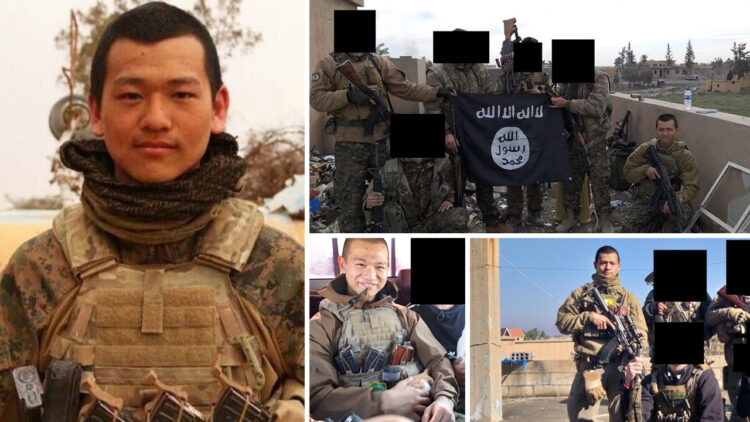
In the US, volunteers often have even less of a support network than in Europe, and are forced to face depression and mental health challenges alone. In 2021, Connor Lee-Kawanishi took his own life after returning from northern Syria. He had experienced several visits from the FBI concerning his time as a volunteer. His mother told Broomfield:
“After the first two weeks [back home], he spiralled out of control, losing hope and purpose… We didn’t have health insurance for him and [were] waiting for that until we could get him to see a psychiatrist for medication and therapy. None of the help we were waiting for came to fruition.”
After Lee-Kawanishi’s death, the FBI continued to harass his sister.
Another volunteer, River O’Mahoney Hagg, who is also a US army veteran, told Broomfield that when she returned home she “lost everything — my family, job and two houses. I was homeless for about eight months.”
Broomfield’s article shows that these volunteers, who risked their lives to support the fight against ISIS, have been met by repression and disdain on their return to their home countries. His analysis highlights the importance of organising mutual aid and support for internationalists, who are still facing attacks by the same Western states who had previously declared themselves allies in the fight against ISIS.
Click here to read the full article on Truthdig.