

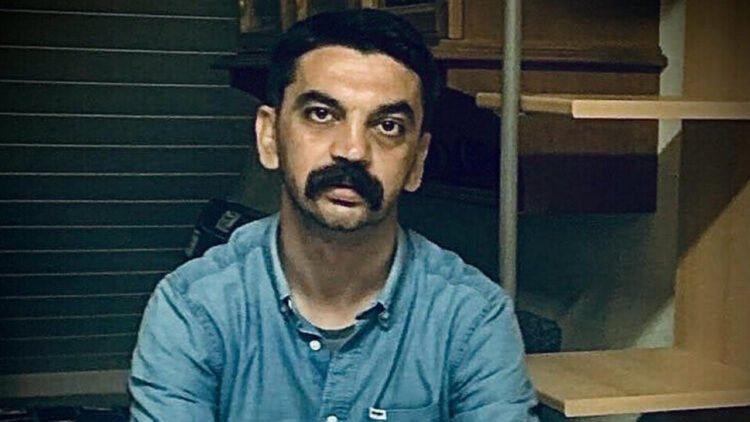
Sweden’s Kurdish community initiated a campaign on Tuesday to protest the arrest and potential extradition of Ferit Celik, a 36-year-old Kurdish man. Utilising the hashtag #SupportFörFeritCelik, they demand his immediate release, asserting his arrest lacks legal grounds.
Ferit Celik found himself in extradition custody following his arrest in Solna, Sweden, after a meeting with the Swedish Security Service. This event, which transpired on 23 February, has sparked significant concern among the Kurdish-Democratic Society Centre in Sweden (NCDK-Sverige), which vehemently opposes Celik’s extradition to Germany, fearing subsequent transfer to Turkey where he faces accusations linked to his Kurdish activism.
Celik, who has been granted asylum in Sweden, is revered in his community for his dedication to Kurdish political and cultural initiatives, which his advocates argue are legitimate and non-violent forms of activism.
The revelation by NCDK-Sverige regarding Celik’s apprehension by plainclothes officers, after willingly engaging with the Swedish Security Service, raised questions about the necessity and rationale behind such measures, considering his unblemished record in both Sweden and Germany.
This case highlights a wider issue of criminalising Kurdish activism in Europe, with NCDK-Sverige underscoring the dangers Celik faces, including potential imprisonment in Germany and persecution in Turkey.
“We are deeply troubled by the police authority’s decision to detain him under such dramatic circumstances,” remarked the NCDK-Sverige in their statement. They noted that the arrest, particularly following Celik’s voluntary collaboration with the Swedish Security Service, indicates a troubling trend of targeting Kurdish activists on dubious legal grounds. The plea for Celik’s liberation forms part of a broader appeal to challenge and denounce the oppression of Kurds in Sweden and throughout Europe, urging a re-evaluation of policies that unjustifiably criminalise diaspora communities.
This situation in Sweden reflects similar challenges in Germany, where Kenan Ayaz, a Kurdish political activist extradited from Cyprus on charges of international terrorism, endures harsh prison conditions.
These developments highlight a concerning trend across Europe, where anti-terrorism laws are increasingly deployed against Kurdish activists, aligning with Turkish efforts to criminalise and stifle Kurdish rights even in the diaspora.
While Germany’s longstanding alliance with Turkey and its similar stance on Kurdish issues may not come as a surprise, Sweden’s recent actions provoke alarm over the extent to which it is prepared to acquiesce to Turkish demands.
Turkey’s anti-Kurdish demands have intensified and outright transformed into blatant blackmail with the influx of refugees, followed by the threat of fundamentalist Islamist terror attacks.
Sweden’s recent application for NATO membership has created a renewed, favourable environment for Turkey’s anti-Kurd demands. But since the process has concluded with the Turkish parliament’s ratification, the Kurdish community is questioning the rationale behind Sweden’s continued compliance with Turkish pressures, particularly when such compliance comes at the cost of democratic values and human rights.
The Kurdish diaspora in Europe, however, refuses to yield to the Turkish state’s anti-Kurdish agenda. Faced with top-down intergovernmental negotiations that foster an antidemocratic environment behind closed doors, at the expense of human rights and democracy, Kurds are choosing to stand their ground by forming alliances with non-governmental, local and democratic forces, as illustrated in Lausanne, where the municipality, under Mayor Grégoire Junod, decided to follow what they “believed was the right path despite opposition [from Turkey]”, and to continue their collaboration with the Kurdish community, which “demonstrated a model of democratic work”.


