

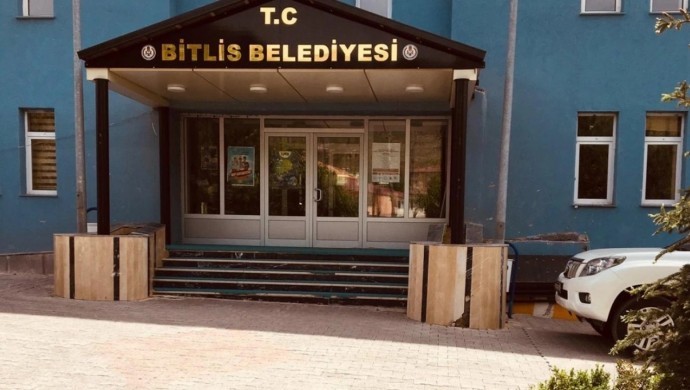
In the Kurdish-majority city of Bitlis (Bedlîs), the sale of 676 properties by Turkish state-appointed trustees and officials from the ruling Justice and Development Party (AKP) generated 393,511,000 Turkish Lira (12.7m USD), sparking a parliamentary inquiry led by Hüseyin Olan, a Member of Parliament for the pro-Kurdish Peoples’ Equality and Democracy (DEM) Party.
Olan’s inquiry aims to shed light on the transparency and allocation of the sales’ proceeds.
The appointment of trustees, or ‘kayyums’, to Kurdish-majority municipalities by the Turkish government has sparked controversy, as critics contend it erodes local democracy and infringes on the political rights of Kurdish communities. This process entails the replacement of elected officials with administrators appointed by the government, resulting in profound alterations in municipal governance and decision-making.
Among the consequences are the impoverishment of municipal budgets through property sales, which lack transparency and could potentially deplete resources for future elected pro-Kurdish officials.
The Environment, Urbanisation and Climate Change Ministry’s response to the inquiry, while confirming the property sales, remained vague about how the funds were used, stating only their allocation to “infrastructure, superstructure and investment projects.”
Specifically, Tatvan (Tetwan) Municipality, under AKP control, sold 145 properties for 71 million 638 thousand Turkish Lira, reportedly using the revenue to cover staff salaries and debts to local tradespeople.
Mutki (Motkî) Municipality, which had a trustee appointed in 2016 and is now under AKP administration, sold two properties for 5 billion 171 thousand Turkish Lira, with the funds directed towards staff and retired workers’ payments.
After the 2019 elections, Hizan (Xîzan) Municipality, under the Felicity (Saadet) Party, sold two properties for 258 thousand Turkish Lira.
Adilcevaz (Elcewaz) Municipality and Yolalan Municipality, both under AKP governance, also conducted significant property sales, with the proceeds purportedly used to settle municipal debts.
The sales by trustees in Güroymak Municipality and the municipal governments of Gölbaşı and Ovakışla have raised concerns about the low sale prices and the lack of transparency regarding the use of the proceeds, further highlighting the critiques associated with the trustee practice in Kurdish-majority areas.


