

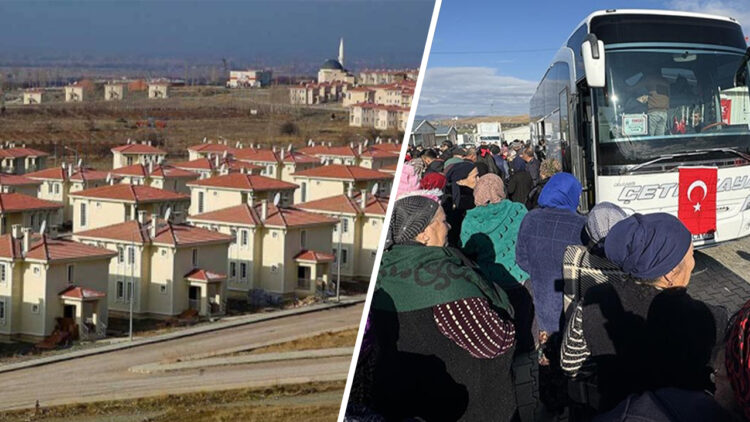
The Turkish state is facing criticism for manipulating the demographic structure of Kurdish-populated regions by settling ethnically Turkish Meskhetian (Ahıska) families from Ukraine in the Kurdish-majority city of Ahlat (Xelat) in Bitlis (Bedlîs), southeast Turkey, as part of a longstanding policy perceived as aiming to change the demographic makeup of these areas.
Observers see the war in Ukraine as an opportunity seized on by the Turkish government to further this policy, the latest push in Ahlat being a continuation of the country’s broader strategy of resettling Turks in historically Kurdish regions, a move that has been met with resistance and criticism from Kurdish communities and observers alike, who view it as an attempt to dilute Kurdish influence and alter the region’s ethnic and political dynamics.
Hüseyin Olan, an MP from the pro-Kurdish Peoples’ Equality and Democracy (DEM) Party, has brought the issue to the forefront of the Turkish parliament. Olan drew attention to the environmental and demographic implications of this resettlement, questioning the accelerated passage of urban planning approvals without thorough review or discussion in subcommittees. The plans involve the resettlement of Meskhetian Turks into specific parcels of land in Ahlat, which include cultivated fields and pastures, potentially impacting the region’s ecological balance, local water resources, and a local bird sanctuary.
The recent resettlement has involved approximately 703 individuals from 218 families previously housed in a temporary accommodation centre in Elazığ (Elezîz), marking a significant step in the government’s long-standing resettlement policy.
The move has been met with resistance from local Kurdish political entities, such as the Kurdistan Patriots Party (PWK), which views the resettlement as an attempt at demographic manipulation—a sensitive issue given the historical context of such practices in the region.
The PWK argued that the Turkish government’s approach to resettling Meskhetian Turks, particularly those evacuated from Ukraine between 2016 and 2017, is a continuation of a policy aimed at modifying the ethnic landscape of Kurdish-majority areas, and has historically involved the appropriation of Kurdish lands and the resettlement of Turkish populations in these areas, leading to significant demographic shifts.
Critics argue that such policies, especially pronounced in the 1990s with the destruction and evacuation of Kurdish villages, undermine the cultural and demographic integrity of Kurdish regions. The recent developments in Ahlat, coupled with allegations of electoral interference, have further fuelled concerns about the state’s intentions regarding the area’s demographic composition.
In Ahlat, the Turkish government has been intensifying its efforts to complete the construction of housing for Meskhetian Turks as part of a strategic demographic shift, particularly with looming elections. In December, the governor of Bitlis was reported to have issued ultimatums to workers, demanding the swift completion of 300 residences within a month to avert potential electoral gains by Kurdish parties.
This initiative is not isolated; it follows on from the construction of 500 homes last year, with plans underway for an additional 1,000 homes. This aggressive housing campaign is set to relocate approximately 20,500 Turks into Ahlat, significantly altering the city’s demographic fabric.


