

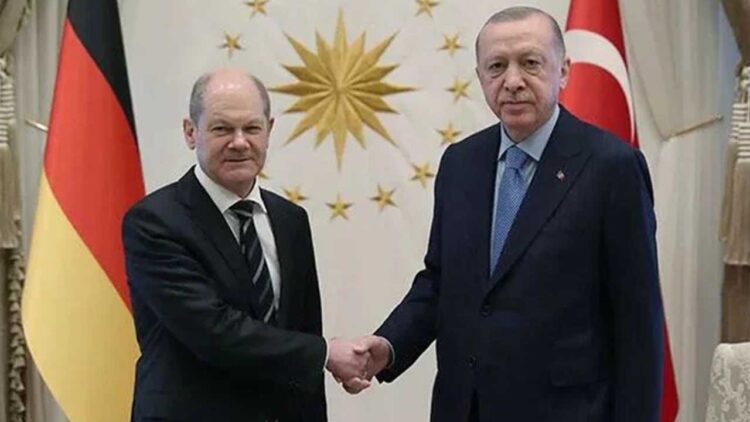
German Chancellor Olaf Scholz is set to visit Turkish President Recep Tayyip Erdoğan in Istanbul on 19 October to discuss migration and Turkey’s bid to acquire Eurofighter jets, amid concerns over the authoritarian direction Turkey is taking. The meeting highlights Germany’s continued close relationship with Turkey, despite its controversial domestic policies and military actions in Syria and Iraq.
Migration will be a central topic, with Germany having recently agreed to speed up the deportation of Turkish nationals, many of Kurdish origin, under a deal announced earlier this year. “We have made progress in ensuring returns to Turkey will be faster and more effective,” stated German Interior Minister Nancy Faeser. The agreement involves the deportation of up to 500 individuals a week, sparking criticism from Kurdish groups who warn of human rights violations.
Germany to deport thousands of asylum seekers under new agreement with Turkey
Meanwhile, Turkey’s request to purchase 40 Eurofighter jets is expected to be another focal point. The deal, which requires Germany’s approval, is seen as part of Turkey’s efforts to modernise its military amid strained relations with NATO allies, following its purchase of Russian S-400 missile systems. Although Spain and the UK have already agreed to the deal, Germany has yet to give its consent.
Scholz’s visit comes against a backdrop of Germany’s resumption of large-scale arms sales to Turkey, signalling a shift in its policy. Germany had curtailed arms exports in recent years due to Turkey’s increasingly authoritarian governance and its military actions targeting Kurdish forces. However, the renewed military cooperation, including a deal involving missiles and torpedoes for Turkey’s navy, indicates that Germany is prioritising strategic relations with Turkey in spite of the ethical concerns.
As the leader of the EU, Germany’s approach to Turkey, a key player in controlling migration into Europe, reflects the pragmatic balancing act between addressing security interests and managing the challenges posed by Turkey’s autocratic leadership.


