

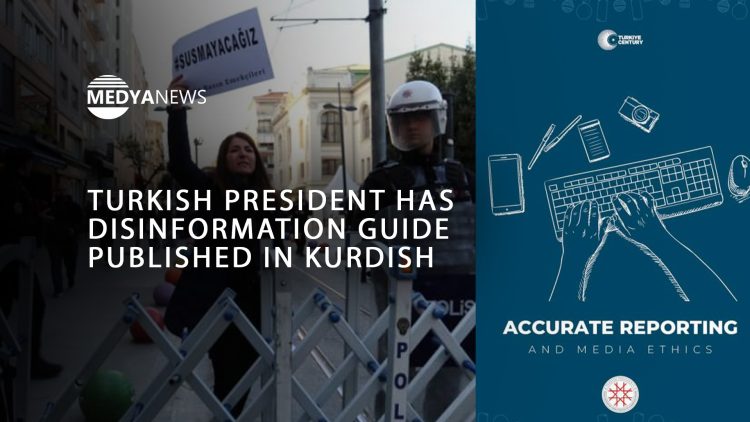
In an astonishing display of irony, the Turkish Presidency’s Directorate of Communications has proudly announced the publication of its Accurate Journalism and Media Ethics guide in Kurdish, adding the language to the previous nine translations. This comes from the same administration that has been accused of suppressing Kurdish culture and language, while fostering a media environment critics say is rife with disinformation.
The announcement extols the virtues of accurate journalism, stating, “The media’s duty to inform the public accurately can only be performed without deviation from ethical principles.” The guide has reportedly been developed with “international examples” to serve as a resource for media professionals, including researchers and journalists.
Yet, observers find the message ironic. Under the leadership of President Recep Tayyip Erdoğan, Turkey has been internationally criticised for targeting independent journalism and imposing strict media controls. The irony is compounded by the fact that since the government’s abrupt abandonment of peace talks with the Kurdistan Workers’ Party (PKK) in 2015, Kurdish-language media has been heavily restricted. Prominent Kurdish journalists have been imprisoned, media outlets closed down, and Kurdish cultural expression stifled.
The brochure, now boasting a Kurdish translation, has sparked incredulity among Kurdish communities. “This administration spent years criminalising the Kurdish language, and now it’s championing journalism ethics in Kurdish? It’s laughable,” said a Kurdish journalist who requested anonymity.
The Directorate frames the guide as a critical resource for promoting ethical journalism. Erdoğan himself is quoted in the brochure: “The most essential aspect of this profession is conveying the truth to the audience in its simplest form.” However, critics note that this declaration is at odds with the government’s long history of disinformation, censorship and propaganda.
For years, Erdoğan’s regime has been accused of manipulating the media to obscure corruption scandals, deflect criticism and amplify nationalist rhetoric. The state has systematically replaced independent outlets with pro-government publications, leaving little room for dissenting voices. Meanwhile, the Kurdish media has been one of the biggest casualties in this campaign.
The irony deepens with the Directorate’s motto: “Every language deserves the truth.” Since 2015, the Turkish government has cracked down on Kurdish education, closed Kurdish-language schools, and prohibited public use of the language in various contexts. Meanwhile, Kurdish politicians, journalists, and activists have faced relentless persecution for advocating linguistic and cultural rights.
“What does ‘truth’ mean in a regime where even speaking Kurdish can lead to arrest?” asked a Kurdish activist based in Diyarbakır (Amed). “This is not about ethics or truth—it’s about international posturing.”
The guide’s publication follows years of accusations that Erdoğan’s government has weaponised the media to discredit critics and spread state-sanctioned narratives. The Kurdish translation has raised eyebrows not only for its content but also for its timing, as Turkey faces increasing international scrutiny for human rights violations and press freedom issues.
“Publishing a propaganda manual in Kurdish while suppressing the Kurdish identity is peak hypocrisy,” said one media analyst. “It’s like telling the world you’re ethical while silencing anyone who says otherwise.”
As the Erdoğan administration continues its media campaigns, the Kurdish version of the Accurate Journalism and Media Ethics guide serves as an uncomfortable reminder of the contradictions at the heart of Turkish state policy. For many, it’s an example of what satire might look like if written by an authoritarian regime.


