

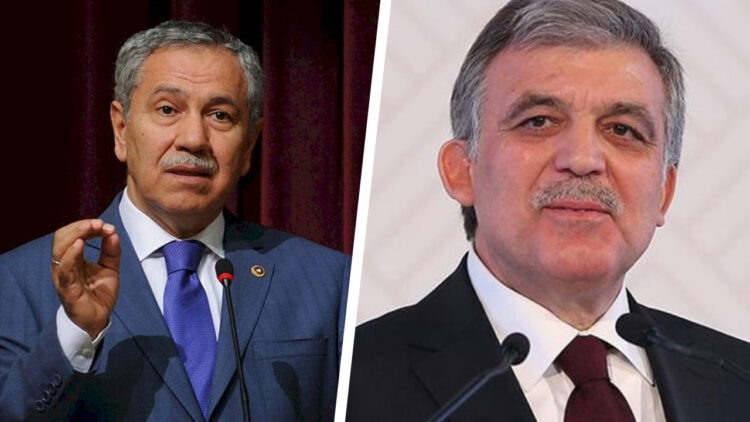
Two Turkish politicians who were actively involved in the short-lived peace process between Turkey and the Kurdistan Workers’ Party (PKK) have broken their silence on the failed initiative for the first time since its collapse.
Speaking at an event over the weekend, Abdullah Gül, Turkey’s then president, from the ruling Justice and Development Party (AKP), suggested that a more robust solution to the Kurdish question, based on democracy and fundamental rights and freedoms, could have avoided the issue achieving regional dimensions.
“It is really sad that even after a century we have not crowned our republic with an advanced, developed democracy. Of course democracy exists in Turkey. But what is meant by ‘advanced and developed democracy’ is well understood”, Gül stressed.
He continued: “We need to implement proven, rational, scientific, economic and financial policies in a determined manner, away from day-to-day political situations. Pointless experiments will bore the people and be a waste of time for Turkey”.
Bülent Arınç, a founding member of the AKP and former speaker of the Turkish Grand National Assembly (TBMM), spoke separately at a reception in Ankara about the talks that took place between the PKK and the Turkish government in the peace process of 2013-2015.
Arınç expressed his dissatisfaction with the current state of affairs, stressing that societies around the world have successfully resolved conflicts with illegal organisations using social and political means, as demonstrated in cases such as Ireland and Catalonia.
“Killing in response to killing is not a solution. Democratic countries have managed to resolve this through negotiation in the end. There is a way for all of them, as long as these issues can be resolved peacefully through negotiations”, he said.
The statements by Gül and Arınç are rare acknowledgements of the turbulent period in Turkish-Kurdish relations and the ongoing efforts to find a solution to the long-standing conflict. Though the 2013-2015 peace process ultimately failed, the issue remains a focal point in Turkish politics, with repeated calls for dialogue and negotiation to end the protracted conflict.


