

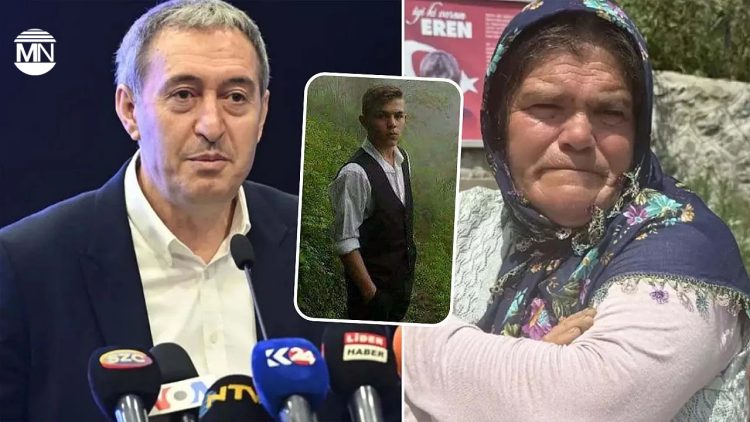
In a rare and symbolic gesture, a leader of Turkey’s pro-Kurdish opposition has phoned the mother of a teenager killed in a 2017 clash involving Kurdish militants and state security forces—amid signs of renewed momentum for peace in the country’s decades-old Kurdish conflict.
Tuncer Bakırhan, co-chair of the Peoples’ Equality and Democracy (DEM) Party, telephoned Ayşe Bülbül during the Eid holiday to offer greetings and to thank her for recent remarks supporting a revival of dialogue. Her son, Eren Bülbül, was 15 years old when he was killed during a firefight in the Black Sea town of Maçka between Turkish security forces and members of the Kurdistan Workers’ Party (PKK). Eren had been helping security forces locate a suspected hideout when the clash took place—an incident that drew public attention not only for its tragedy but also for criticism over the involvement of a civilian minor in an active security operation.
Speaking to the news outlet T24, Ayşe Bülbül described the conversation as emotionally meaningful: “He wished me a happy Eid and thanked me for my recent words. I thanked him in return. This process is what convinced me to accept the call. Otherwise, I wouldn’t have.”
Bakırhan reportedly expressed gratitude for her openness to dialogue, and Bülbül in turn voiced cautious support for renewed peace efforts. “I support it so that no more Eren-like children die,” she said. “I’ll never forget my son. But I want no more grieving mothers.”
The phone call follows a major development in May 2025, when the PKK announced the dissolution of its armed wing—a move welcomed by Kurdish political parties and some civil society groups as a potential turning point. The DEM Party, which has long advocated for a democratic solution to the Kurdish issue, has called for political reform and renewed peace talks, following the collapse of the last process in 2015.
Turkey’s Kurdish conflict has claimed over 40,000 lives—mostly Kurdish civilians—since the 1980s. While the roots of the conflict lie in demands for cultural and political rights for Kurds, it has also been shaped by cycles of armed insurgency and state repression. The failure of the 2013–2015 peace process led to a resurgence of violence and a crackdown on Kurdish political actors, including widespread arrests and the trustee appointments to pro-Kurdish municipal governments.


