

Turkey’s financial markets are reeling after the detention and arrest of Ekrem İmamoğlu, the mayor of İstanbul, in a government-led operation. İmamoğlu’s arrest is seen as a politically charged move against a prominent opposition figure, heightening tensions between the government and its critics.
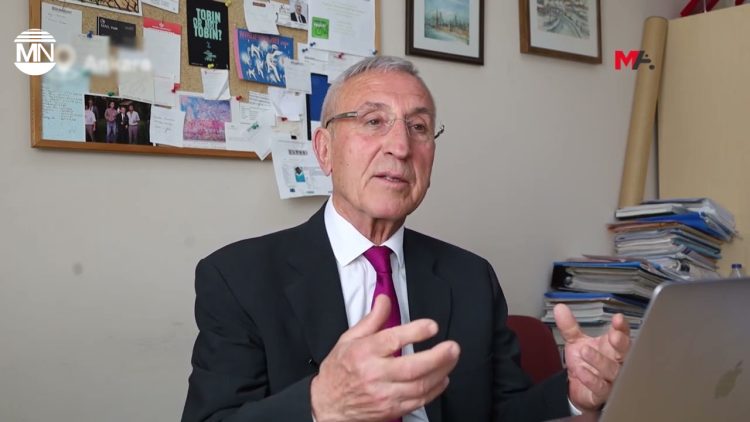
In an interview with Mezopotamya Agency’s Melik Varol on Saturday, economist Professor Ahmet Şahinöz labelled the operation the “19 March Incident” and warned of its dire economic consequences. He likened it to the 2001 crisis, stating, “The cost of this incident to the economy will be just like the September 2001 case.”
Since 2023, Turkey has implemented a disinflation policy, reducing inflation from 70% to 40% and improving its current account deficit, but Şahinöz cautioned that these gains are now under threat.
On 19 March, the Turkish lira spiked 12% from 36 lira to 44 lira against the dollar, prompting the Central Bank of Turkey to intervene with 25 billion dollars in reserves. Şahinöz noted that this was insufficient to fully stabilise the currency, with the rising exchange rate and growing debt poised to strain Turkey’s economy further. The stock market index fell from 1,000 to 900 points, resulting in a 2 trillion Turkish lira (approximately 45 billion USD) loss for companies, while gold prices neared 4,000 lira (approximately 91 USD).
The 2001 economic crisis provides a grim precedent. A political clash caused the lira to plummet, inflation soared to 88%, and reserves dropped by 5 billion dollars, requiring International Monetary Fund (IMF) support. Şahinöz fears the 19 March Incident could similarly destabilise Turkey, though the Central Bank’s intervention has so far prevented a full collapse.
Şahinöz highlighted the toll on citizens, with consumer loans up 50% in the past year and 1.4 million more people entering legal debt proceedings, bringing the total to 23 million cases. “The government keeps impoverishing people to tame inflation,” he explained, warning that rising exchange rates will deepen poverty. Turkey’s credit risk premium has climbed from 250 to 380, signalling costlier borrowing as the nation faces an annual need for 200 billion dollars in fresh foreign currency.
Public unrest is growing, with protests recalling the 2013 Gezi Park demonstrations. Şahinöz attributed this to two decades of policy failures, noting that the government’s tactic of burdening workers and pensioners while planning pre-election wage boosts may no longer suffice. “People won’t forget this time,” he warned, pointing to the depth of impoverishment.
Turkey’s reliance on foreign capital makes the loss of investor confidence particularly damaging, Şahinöz added. Portfolio investors have exited the stock market, and direct investment may dwindle, threatening an economy unable to grow without external funds.


